Behind every man now alive stand thirty ghosts
2001. Eternal Sunshine of the Spotless Mind. Andrew & Steven. Unsuitable Boys: Simon. ‘The cost of a thing is the amount of what I will call life which is required to be exchanged for it, immediately or in the long run’. 21st Century Blues. Ani.Mystic.
ITEM
Beyond the Infinite
2001 - Stanley Kubrick, 1968
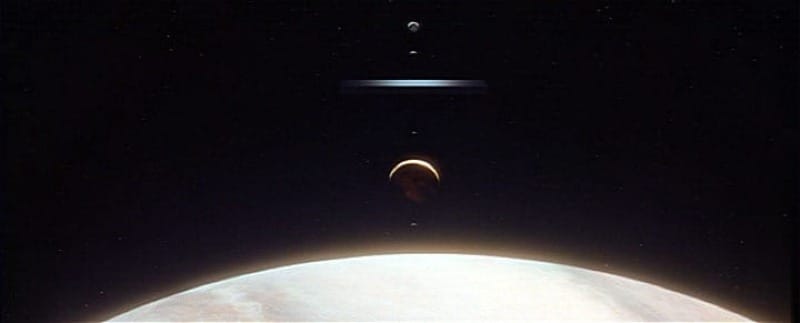
Instead of trailers, the curtains stay closed as Blue Danube swirls over the soundsystem. When the lights finally dim they do so to Ligeti’s choral vortex. We are left in the dark, in silence, for what feels like minutes. The hippy couple in front of us adopt lotus positions and hold hands as the film begins, sun rising behind the Earth to the strains of Thus Spake Zarathustra. Twenty minutes later, after the epochal discovery of weaponry and a time jump that takes us to a wheeling space station, they begin to fidget. Lotus unravels, get up and leave.
Because it's quite slow, isn't it, 2001? Whole sequences fail to move the plot or arc a character. Instead we're asked to sit and watch objects move through the void. The fragile dance of humans and their machines against the infinite night that engulfs Kubrick’s monolithic frame.
Slowness is the point. An opportunity to contemplate space as pure form, unconstrained. Impossibly vast. No up. No down. Infinite trajectories, where the only kind of speed that makes sense - light’s 187,000 miles per second - is too slow to permit the possibility of a present. Even the newest starlight is 8 minutes old. The most ancient takes us back a billion years. And yet, as if in defiance, the film’s celestial choreographies reach their climax in the monolith’s third act cosmic alignment. An outcome hinted by Kubrick’s persistent use of symmetry in the frame. So powerful that it compresses the lead character’s entire life - and all of human history - to a single point. A conspiracy of the heavens marking the now denied to us by relativity. A stone in the firmament. Om.
ITEM
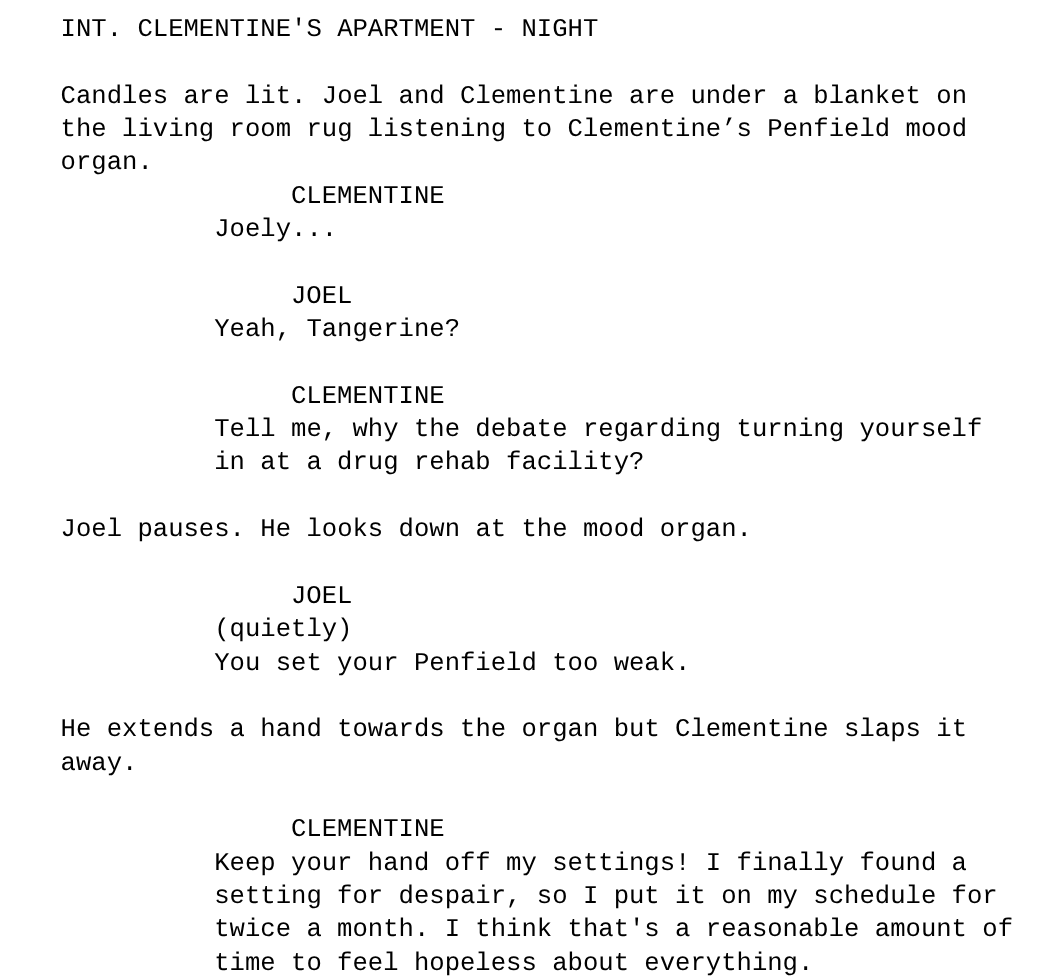
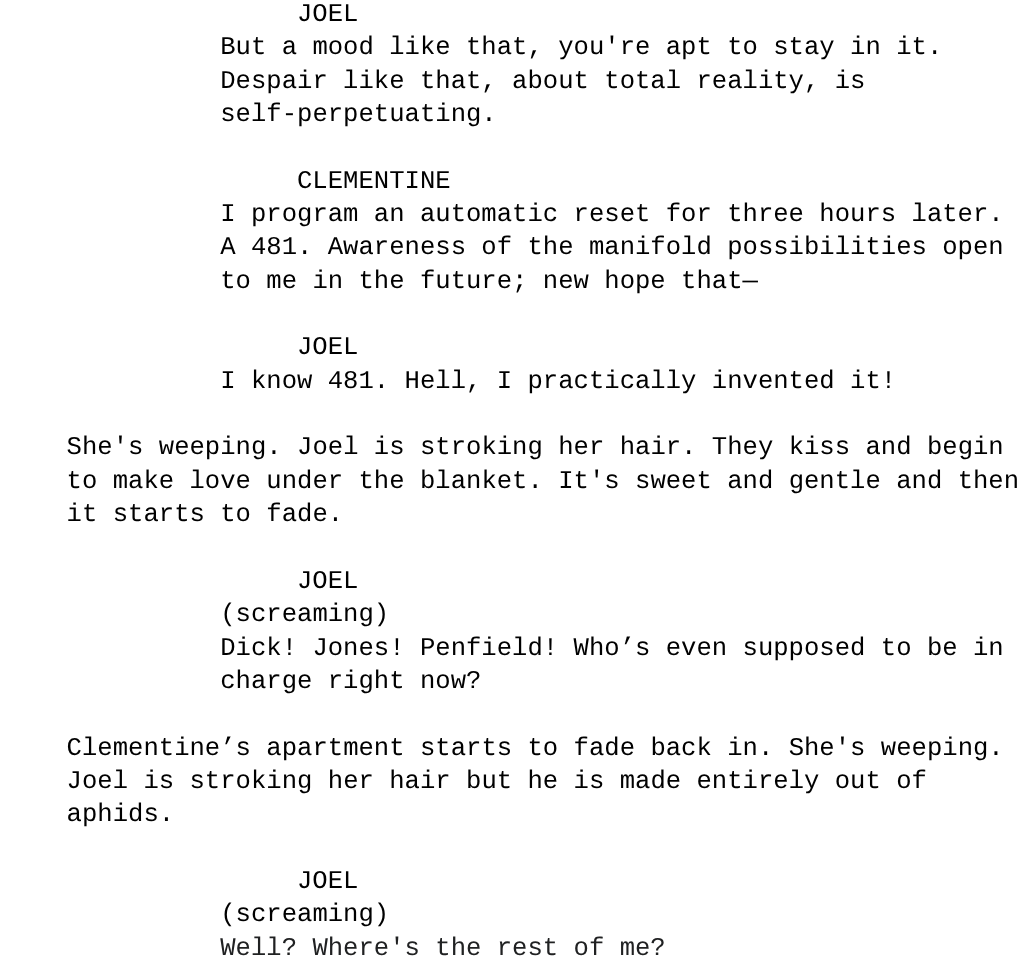
“A reflection (Uh-huh) and that's all it is” - Eternal Sunshine of the Spotless Mind (Jim Carrey, Kate Winslet, Michel Gondry, Charlie Kaufman, 2004)
ITEM
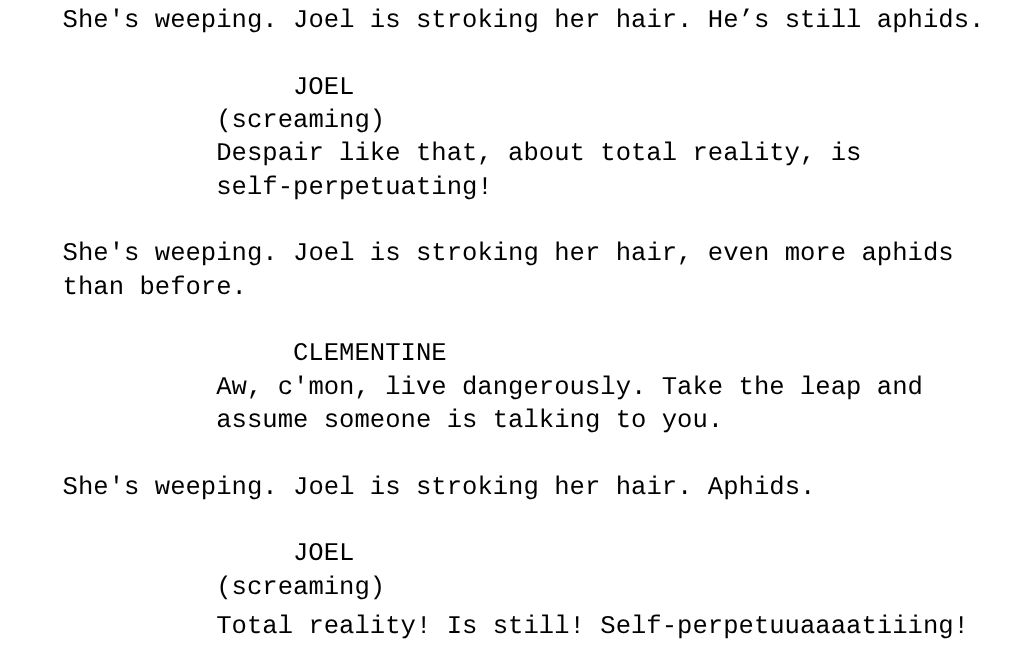
Andrew and Steven, Those Amusing Brothers
ITEM
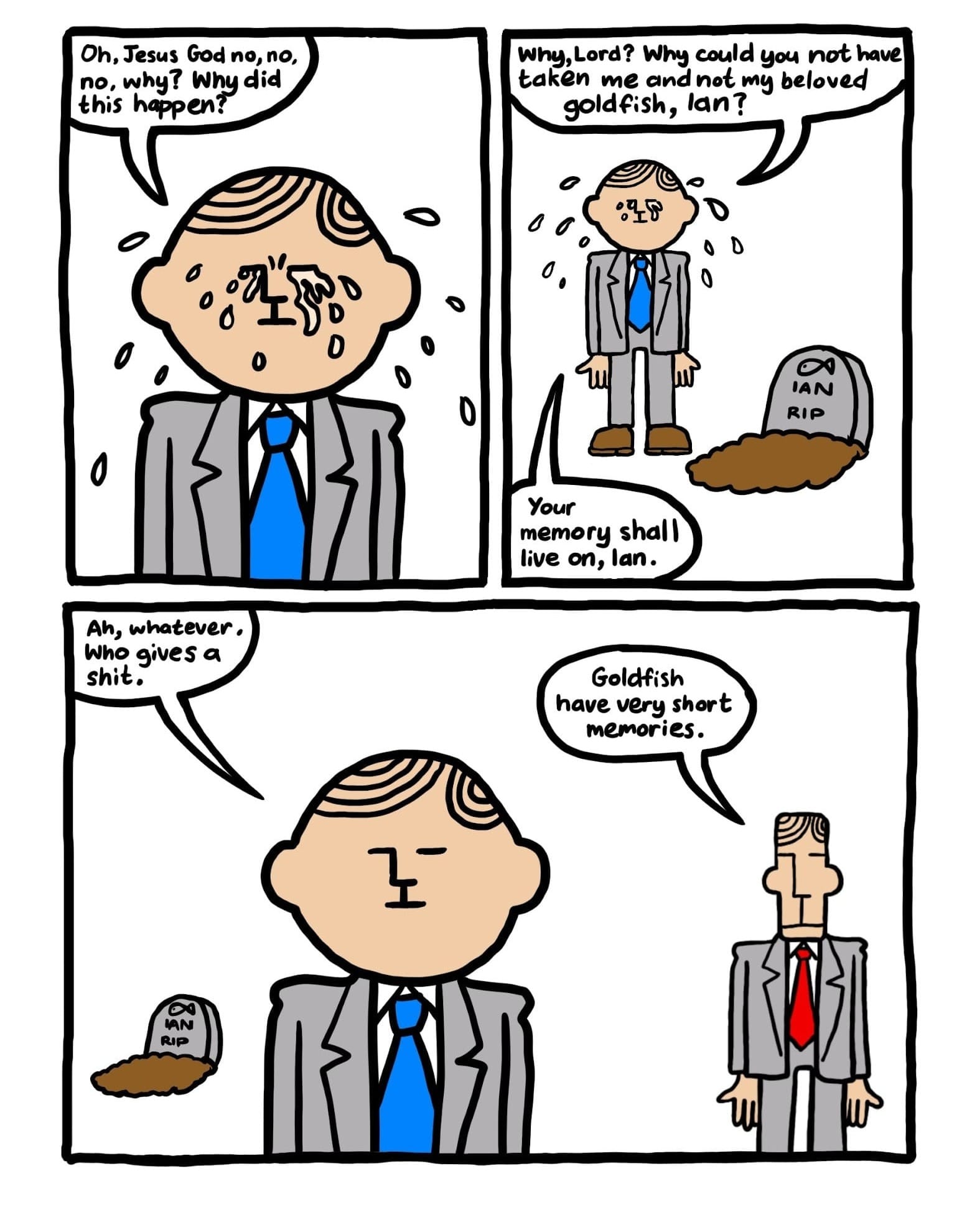
Unsuitable Boys: Simon
Blue Jeans No. 219
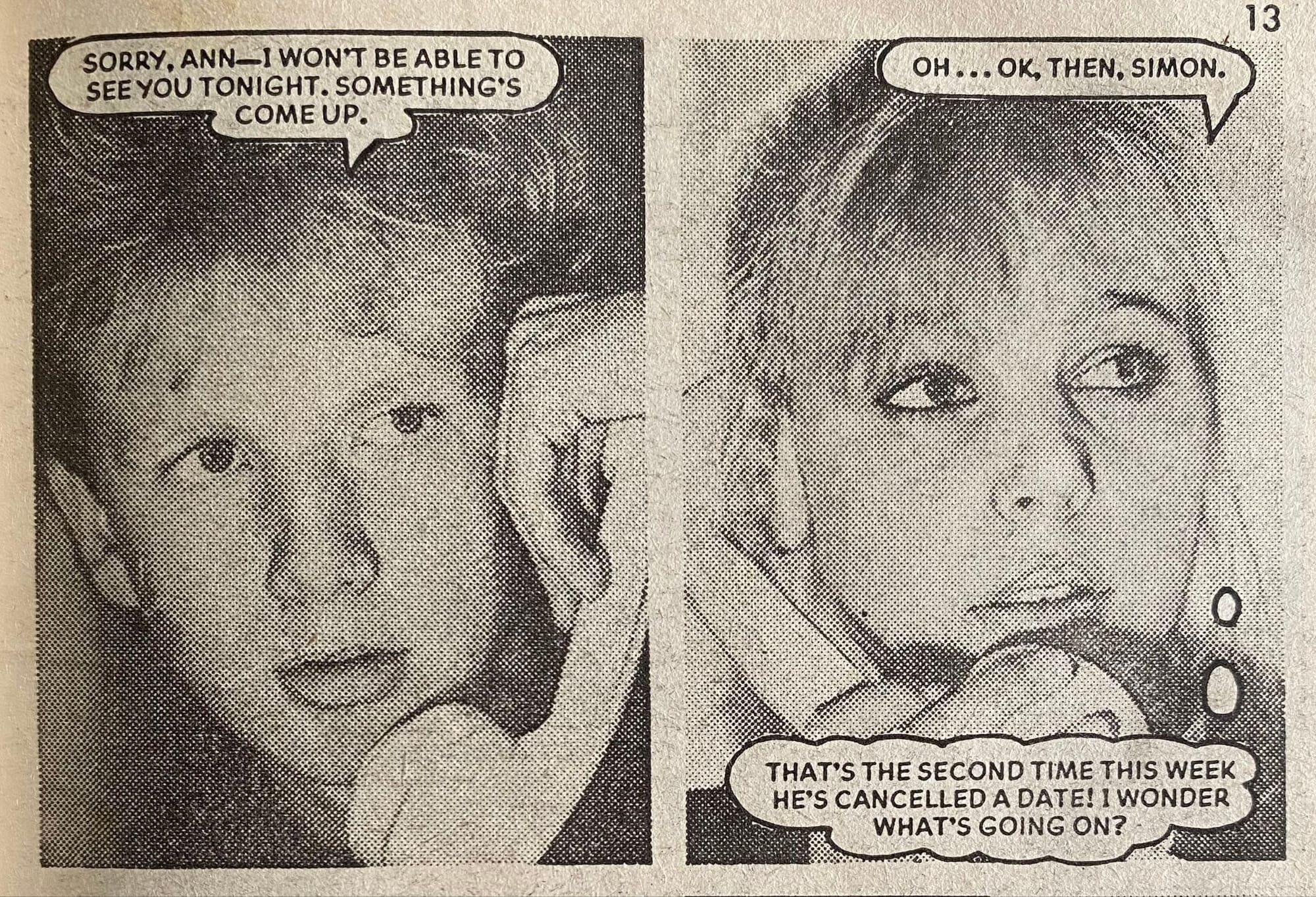
Ghosting is an odd term for the sudden or gradual withdrawal of someone from your life, a string of cancelled meetings, the refusal or failure to answer a text or pick up a phone, a moment of silence that stretches out longer and longer till that absence becomes permanent. This is in direct contradiction to ghosts as we know them, beings of too much presence, a presence in the wrong place. Something where there should be nothing.
Simon, having declared love, ghosts Ann. He disappears from her life to entangle himself with Marion, the bosses daughter. Seducing his way into some social climbing.
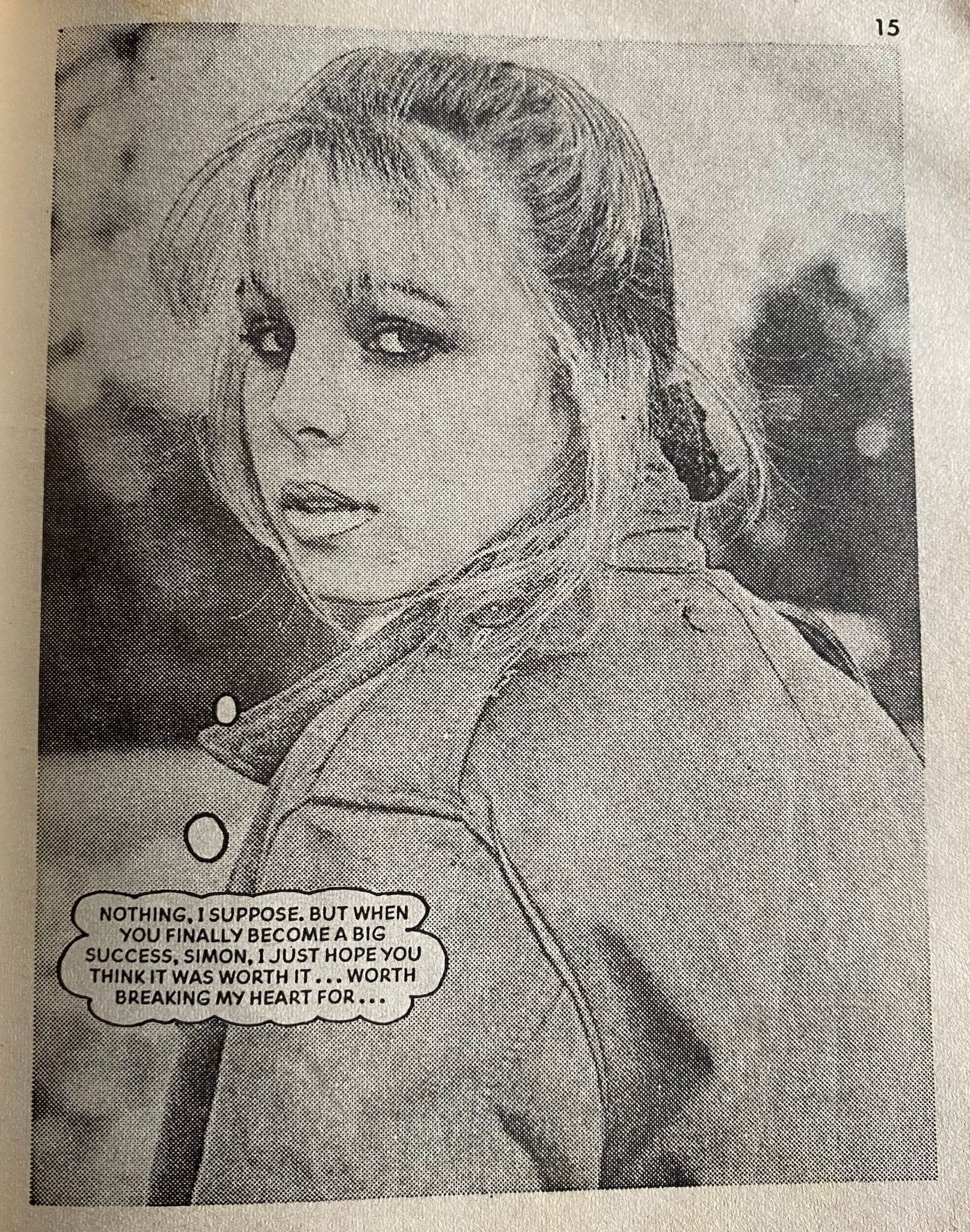
Ann, broken hearted, eventually moves on, finding something precious in the solidity of Dave. But now Simon is back skirting the edges of the fairground, picking pockets, taking wage packets and pensions with Ann as his only witness.
Now his haunting can begin. He crashes back into her life as a ghost should, presence increasing. Threatening letters become threatening phone calls, become a car knocking her baby brother off his bike, become a break-in, cut phone lines and hands around her throat.
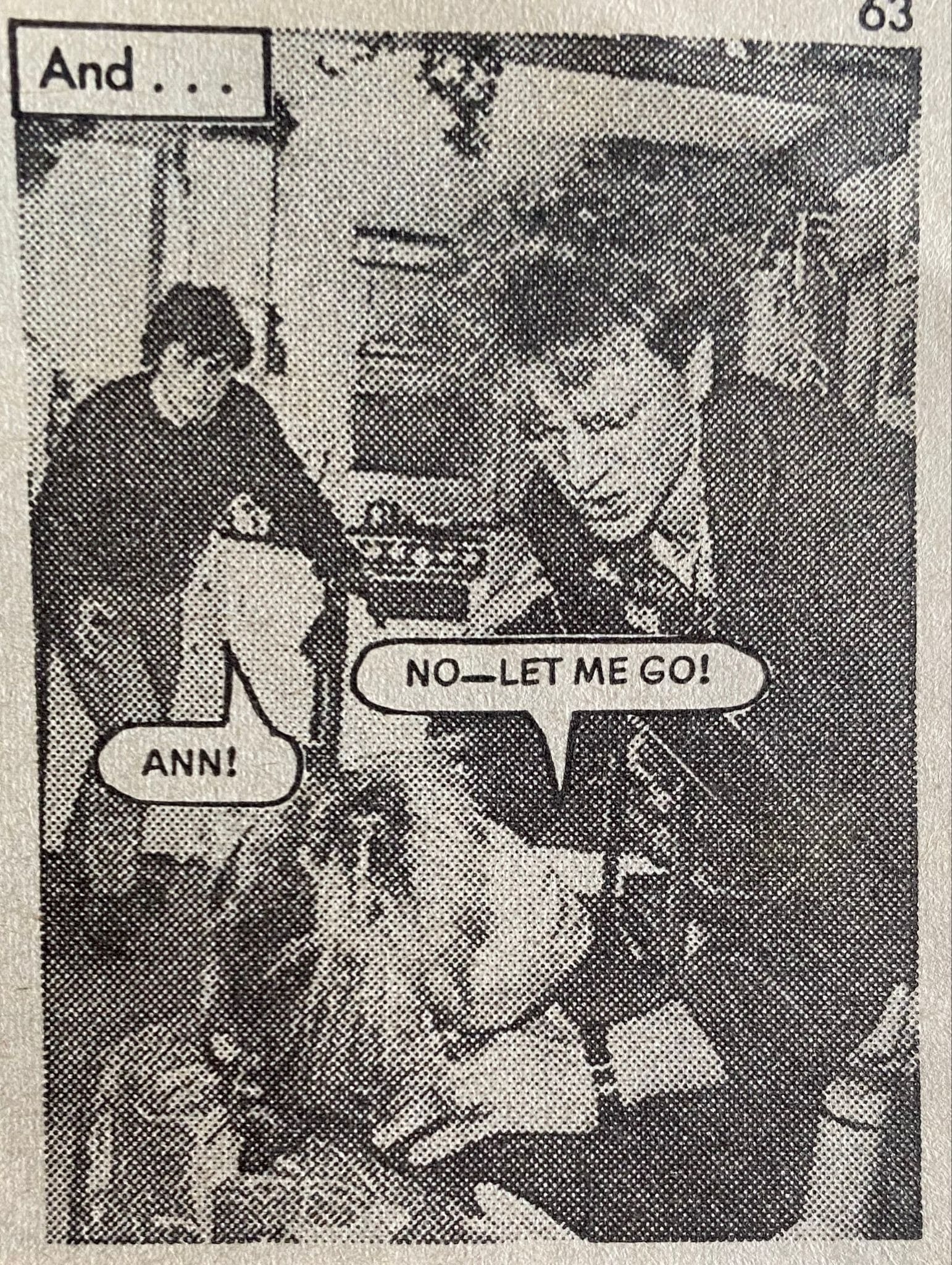
His reasons seem clear to him, a desire to protect the new life he has built, his string of thefts are additional income to protect the lies he has told Marion about money and status. But like most ghosts he can’t see himself clearly. Ann’s status as witness too much to be a coincidence. He doesn’t recognise that he is angry at her for his choices. That he holds her at fault for his leaving. He doesn’t recognise the haunting for what it is, a desire to merge himself back into her life, to be constantly in her thoughts, to connect with her family, to be in her home, to be physically close to her. Where once he faded away he is now manifest as force and destruction. The connection between his states is that every one is the wrong one for her.
ITEM
‘The cost of a thing is the amount of what I will call life which is required to be exchanged for it, immediately or in the long run’.
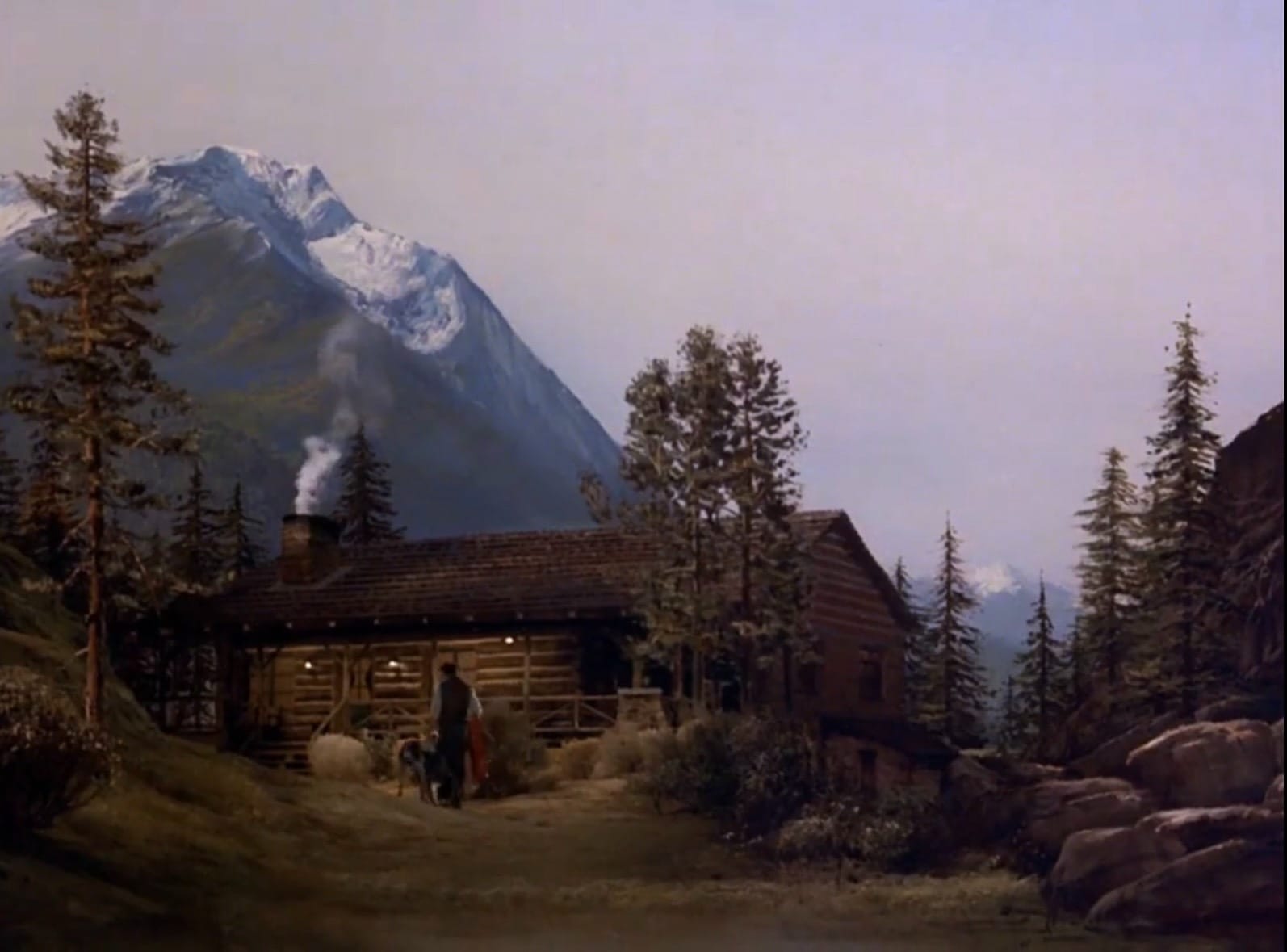
The reward amongst the frontier. Home. The log cabin. Many a fictional Vietnam Veteran rests in idyllic calm. As a child, I saw Airwolf pilot Stringfellow Hawke live in such a setting. As a teenager, reading Craig Thomas’ Firefox I was amused to discover Mitchell Gant didn’t live in such a place, as depicted by Clint Eastwood. Instead he was a car mechanic.
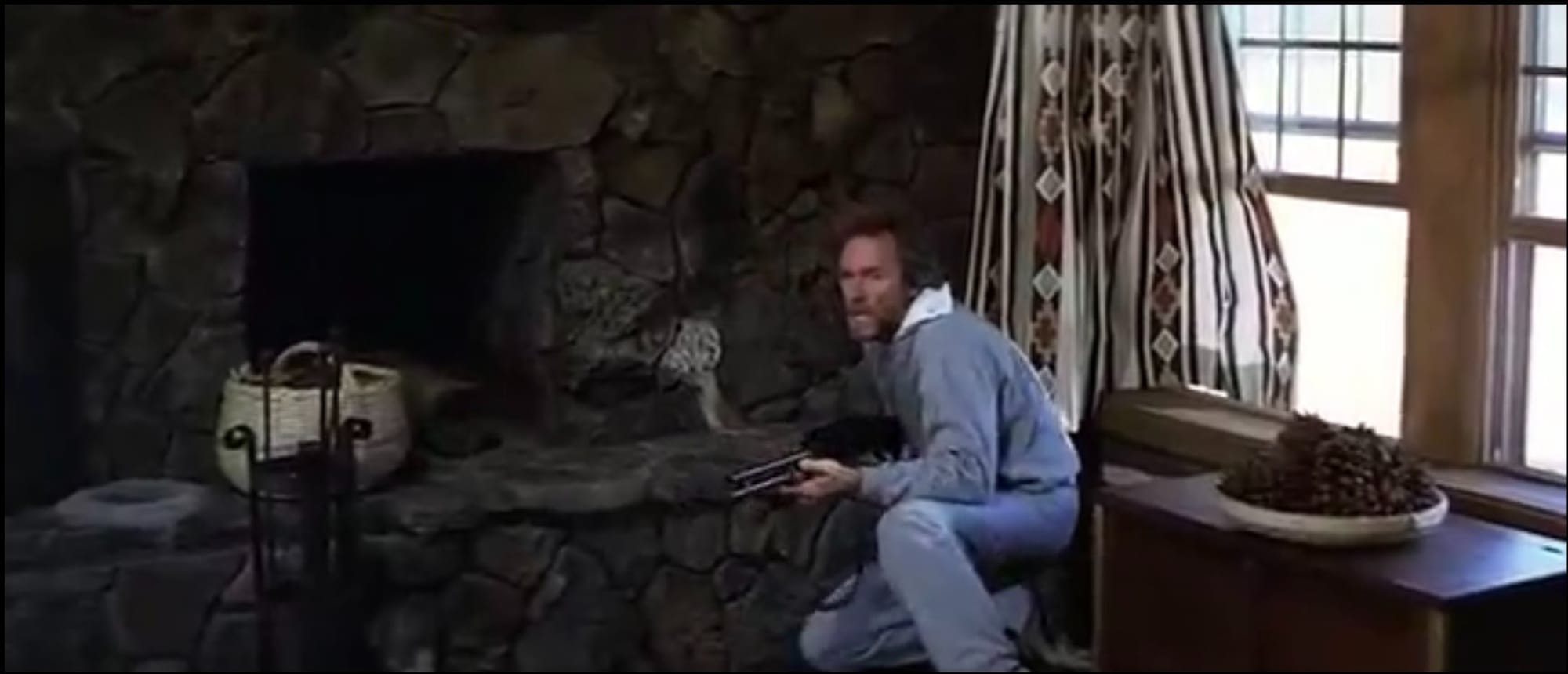
Of course, I learned from the Netflix documentary Murder Mountain that California’s Humboldt County was perhaps just such a great place. Rugged isolationism. Outlaw lifestyle.
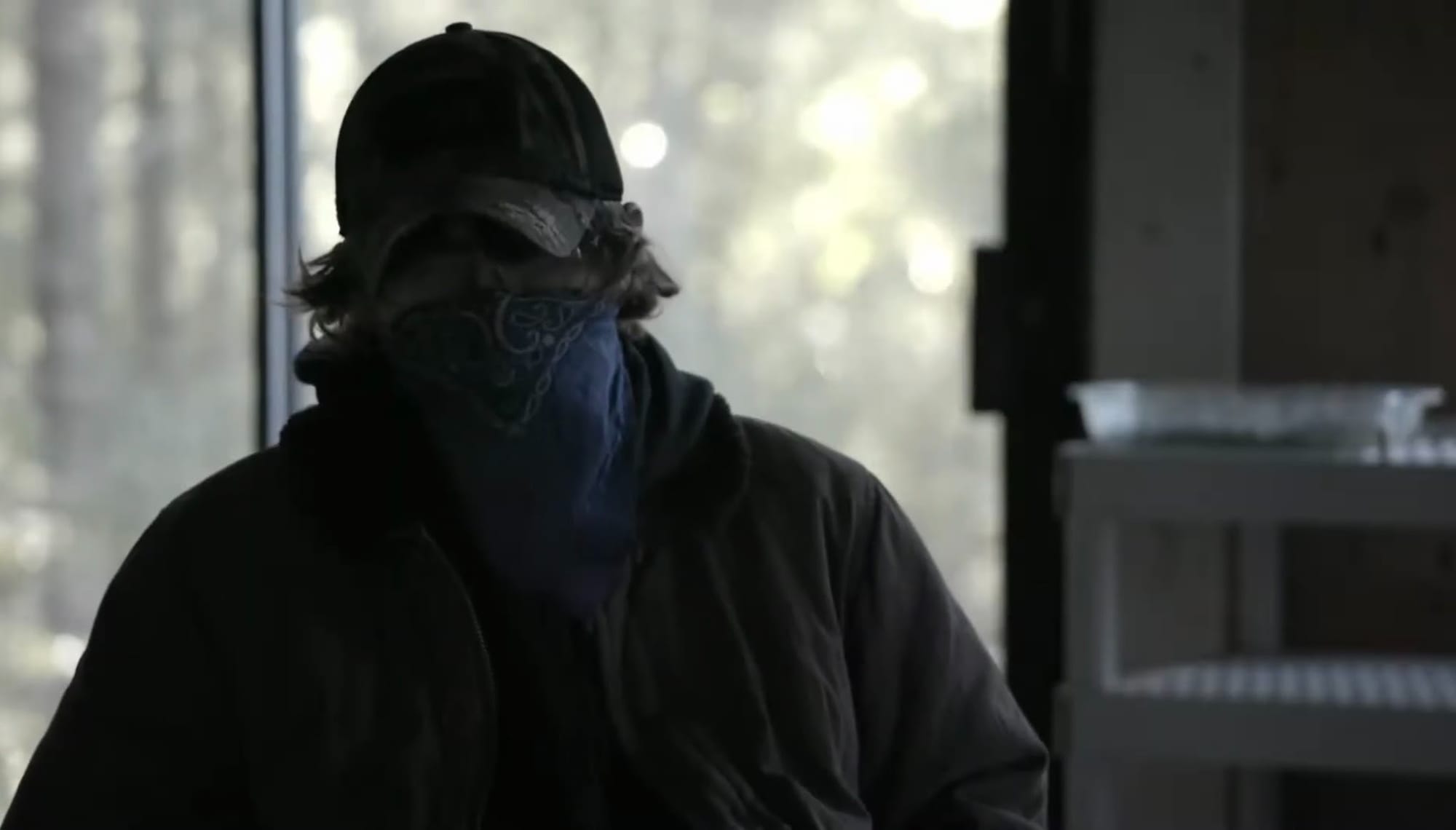
It popped into mind while reading the third volume of Skybound’s GI Joe reprints. (CLASSIFIED), or Code Name: Snake-Eyes has such a retreat.
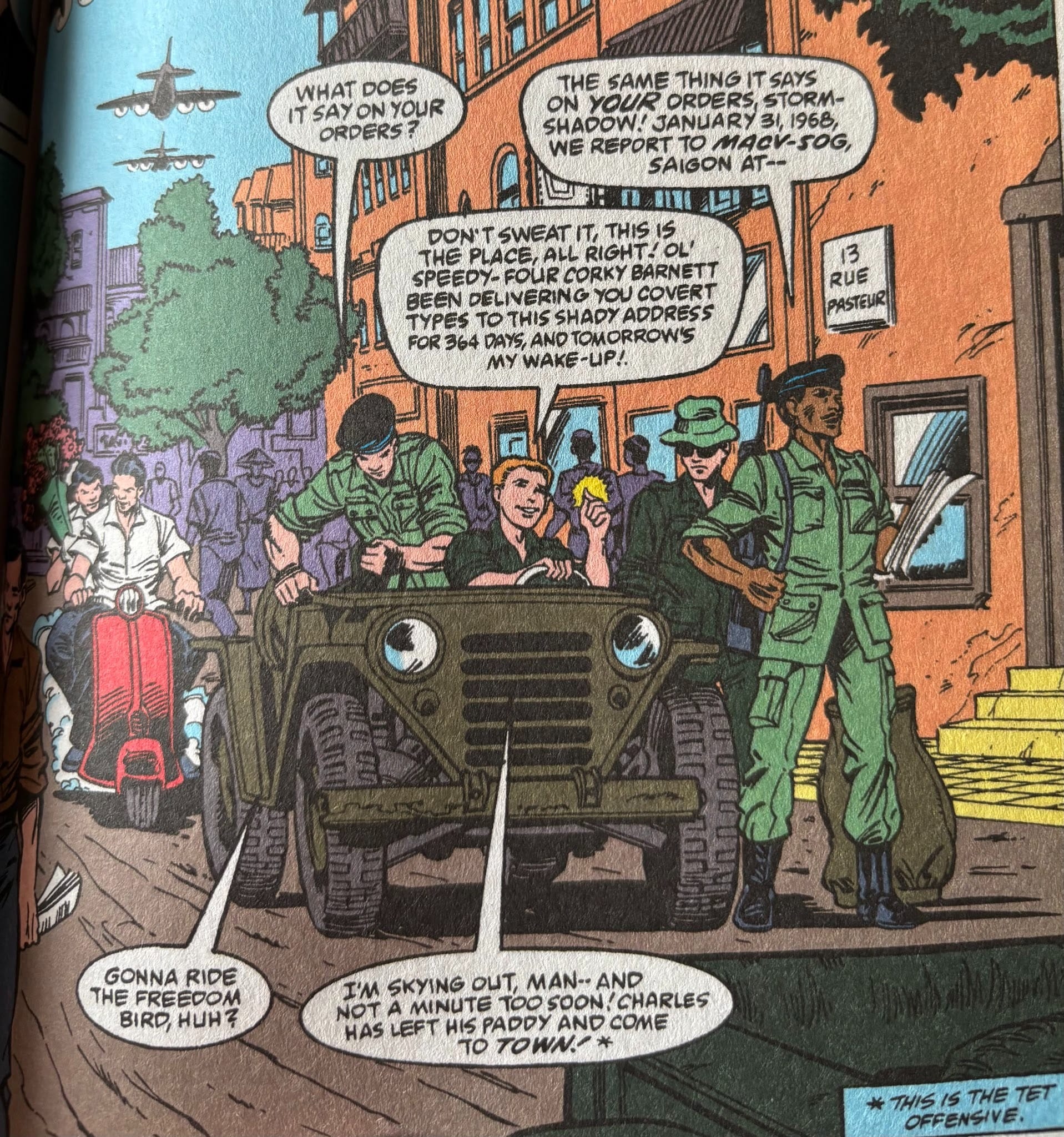
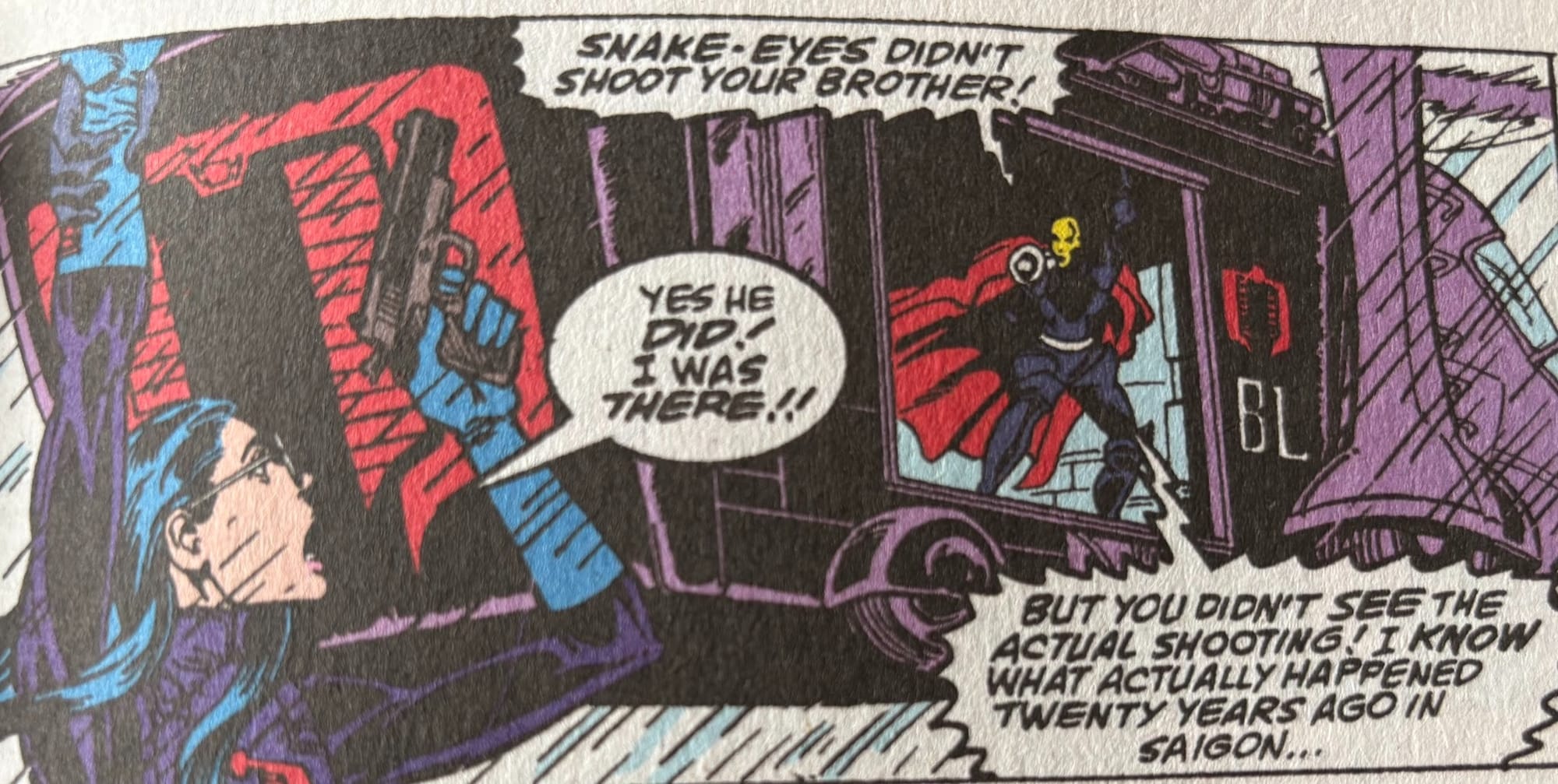
The book reaching the peak of shrieking melodrama, as Snake-Eyes, his sword brother Storm Shadow and the Baroness hang from the burning Cobra Consulate Building, while Destro shouts a flashback at them though a loudspeaker from a helicopter. Back to Vietnam. They were all there, of course. American adventurism, European humanitarianism and Scottish mercantilism colliding.
The original Cobra Commander strikes back, surrounded by his loyal Freds, the terrifying conformist loyalists. The Crimson Guard, with their unified faces and names, a nation of suburban salesmen selling Cobra’s cleaning products and vitamin supplements.
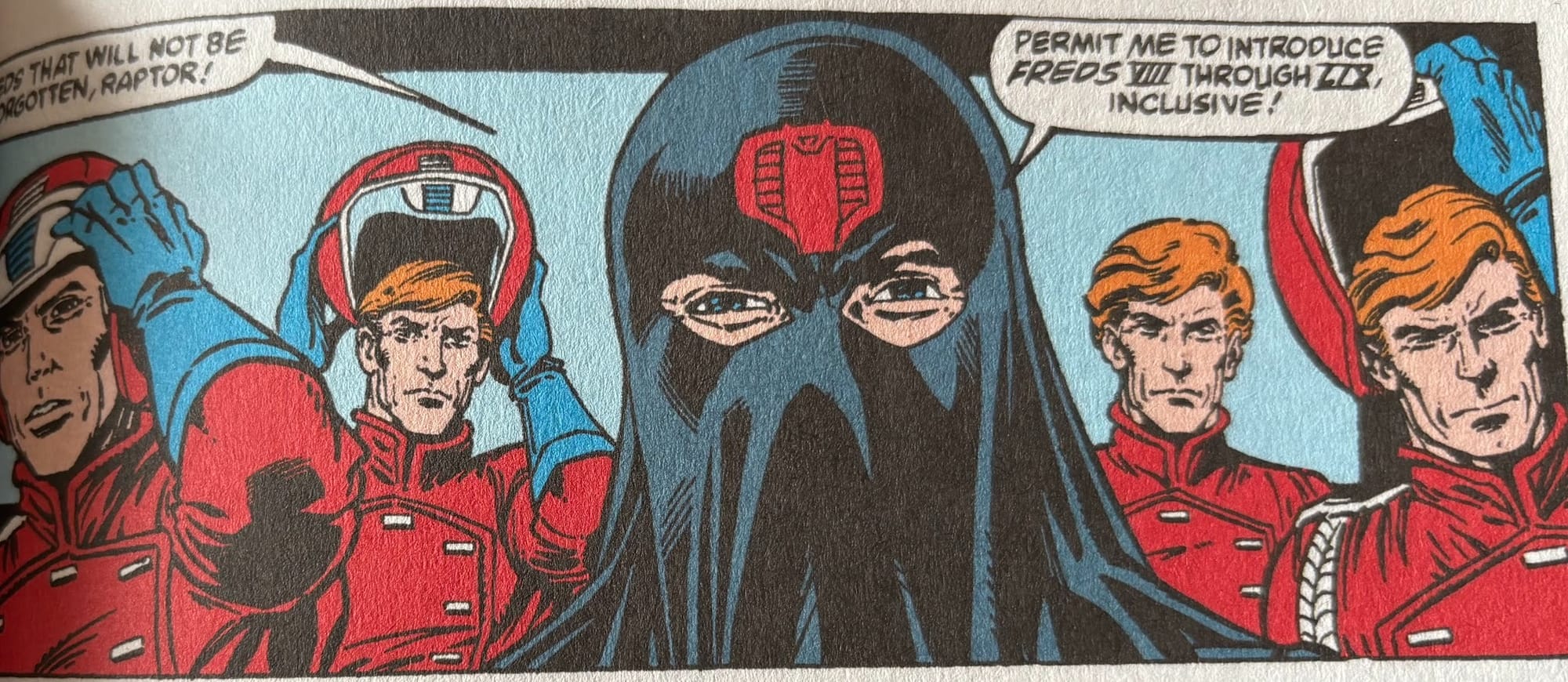
Not the howling cartoon army with their secret palaces. The comic Cobra is a movement of postwar disenchantment. A uniformed middle class in lockstep. Here in volume three they offer a collapsed factory town brainwashed conformity. Robbing the free of their log cabin dreams. Of the rugged individualism of a GI Joe file card.
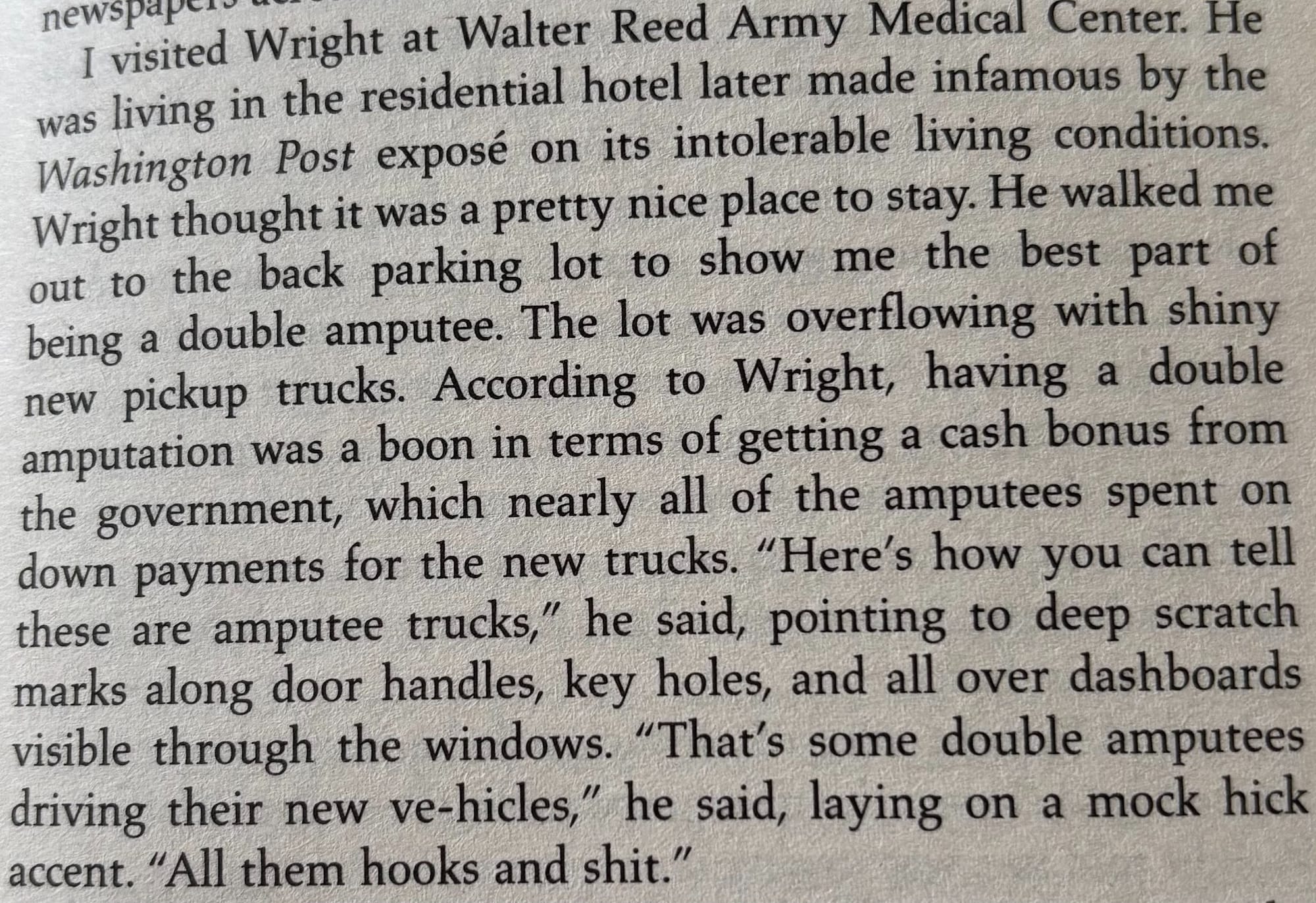
Mind you, there’s perhaps an alternative. Late in the book Generation Kill, Evan Wright visits a marine who lost both hands in a second tour, not covered in the TV adaptation. Although it did inspire a plot in The Wire.
ITEM
21st CENTURY BLUES
Life is full of curveballs, such as you might be advocating the most synthetic and Huysmansesque music one week and then entirely listening to (well, samples of) traditional instrumentation the next, or you might find someone you happily yet unsuccessfully ripped your life apart for 13/14 years ago is single and be awash with feelings - that might be distracting, I dunno; just don’t expect my usual laser focus this week, readers!
IT’S BEEN AWFUL
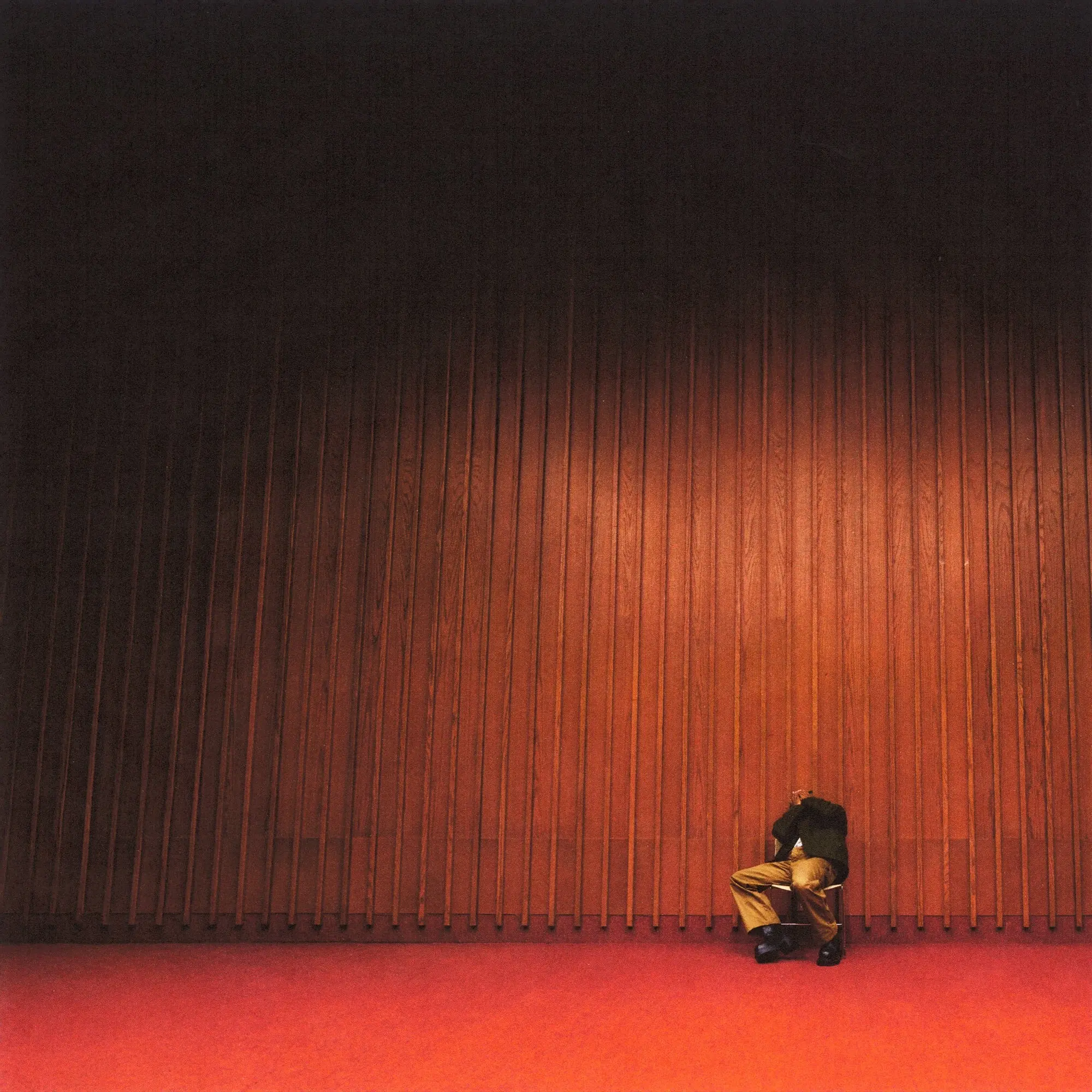
How did I find my way back to melodic, soulful hip-hop - well, I listened to a rapper named after the best Spider-Man, Ben Reilly, over a Jackson 5 sample and then TDE, the former home of Kendrick Lamar and current of Doechii and Ray Vaughan among others, released two albums in fairly short order - the above by Isaiah Rashad, IT’S BEEN AWFUL and (with a delightful and not even really slightly incongruent Weezer flip on ‘LA Nights’) Trap Dickey’s The Ville - like Vaughan last year with The Good The Bad The Dollar Menu, and really in the template of Kendrick’s Mr. Morale these are extremely raw and wrenching, soul and classical sampling, maybe lil bit 70s rock, horns & strings - troubadour vibed accounts of [the most important and under-discussed type] man’s pain.
What I wanted to say here is I think rap music is quite like superheroes, a para-genre, or a way of making steroidal - stronger - like yeah there’s crime stories, and crime stories in fuckin GOTHAM and these are based in soul and jazz and black American music more 1930s-70s. I do think I was a bit saddened though unsurprised to discover my septuagenarian parents don’t like rap and am trying to find a counter in my head. You liked Luther, dad! I only bloody like this stuff cos of your old Motown tapes!!
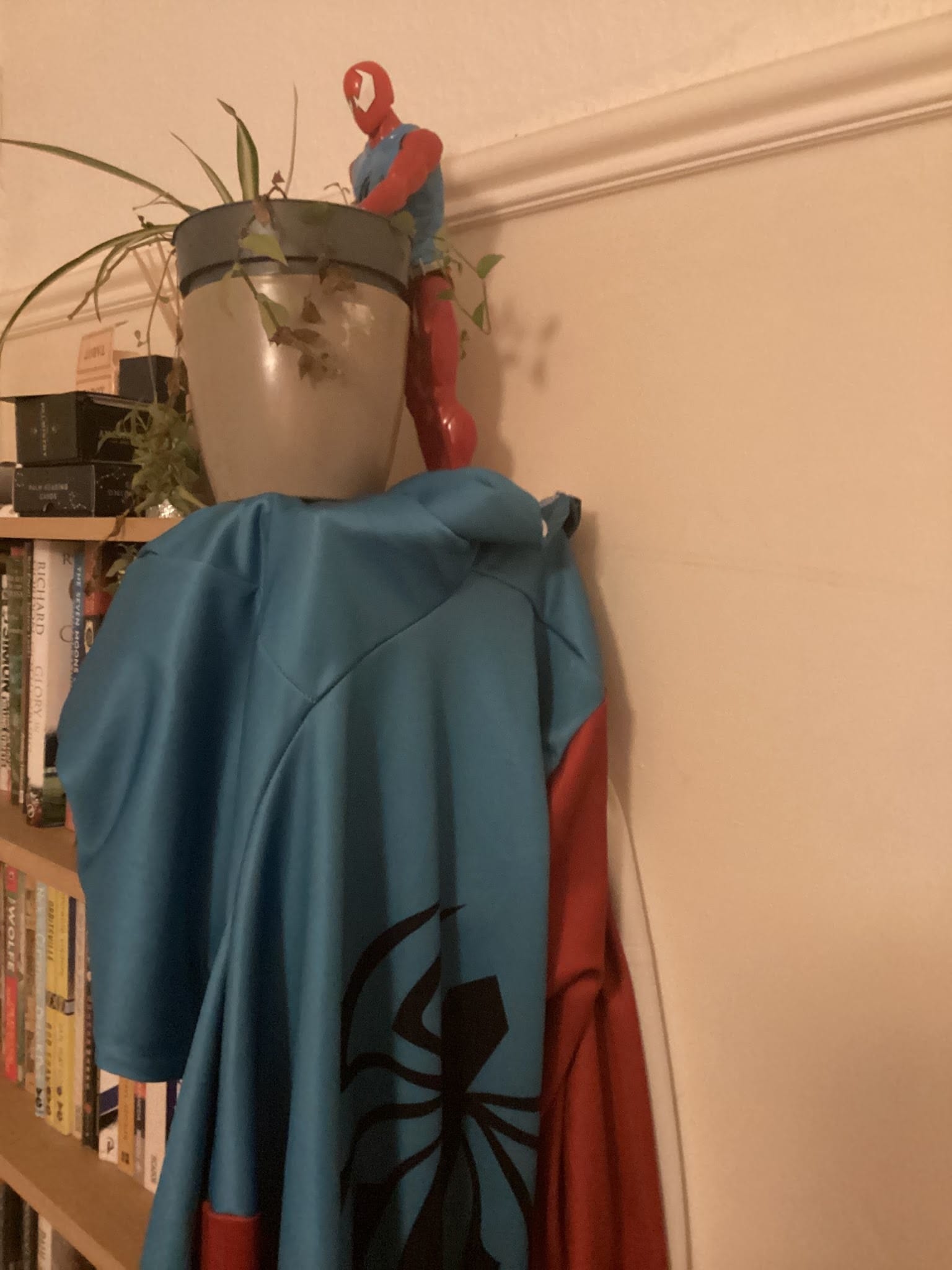
I absolutely have more Scarlet Spider stuff than you - don’t compete where you don’t compare
ITEM
Ani.Mystic by Gordon White (Scarlet Imprint, 2022)
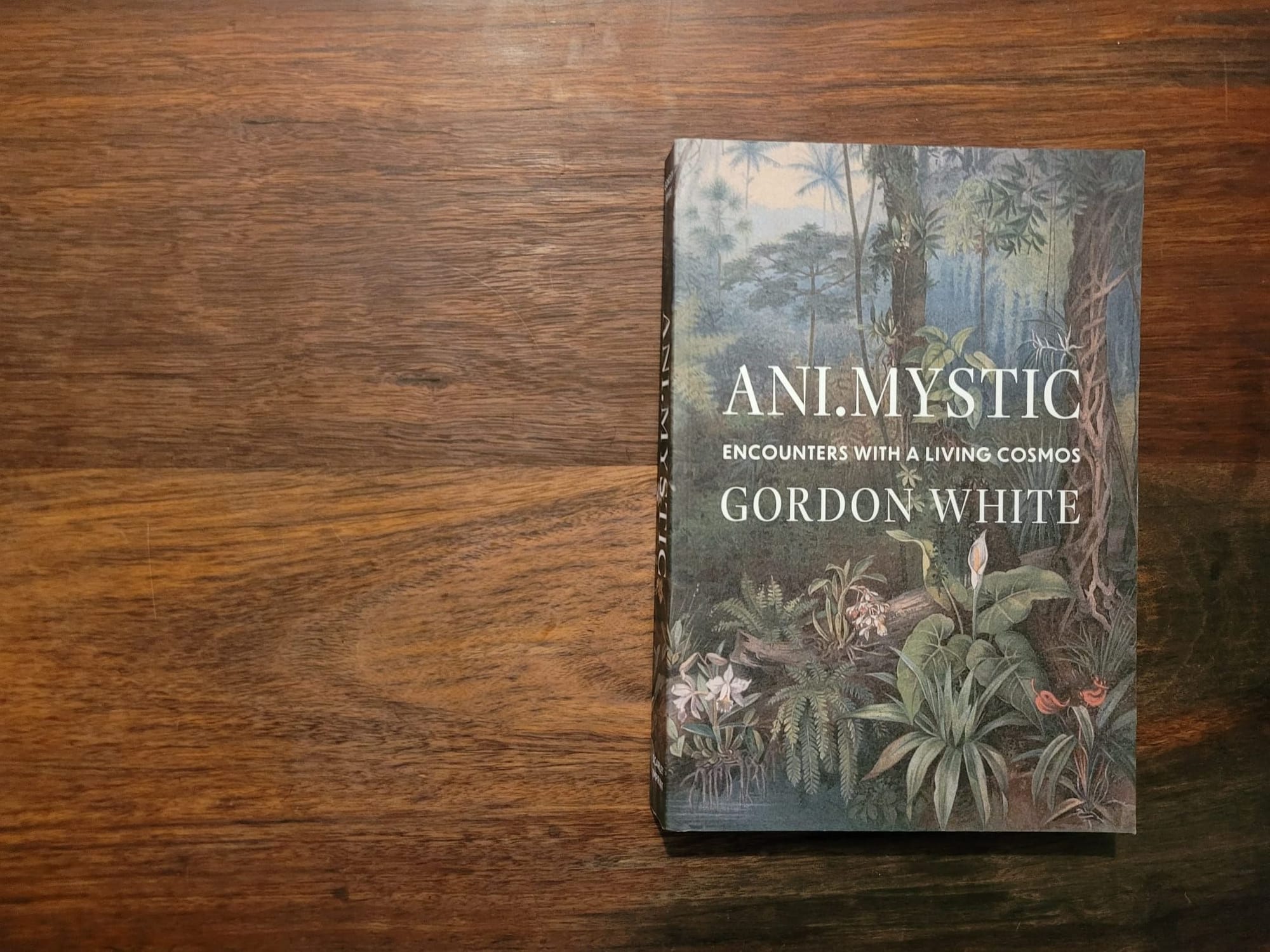
In a dream at dawn on Friday, the dead sage said to me, gesturing at the packed dual carriageway, 'See this? The traffic is all Change. That's how the Cards work.'
Then at midnight, turning randomly to open the heart of his final book, a spread right where my eyes first fall, top of page 139:
Ace of Swords. Ten of Batons. Two of Swords. Seven of Swords.
Batons symbolise Air, for their sound when swung, and Swords are Fire, from which they are forged. Thrown to gather urgent data in response to wildfires speeding homeward, they tell a frightening description of fortune’s wish: a clear assertion of flame, meeting a strong finality of air. Perfect inferno conditions, producing more flame, clear and balanced, then - more flame, flame as mystery and holy intention, a living plasma, the paths it unwrites and rewrites.
Much sorcery was sent to deflect this dire warning - angels, ancestors, dragons - and today the house still stands. The cards were defied, forced to change, made liars.
Did they deliberately paint a bleak vision to inspire reaction? Or become the capsule universe where the fires won, sealing it off from reality manifest? In the orthodox Golden Dawn attributions, where Blades are Air and Sticks are Fire, the blaze blows out before it begins, the tenfold fire annulled by the one, two and seven of open sky.
Although there, of course, the house protections go unbuilt.
The universal fundamentals never go still, changing with the turn of the next card. Crypto turns coins into air, microplastics fill cups with fire. Hypersonic swords rearrange the earth, and a wand will float on water. The dead still live, but are different from us. Their clarity is our mist. Dead isn’t dead, it’s just cards falling, and our responses. Just change.
ITEM
Never can say goodbye
Tell just one person that you liked this newsletter. Word of mouth, more than any other form of promotion, is how creative works get noticed and sustain themselves. Thank you very much for reading.