This is the me that can be seen
Resonant Frequencies. Assistant. Mason. SFMR: wtchmn. Planks Constant. On Your Mark. Resident Evil. Jigsaw.
ITEM
Resonant Frequencies

Detail from the cover of Belbury Poly’s album The Willows. Art by Julian House
So I’ve argued previously that the Ghost Box music label’s early output is at least as aesthetically fortean as hauntological, and spent time troubling the border between those two categories, in that the fortean can be read as a species of hauntology.
Mark Fisher, the sadly passed and famously depressive theoretician of hauntology (among other things), primarily presented hauntology as a vessel for lost futures and lost cultural capacities. For Fisher, hauntology was a means of highlighting a cultural malaise - even an impasse - born from “late capitalism”, and a way of articulating his feelings about it. Hence his focus on hauntological art with an elegiac tone: the music of Burial and The Caretaker, and Kubrick’s The Shining, with its narrative of tragic recurrence.
The idea that hauntology is to one degree or another about loss is maybe a dominant view among weirdos who care about these things (it me), with Ghost Box often held up as the paradigm example of art concerned with lost futures. But viewed through the lens of forteana it takes on a different character. Instead of pointing back to better, sadly extinct ways of imagining the world, and in doing so underscoring the impoverishment of the present, the fortean is resolutely presentist.
After all, the data denied by the official record pertains to this world right now. Nessie could be out there. Flying saucers over our heads. The fortean affect - like much of Ghost Box’s music - isn’t mournful, it’s mischievous, some might say gleeful. More like a goblin than a ghost. It’s this layering of fortean and hauntological, this strange alchemy of elegia and winking insurrection, that keeps the musical worldbuilding of Belbury Poly, The Focus Group and The Advisory Circle so energised 20 years after its moment in the post-psychedelic sun.
ITEM
Assistant
ITEM
Mason: Built for the cosmos but hooked on empire
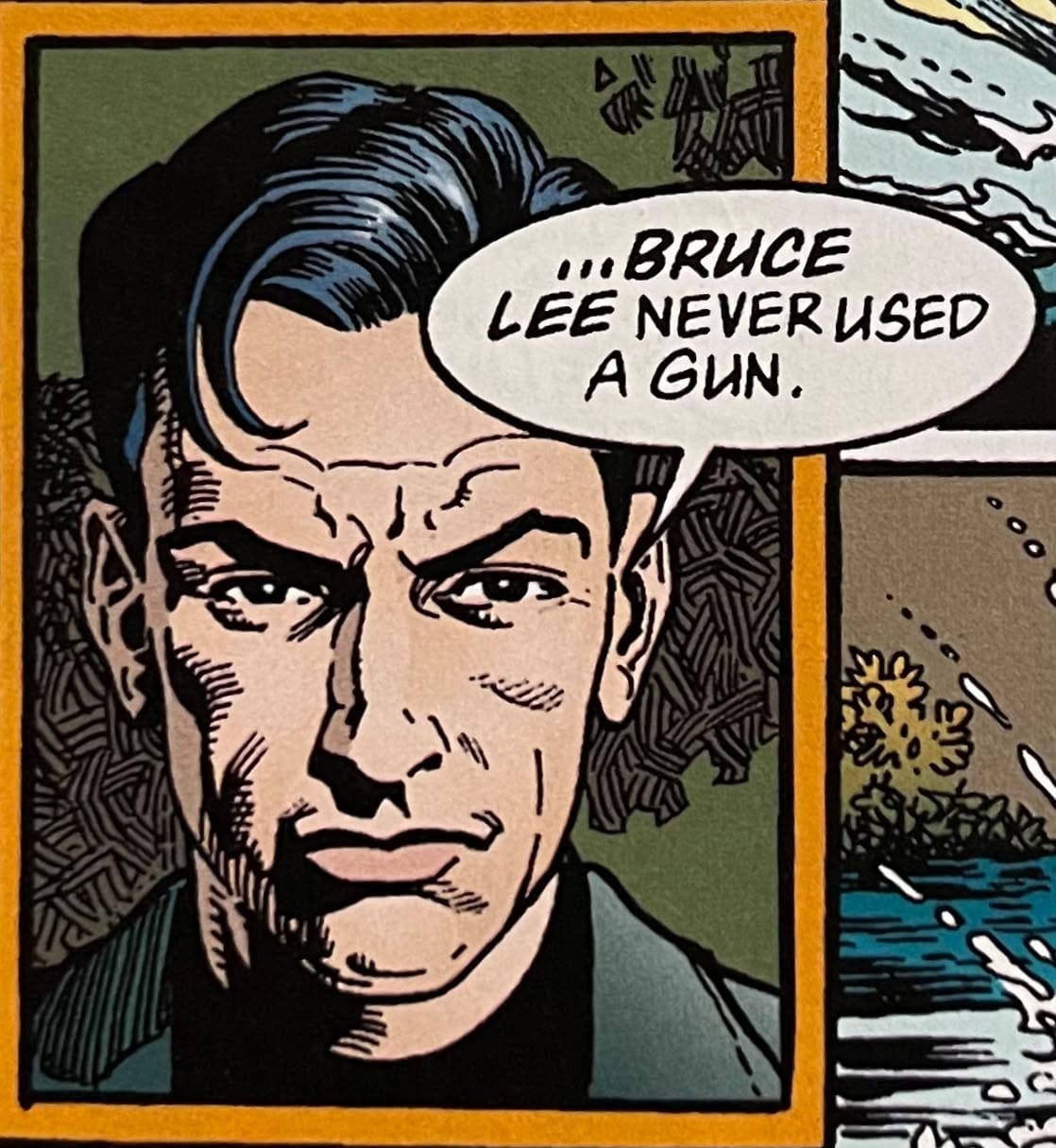
Grant Morrison’s best comic? Probably Mason. This sprawling series has magnum opus vibes. Unlike its meta-textual source code, The Invisibles, in which Mason was a core, if opaque, character, this 12-issue, 48-page prestige format banger is pure, accessible, epic storytelling.
Lore is that in 2026 Morrison, who broke down the dense, stultifying psychology of modern tech billionaires in an online chat with Douglas Rushkoff, had a sudden realisation: they had already sketched the blueprint for this archetype with Mason Lang, the mysterious, super-rich backer of King Mob’s Invisibles cell. It just took the grotesque reality of today's tech elite to prove he deserved a standalone epic.
Mason unfurls as a sweeping, decade-by-decade biography of the modern world - charting the post-war emergence of hippy mysticism and cyber-culture, techno-capitalism, neoliberalism, and pop-cultural mutation. Each chapter maps a distinct era: starting with the formative crucible of his bohemian parents and a high-weirdness childhood brush with alien abduction, it tracks Mason's trajectory through mid-century optimism, the 1990s (brilliantly retelling The Invisibles through his self-mythologising POV), the hyper-commodified tech booms, all the way out to deep cosmic time.
The crown jewel is Eagle Award-winning issue 7, Bunker Mentality, rendered with surreal, claustrophobic brilliance by Frank Quitely. It traps Mason inside a late-2020s prepper compound as a rogue AI threatens to lock him out of his own empire, interweaving flashbacks of his pandemic lockdown (alongside the magnetic, ageless fan-favourite Helga Tannen), with a disastrous 2025 Traitors-style reality TV stint that accidentally turned him into a global pop icon.
Of the recent instances of veteran British comics royalty revisiting classic works, Mason shines. It eclipses Pat Mills’ sharp reframe of Nemesis the Warlock through Torquemada’s eyes, and towers over Alan Moore’s baffling, cringeworthy completion of Halo Jones, the seven-book project mystifyingly co-written with a beyond-the-pale Neil Gaiman.
ITEM
Suggested For Mature Readers
2: wtchmn
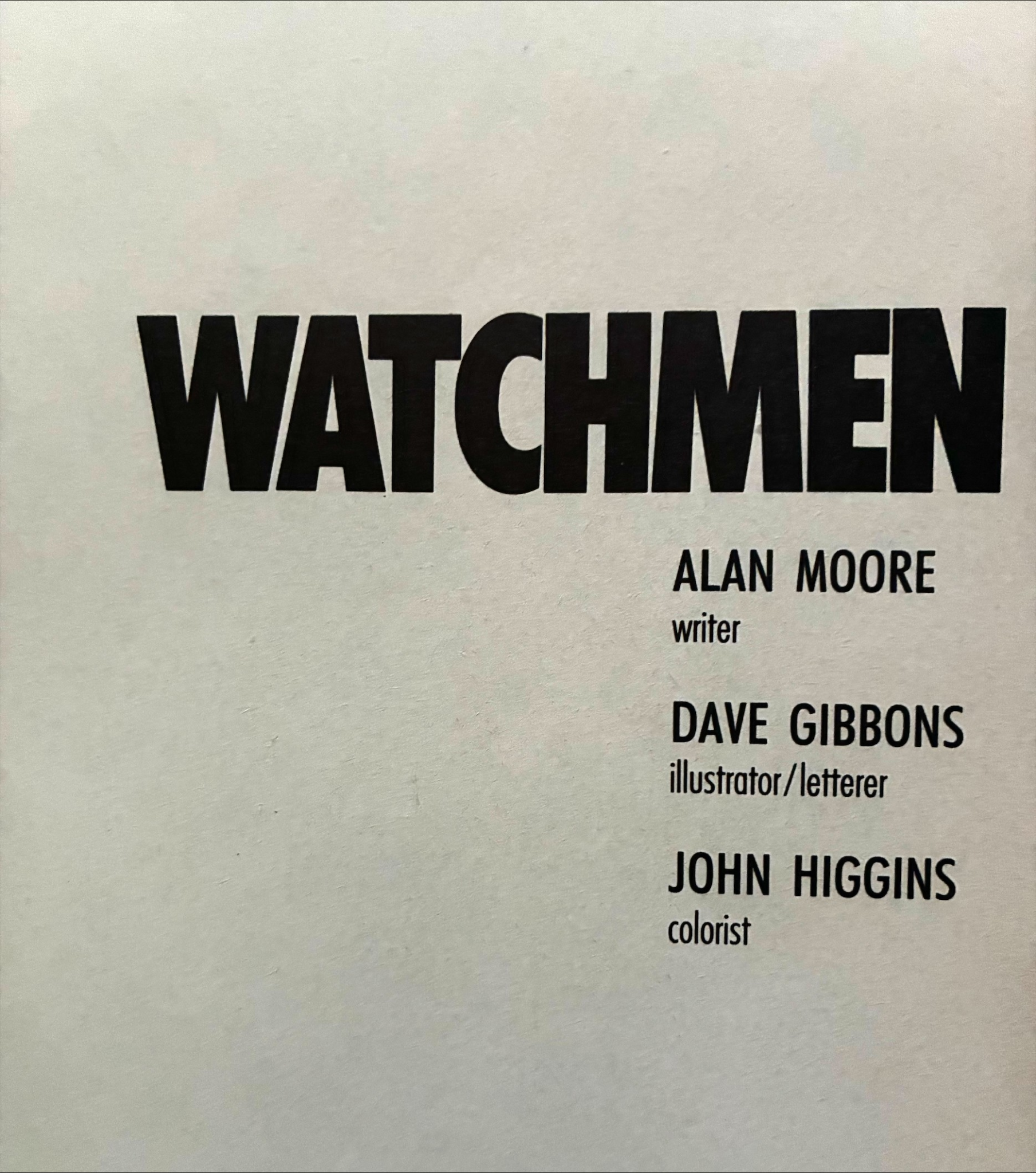
Like the joule or ampere, there is a unit of measurement for the revisionist text. It is a ‘watchmen’, often shortened to ‘wtchmn’.
The dimensions of a ‘wtchmn’ are 17 x 25.5 x 1.75 cm. A single ‘wtchmn’ is composed of 12 units, referred to as ‘cmcs’. Within those dimensions however, are infinite levels.
Measuring a revisionist text using ‘wtchmn’ provides a useful metric to understand its intrinsic quality, and most importantly allows us to place it on an empirical scale.
Watchmen is usually talked about in terms of the seismic impact it had on comics storytelling, for better or worse. What is often overlooked is quite how iconic it is as a 20th Century design item.
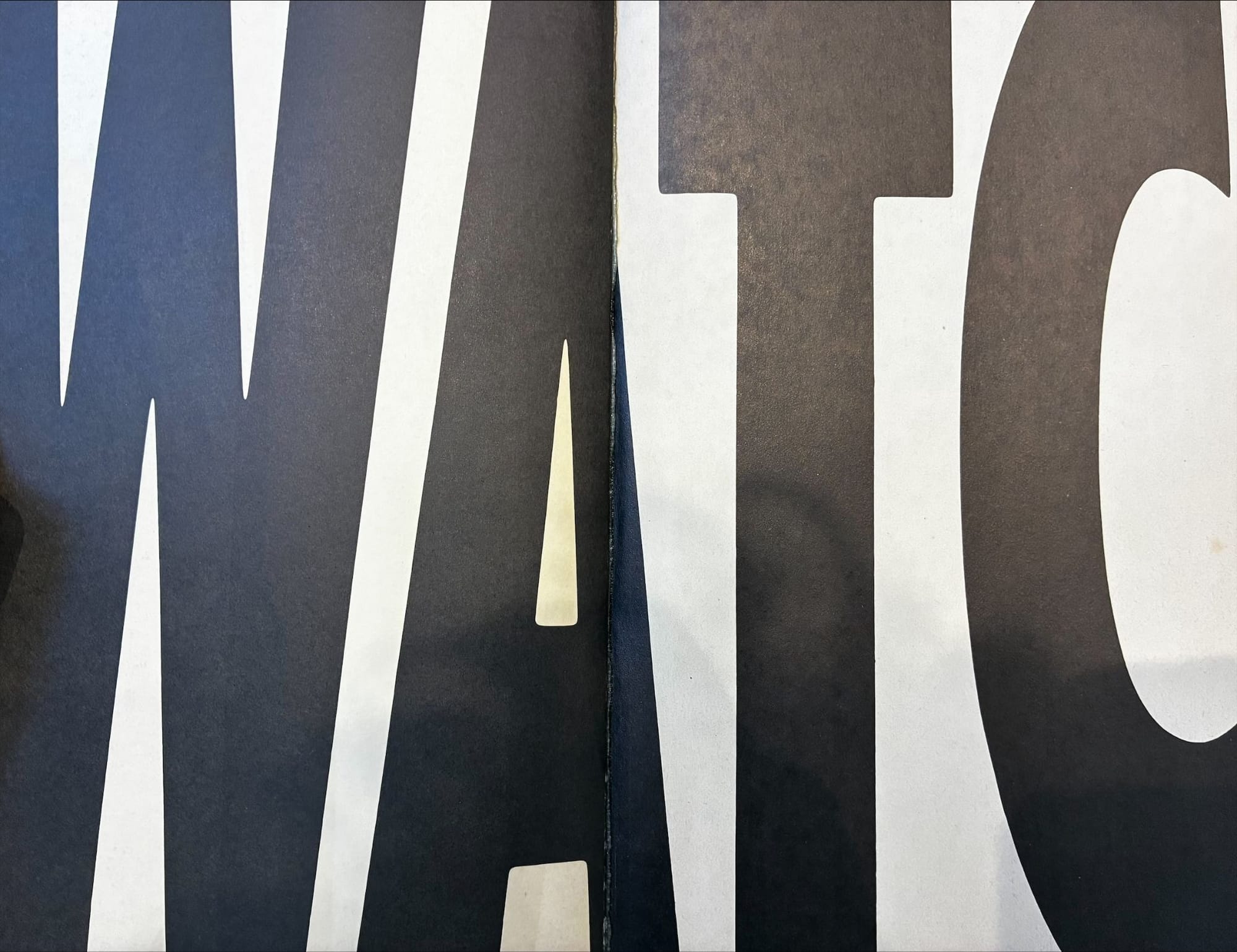
There really is no other comic that has achieved the ubiquity of the collected Watchmen. It has an instant recognisability meaning even someone unfamiliar with the text will be able to place it as a piece of pop cultural set dressing, to sit alongside Warhol’s Marilyn screenprints or a Ferrari Testarossa.
People reading a copy of Watchmen carry the same heft as someone reading Ulysses. “Oh. They’re reading that”. No shame.
Seeing a copy doesn’t mean ‘comics’. It means ‘Watchmen’.
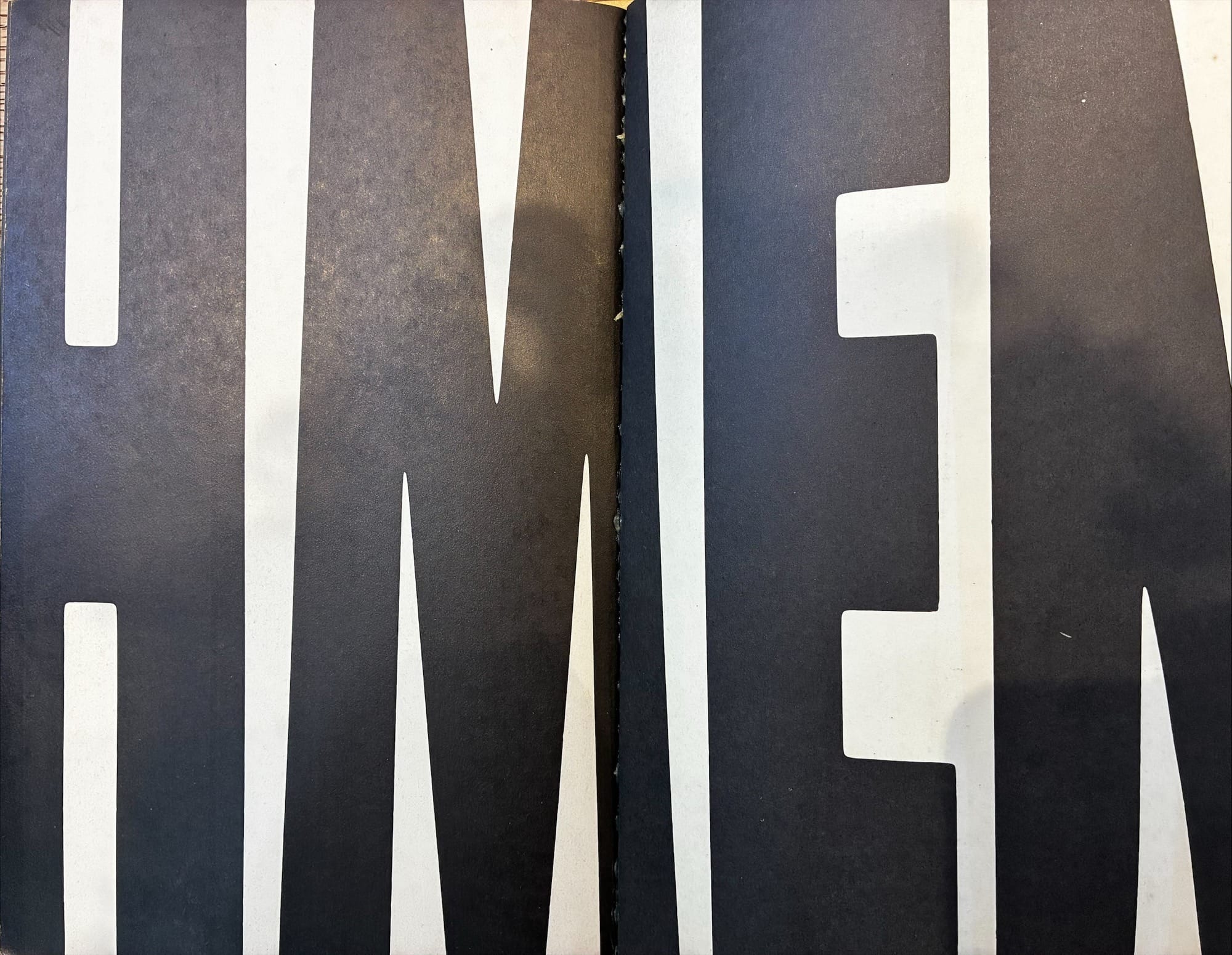
The utilisation of the smiley face symbol, that most tenacious design symbol since the 1950s, is inspired, bringing a crisp graphical element to the comic, placing it in a different weight-class to its peers.
Matched perfectly with the bold graphic design of the sideways logo. The lack of cover taglines, or adverts.
A perfect, hermetically sealed design item.
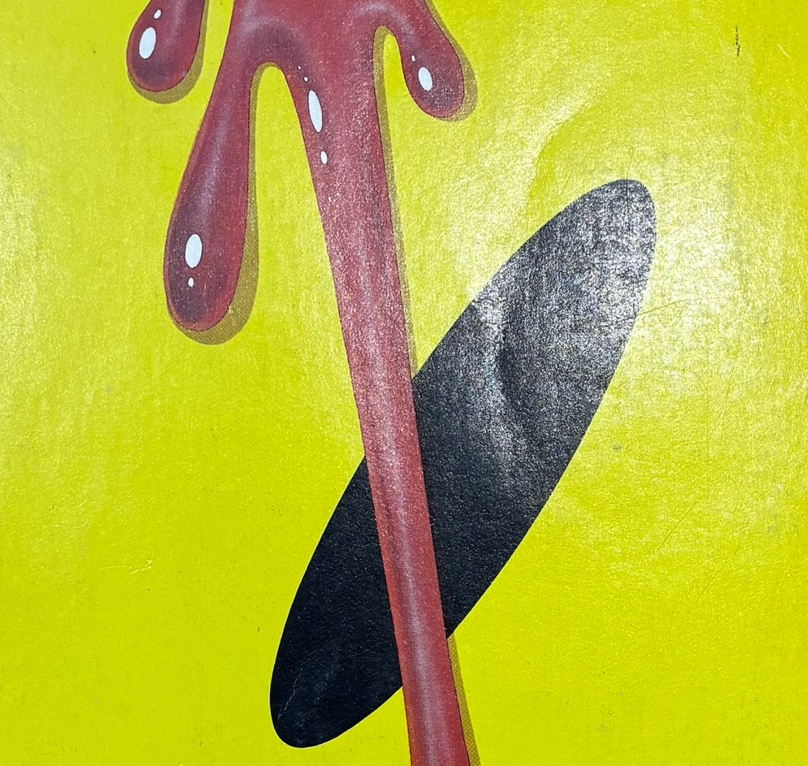
The trade is purposefully utilitarian. Softcover, matte pages. Firmly a comic, but handy, digestible, complete. No frills, not even an introduction. Just the entire contents of the book, of the world that Moore, Gibbons and Higgins created.
An instantly immersive beautiful object.
= 1 wtchmn.
ITEM
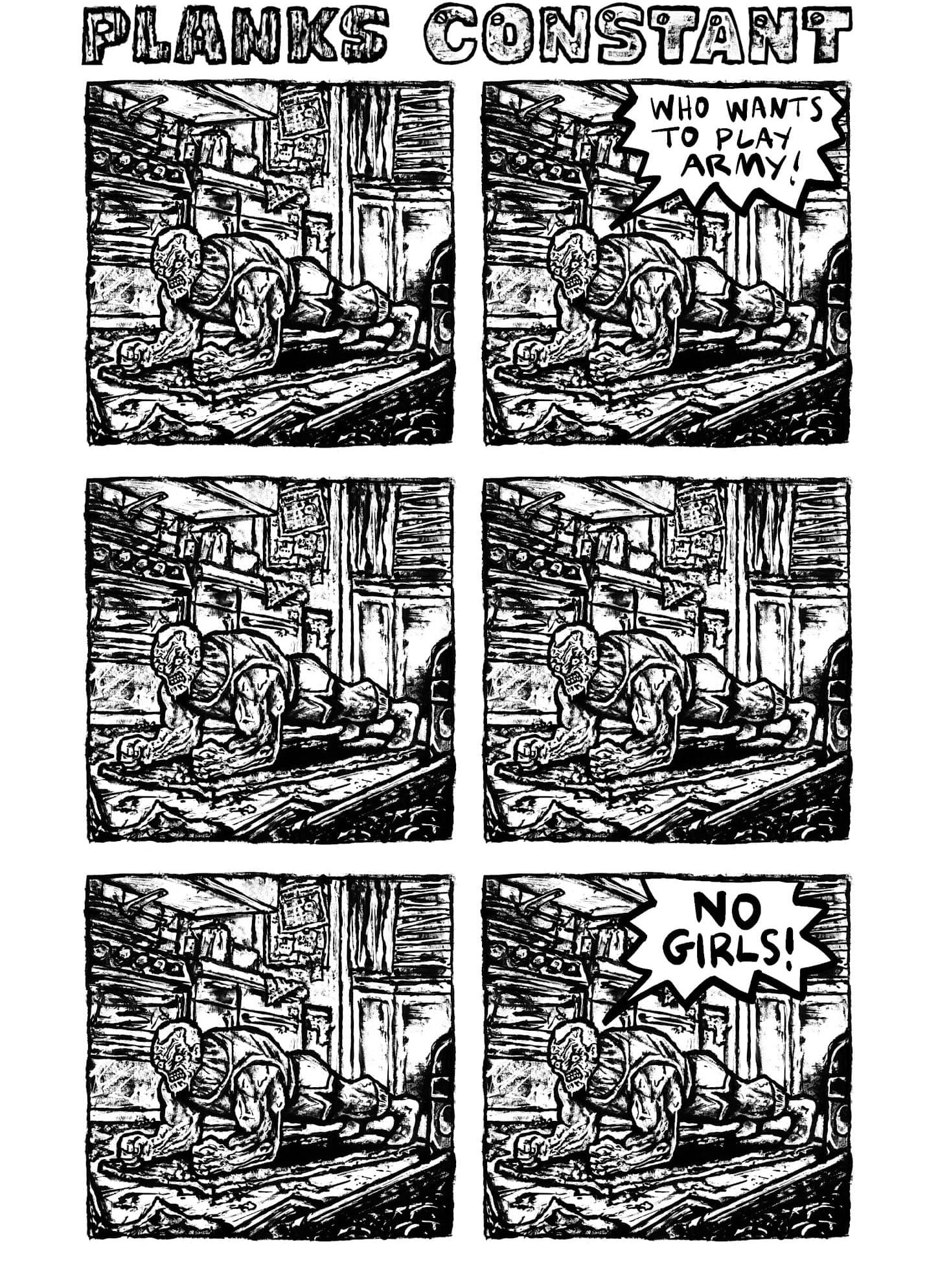
Planks Constant
ITEM
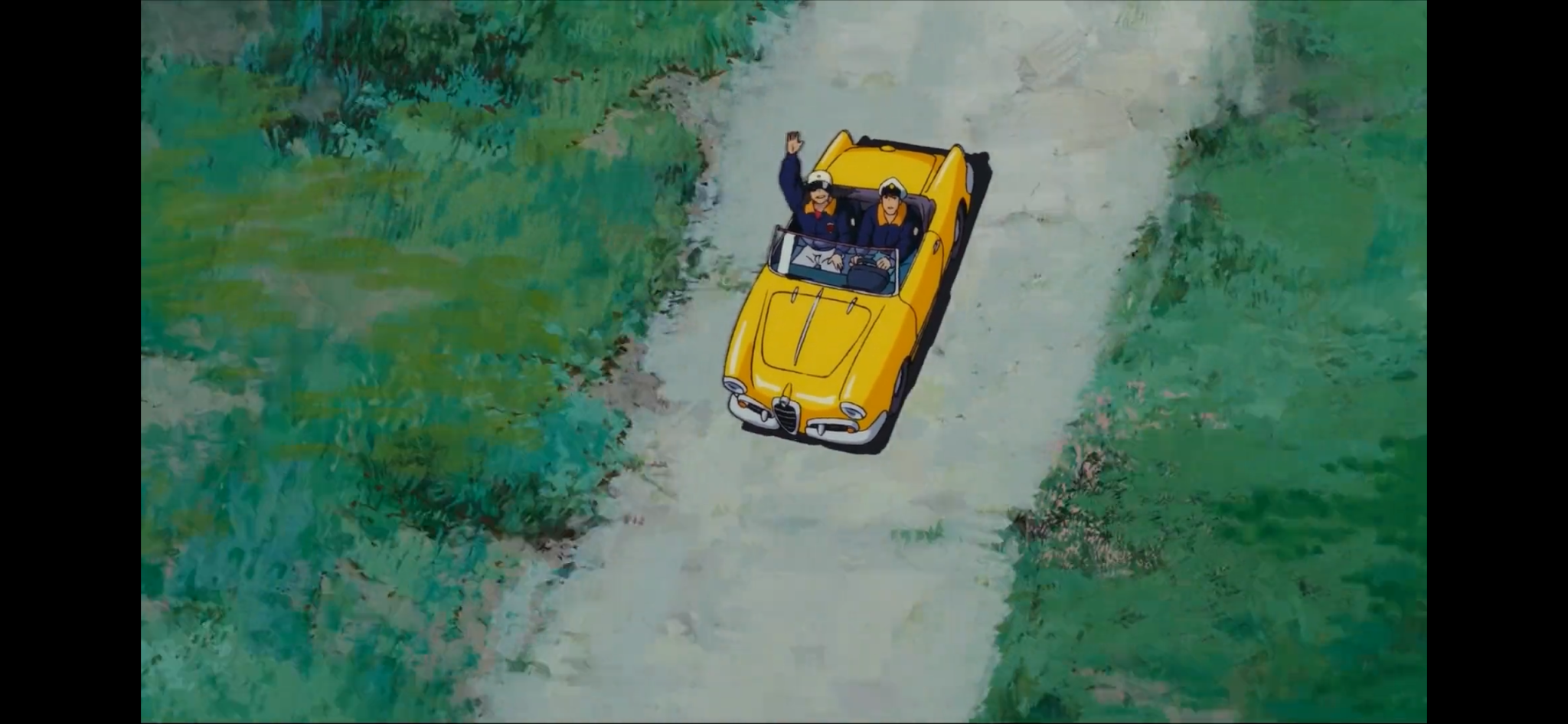
On Your Mark (Chage&Aska, Hayao Miyazaki, 1995)
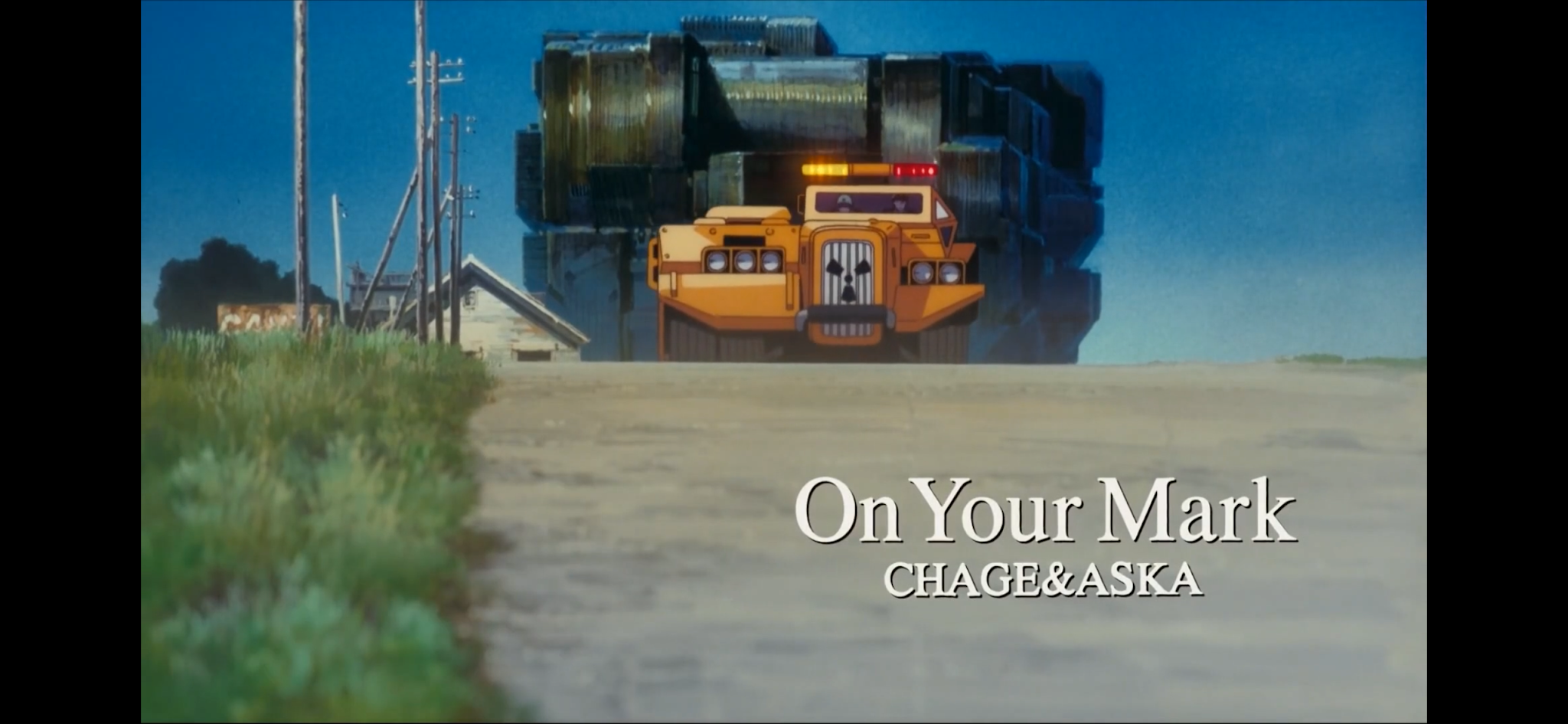
In the beginning there were cops and cultists. I didn’t have a side but I hadn’t been so hooked on cartoon violence since… what? Transformers The Movie the first time round? Or maybe Akira?
Big box sci-fi landscapes. Holes ripped into space. Unimaginable alloys shredding on impact. It can’t rain in here so why is it so wet oh yes that’s right those might still be tears.
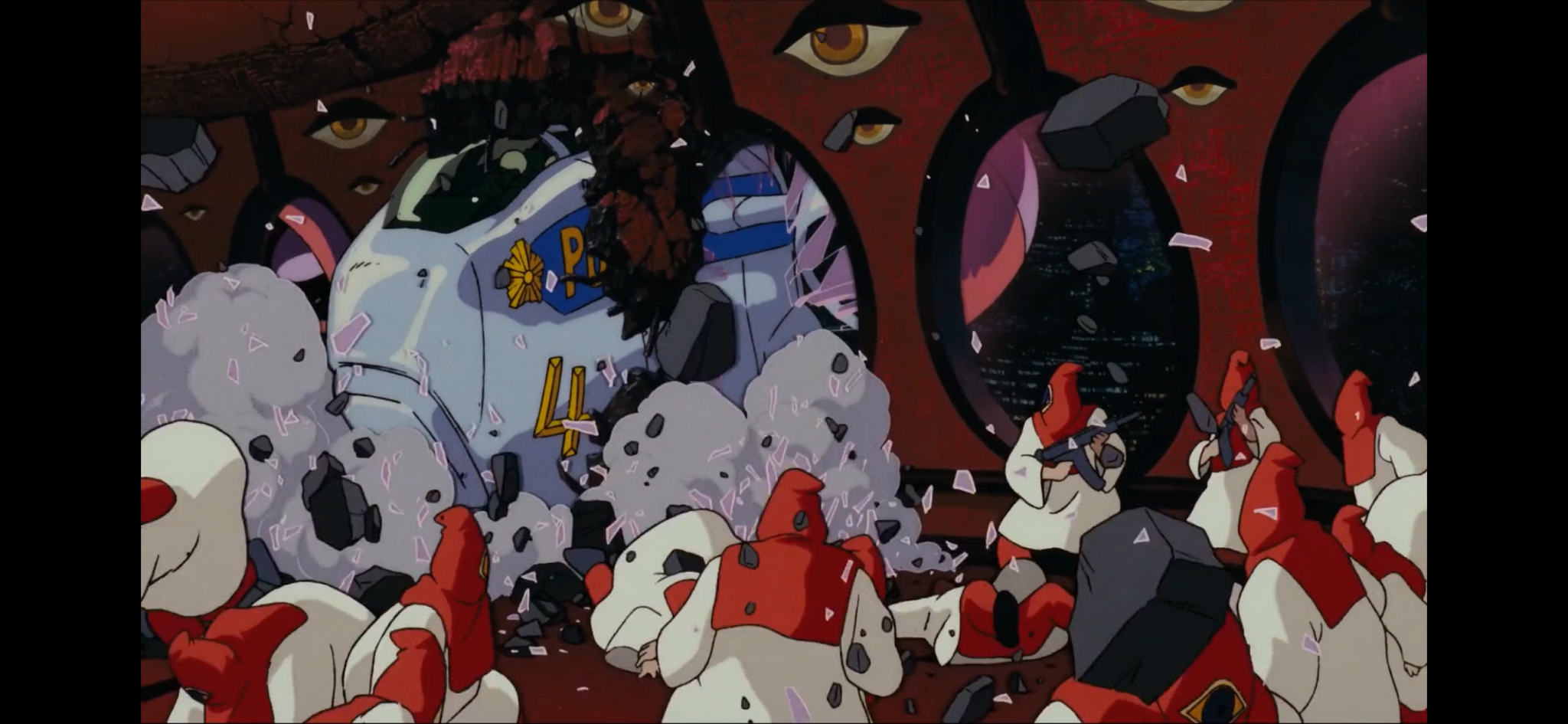
An exercise in endless unmasking follows. Not like a villain reveal in Scooby Do, not unless you’re really unlucky. More like shedding armour. I thought of those wee critters at the end of We3, having survived violence that outpaces our perception, finally exposed to the world, unprotected both from its violence and care.
No strength left but the faint remnants of their own, surgically excised from that of their previous owners.
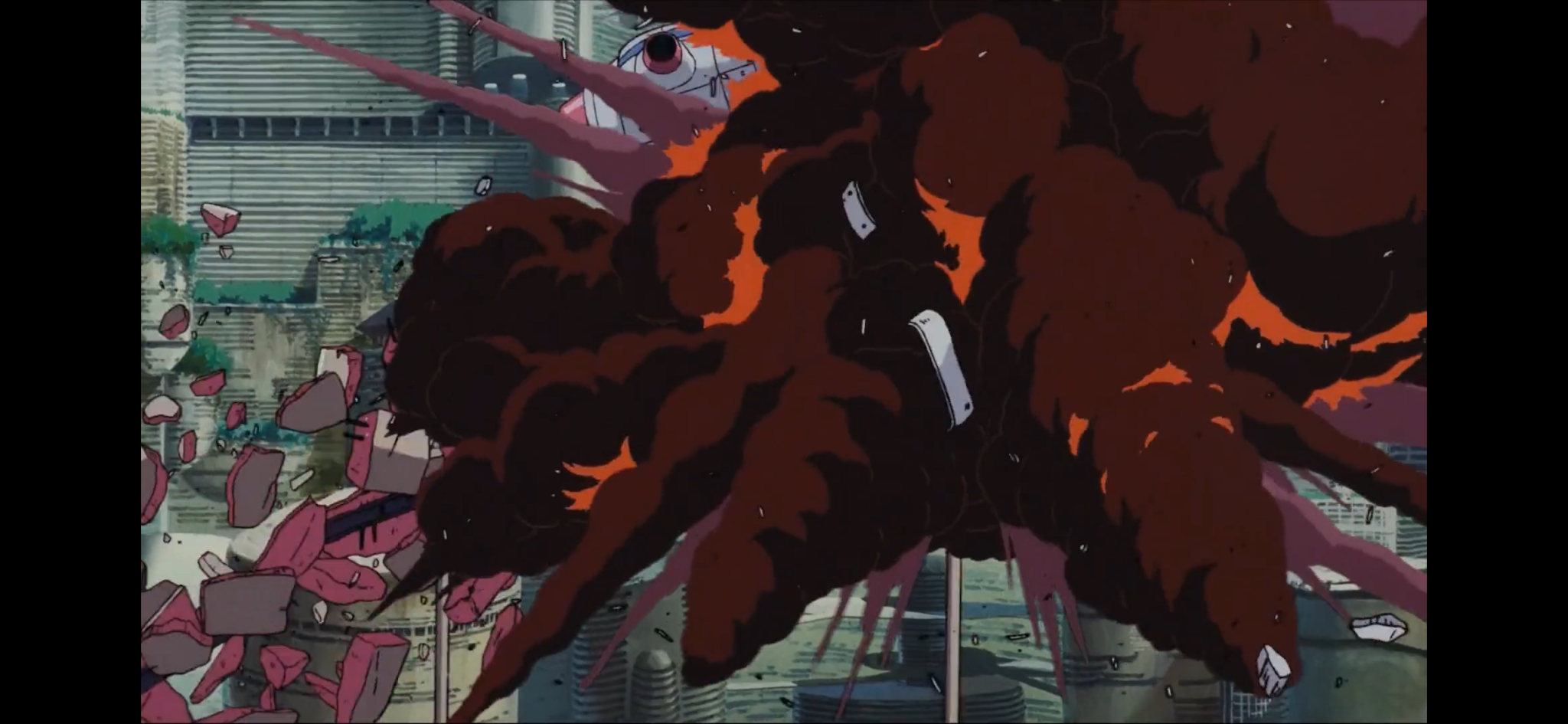
This isn’t without its perils. I recognise the boxed in shape and abandoned domestic landscapes. The radiation warnings. Hands still itchy from last week’s reading on mushroom production in Fukushima. Chernobyl as a cloud that never quite arrived or cleared in the long day of childhood memory.
I also recognise, as anyone who’s not a goonish accomplice will, the violent proficiency with which the system manufactures its inevitability.
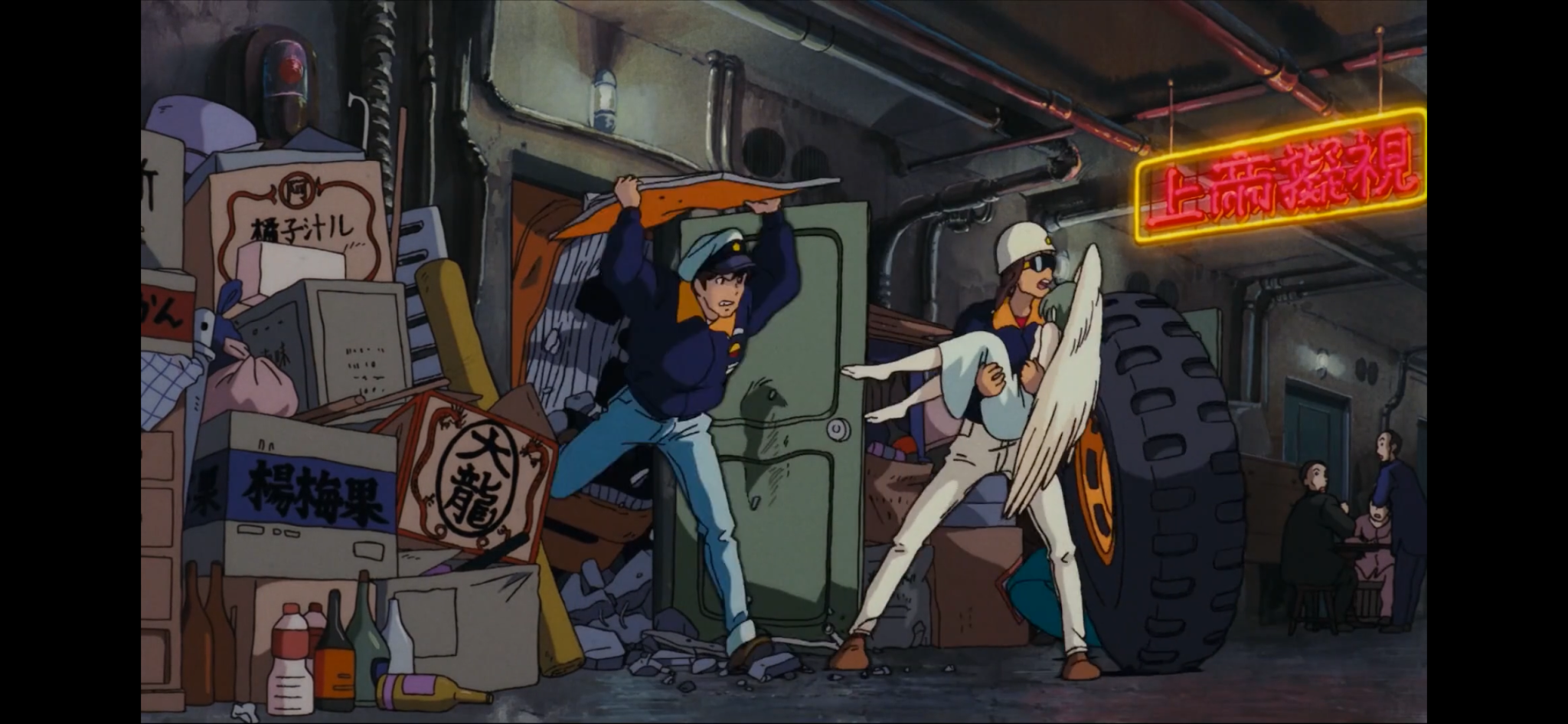
The repeated visions of rescue could read a little gendered, but perhaps they don’t need to - angelic bird person is its own category, anyone might hope to embody and rescue. What’s really striking is the transformation of the two lads from start to end. Protective gear shrugged off. Arms flapping not to save themselves but to demonstrate how someone else might. Risking it all for a hope they have no sure claim on.
The cops and cultists may well have imagined this to be their path but here, in the end, it finally feels like love.
ITEM
Stratospherics
Tell just one person that you liked this newsletter. Word of mouth, more than any other form of promotion, is how creative works get noticed and sustain themselves. Thank you very much for reading.
ITEM
Biohazards - Resident Evil (2026, Zach Cregger)
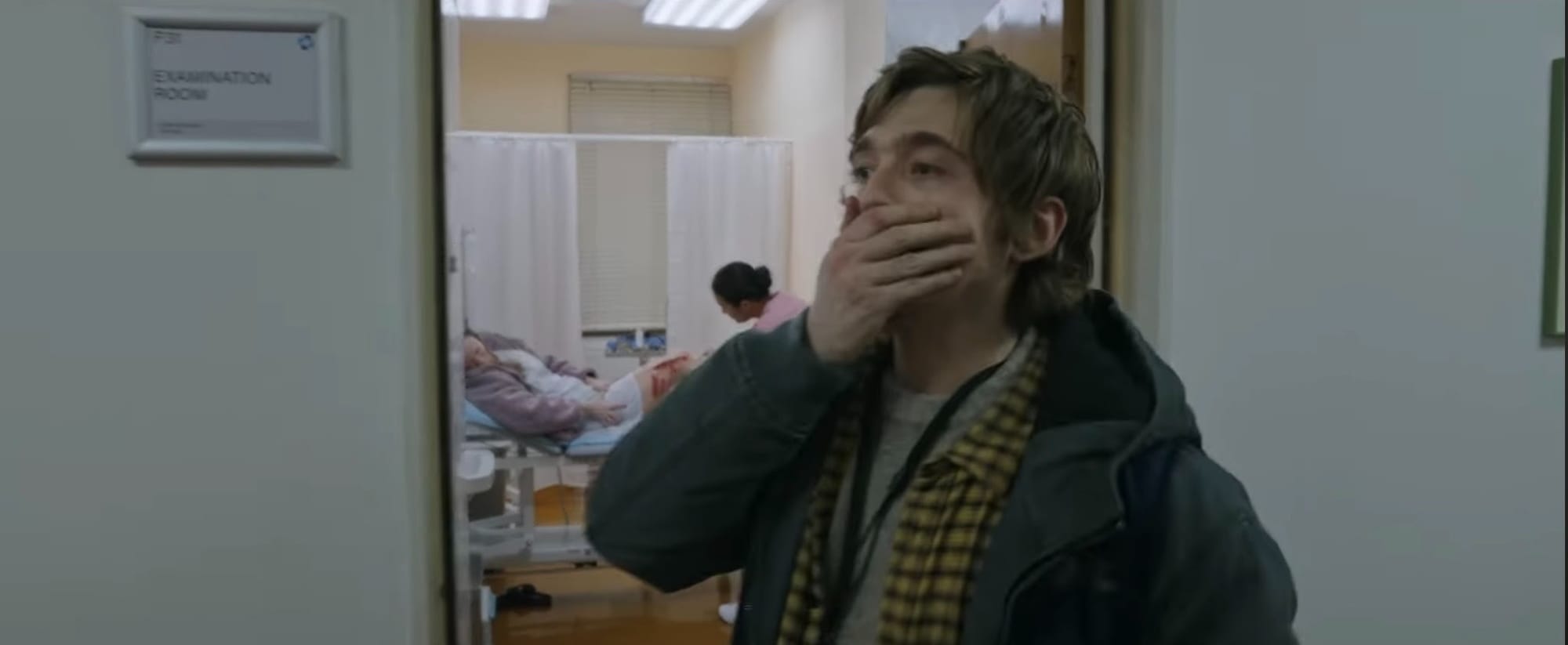
My lungs felt like they took a battering from COVID. Harder to go uphill. Chest infections had their way with me. Mentioned my concerns to a doctor on the phone as they tapped out an antibiotic prescription. ‘That’s just your age’. Diagnosed fucked and middle aged. Cough didn’t shift for weeks. The next doctor got to the bottom of it. Autoimmune disease in the lungs. A taste of organic betrayal. A dry run for that cold fear I’ve tried to steel myself since watching my dad get told the cancer was beyond treatment. Since watching him gasp his final words.
We left the cinema upbeat after watching Resident Evil. Thoughts of comic violence against the idiot Glesga da who couldn’t shut up during the screening, like he was watching the football, easing off.
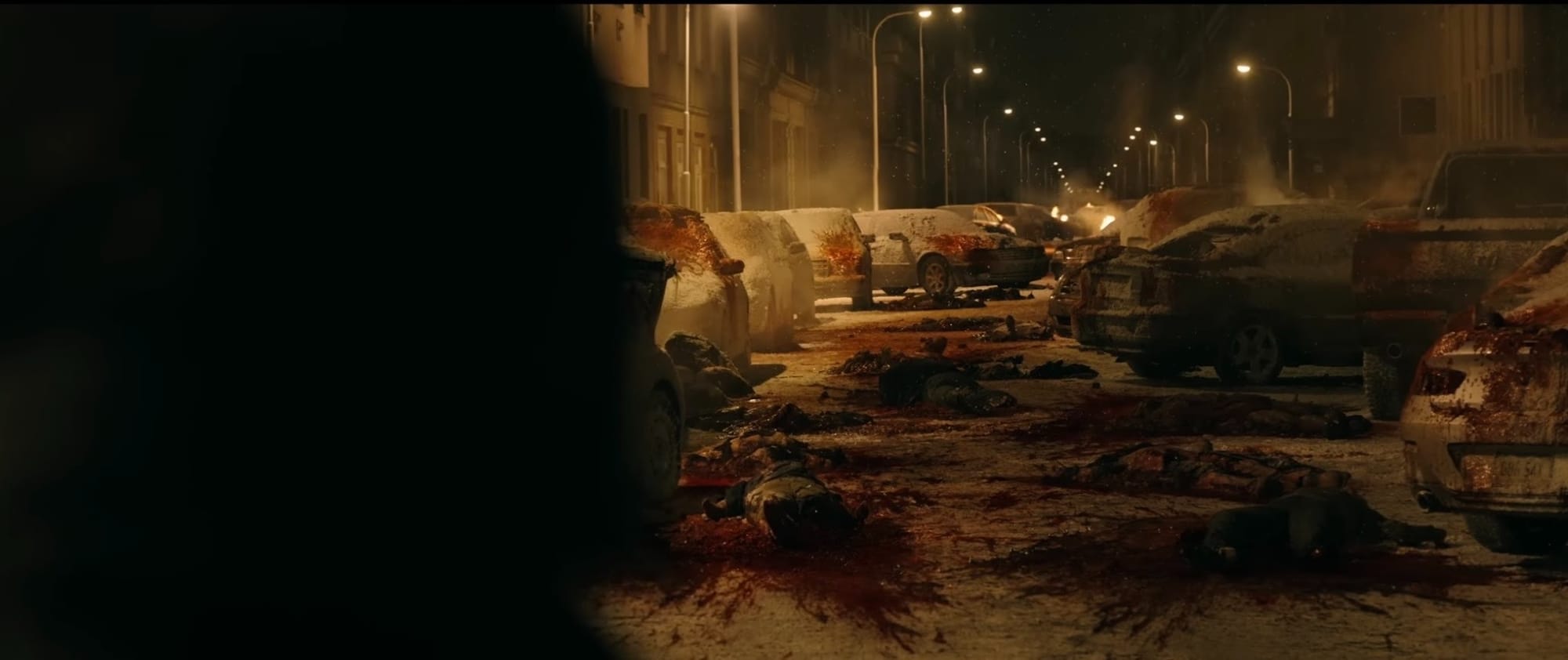
A Saturday night, filled with the threatening, hungry, masculine energy of young men prowling. A horrible feeling something was in the air, sparked by a shirtless guy pinning another one across the street from my flat before we went out. That worry about your own confidence and ability if something goes down. Deep down, a distrust of other men because you’re never sure when their own need to posture will trump harmony.
To misremember a quote, I’m only good with guns in video games.
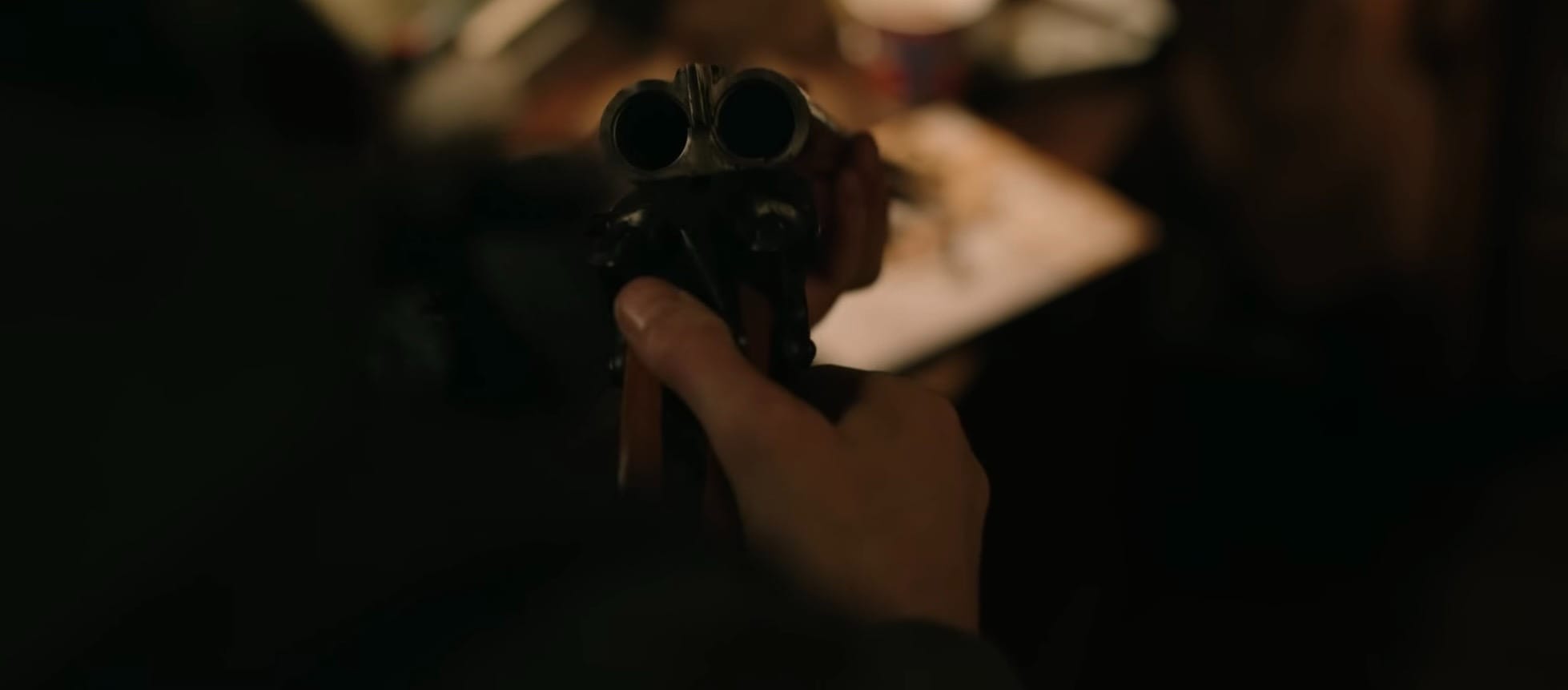
The relentless fun of Zach Cregger’s 2026 Resident Evil taps into specific anxieties for me. The lack of competence in a crisis. The navel gazing. Pleasingly, it turns these into scares and laughs, feeling like a lost gem that surely must have existed around the era of the good Blade films and Shaun and Dawn of the Dead.
We all like to think we’ll style it out in the face of life or the end of the world. Maybe it’s too late to fight the spread.
ITEM
Jigsaw (Val Guest, 1962)

Dixon of Dock Green goes to the seaside and investigates the murder of a pregnant young woman, cut into pieces, shoved in a trunk and dumped in the basement of the Saltdean rental her fancy man had set her up in. Quivering in that moment of pause before the fifties fade away and the sixties get into gear, the social dynamics of a new permissive England are hoving into view. A blanc coast of tally books, short term lets and randy vacuum cleaner salesmen falls under detective inspector Jack Warner’s steady, stolid gaze, eventually putting the pieces together thanks to his dashing assistant sergeant’s knowledge of bank holiday opening hours.
Brighton’s real-life trunk murders had happened a quarter of a century before, while the daytrippers were still trying to forget the last war and pretend the next one wasn’t coming. Chief suspect in the first, the finest abortionist in all King’s Cross, started naming names when cornered by Old bill, big names, so the investigation looked nervously the other way and shuffled off, case unclosed.
The killer in the second was picked up in a bedsit on Kemp Street, caught in a sweep looking for leads in the first, eating limp sandwiches off the lid of the trunk while fluids leaked into the floorboards. Got off at the Lewes Assizes thanks to the withering cross-examination of a later Nuremberg judge, then confessed on his death bed in the seventies. Sorry Violette.
The sea lies out of sight throughout, the melding of sky and horizon overpowering the camera’s capacity to process the reflective air, a flat backdrop strung up behind the law’s reach. From the chalky ridges above and to the west, the promenade barbers below, misty shoreside sealight evaporates inside the frame, bleaching everything an empty white. The smooth front surface of a tidal void come to swallow the policeman’s distinctions.