Like a long wagon train strung out along a road
Reading comics can damage your health. Cyberzone: Dizzy in the Backrooms. Park Life: The House in The Valley of Witches. Planks Constant. Convenience. The Return of Superman.
ITEM
Reading comics can damage your health

It’s a vivid memory. A gloomy November Saturday night with my mum, dad and brother in front of the telly. TV was good back then. Edge of Darkness. Max Headroom. Tutti Fruity. But I liked the straightforward stuff too, like Casualty. It was on that night - 8.15pm. Brenda Fricker’s nurse (Megan?) suspects child abuse when a woman brings in a badly bruised baby. Thankfully there’s a tender resolution. Looking back, it had Ken Loach vibes.
Then at five past nine, Hellblazer, a kind of horror detective show. Critics at the time, wrongly, dissed it as a low-budget British Angel Heart. After that, the news and then a film, Cat’s Eye - a Stephen King Twilight-zone style movie with a trio of dark tales.
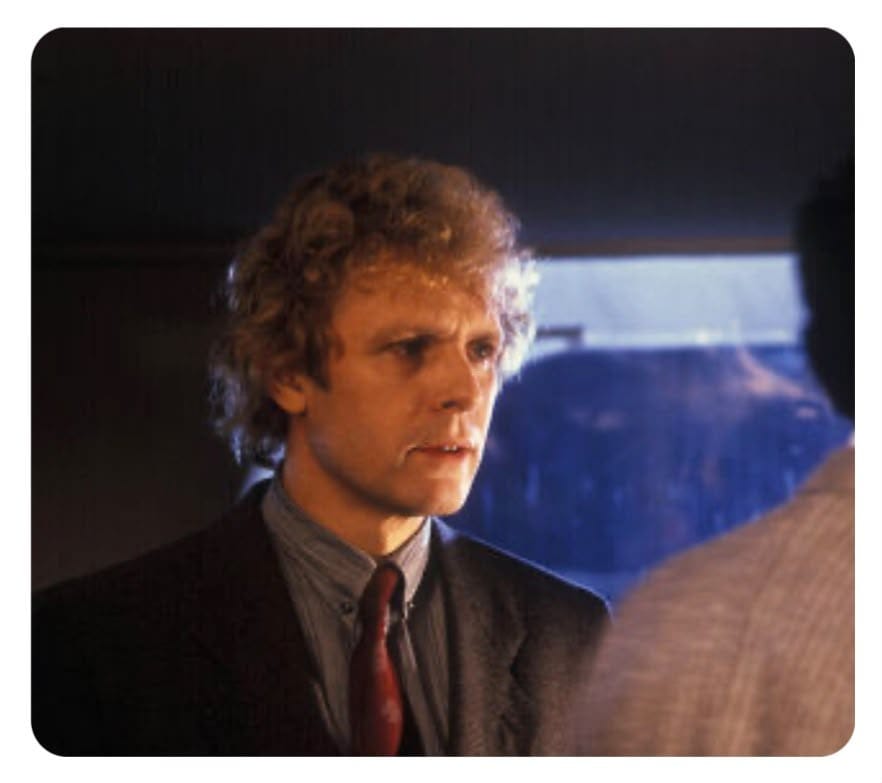
Hellblazer, with The The’s Heartland as its theme tune, was the standout. It had begun the week before with a feature length episode - The Hunger - written by Jamie Delano and directed by John Ridgeway. It starred David Hayman as John Constantine, a kind of cockney chaos magician. Hayman was incredible. In it, he defeats a ‘hunger demon’ wreaking havoc in New York by trapping it in the body of his junkie pal (who dies). Hayman’s Constantine is haunted by his actions, and so are we…but I, and most viewers, as Anne Robinson on Points of View confirmed, were somehow onside.
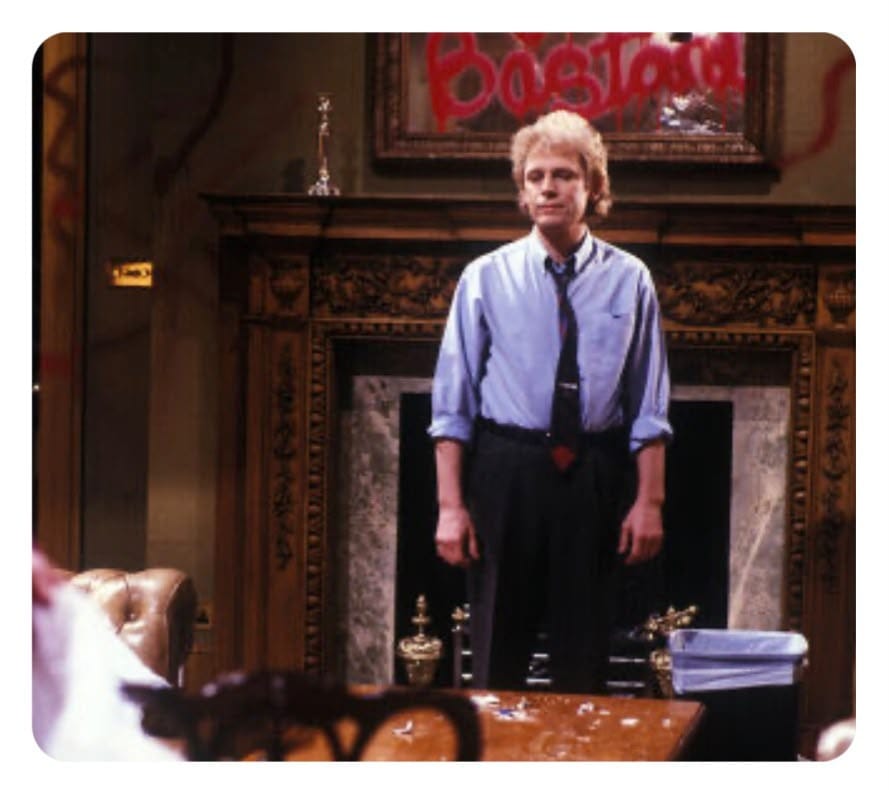
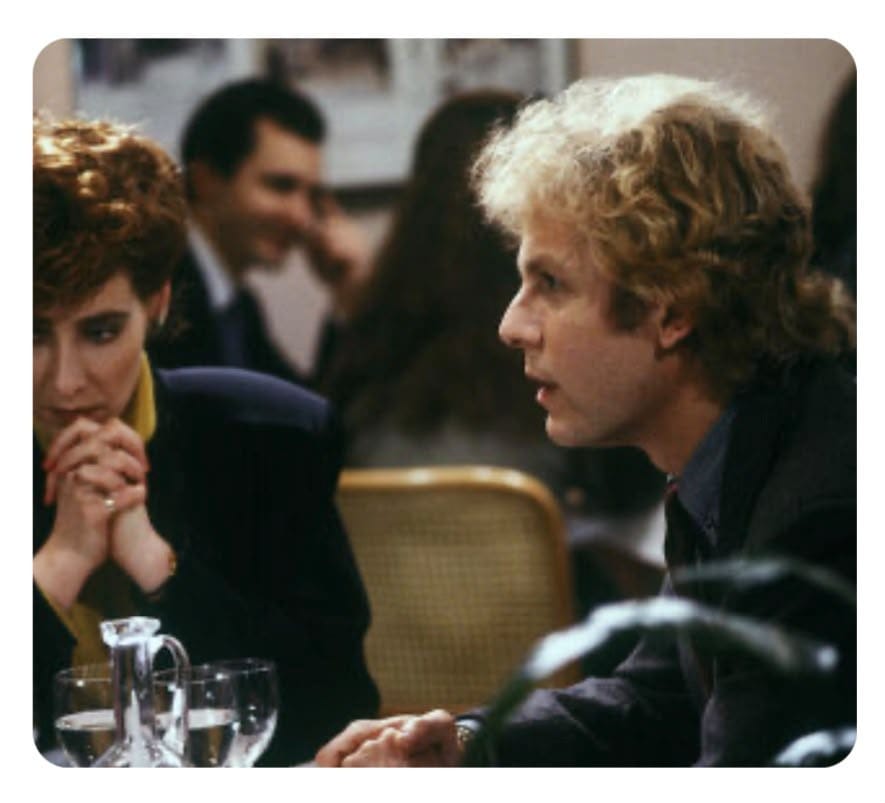
That night, though, something strange happened that turned out to be a masterstroke. Without any announcement, Hellblazer began with Constantine played by Paul Nicholas, the blond guy from Just Good Friends! The weird thing? He was actually better than Hayman and the episode - Nicholas duelling a Yuppie demon in London - was better too, despite no longer being on film stock, and looking more like Casualty. It was funnier, weirder, more British.
As I said, a vivid memory.
ITEM
Sophisticated suspense
Tell just one person that you liked this newsletter. Word of mouth, more than any other form of promotion, is how creative works get noticed and sustain themselves. Thank you very much for reading.
ITEM
CYBERZONE 2: Dizzy in the Backrooms
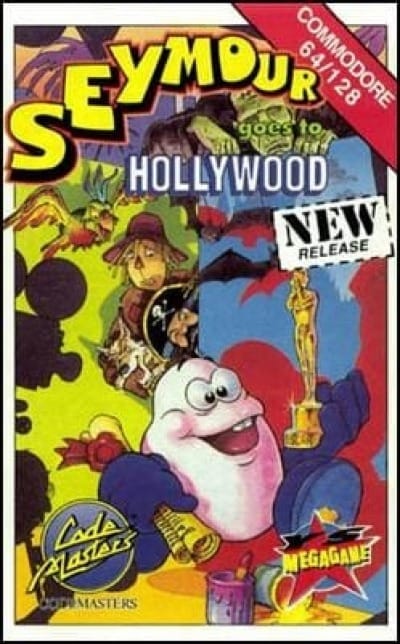
I wasn’t always with the home hardware curve. A friend still rocked his ZX Spectrum into the early nineties. Often in sharp contrast to the Amiga 500 wielded by another pal in the year above. My Atari 2600 owning self had no real relationship with the Dizzy games, so it was Seymour Goes to Hollywood that caught me. A game created for the Dizzy line, but forced to create a stand in when objections arose.
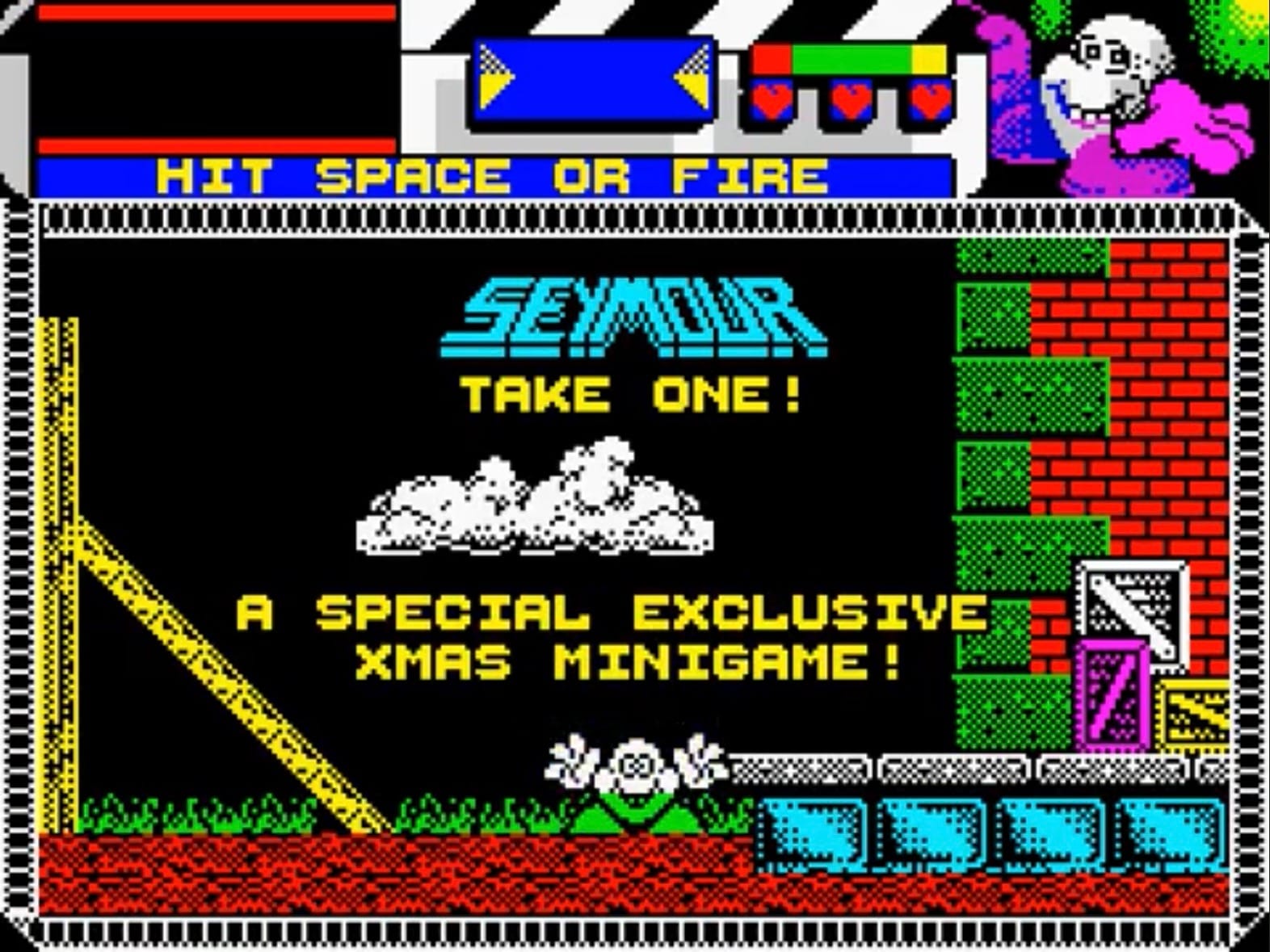
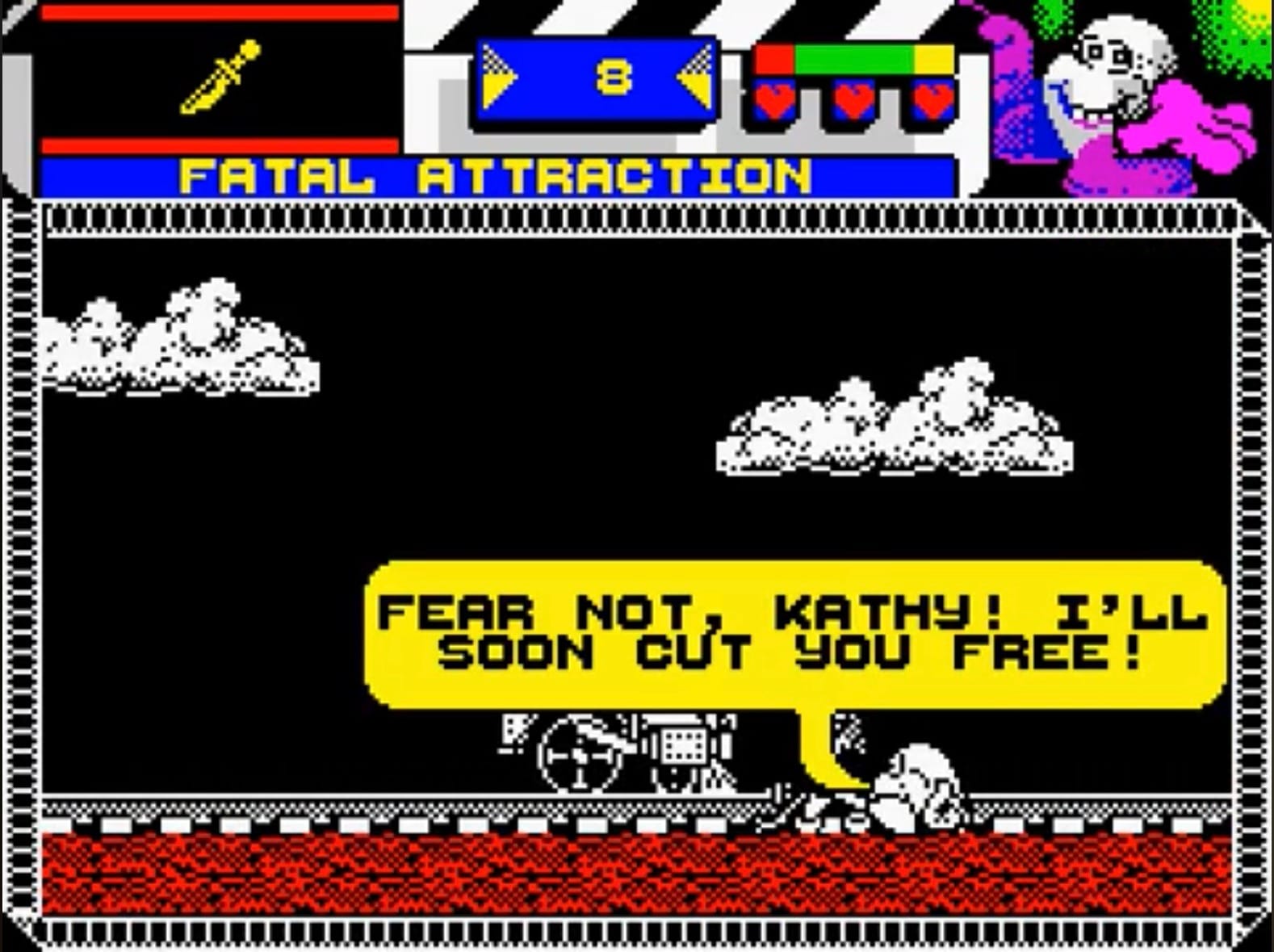
An introductory demo off a magazine cover tape, Seymour Take One, had the player set up a movie scene. You tied a damsel to railway tracks and acted it out the rescue for the rolling camera. You developed the film and watched your exact actions play out, even if you’d fucked it. Naturally, we started clearing the puzzles and goofing for the camera. The replay ability amused us.
When Goes to Hollywood dropped, it featured a typically cruel Dizzy style completion task. Hidden throughout the backlot locations were awards. You find a pile of scripts and must hand every character in the game a copy and an award. Never finished it. Think a jump in the Frankenstein lab done us on a return visit during a big session where we locked in with a magazine guiding us.
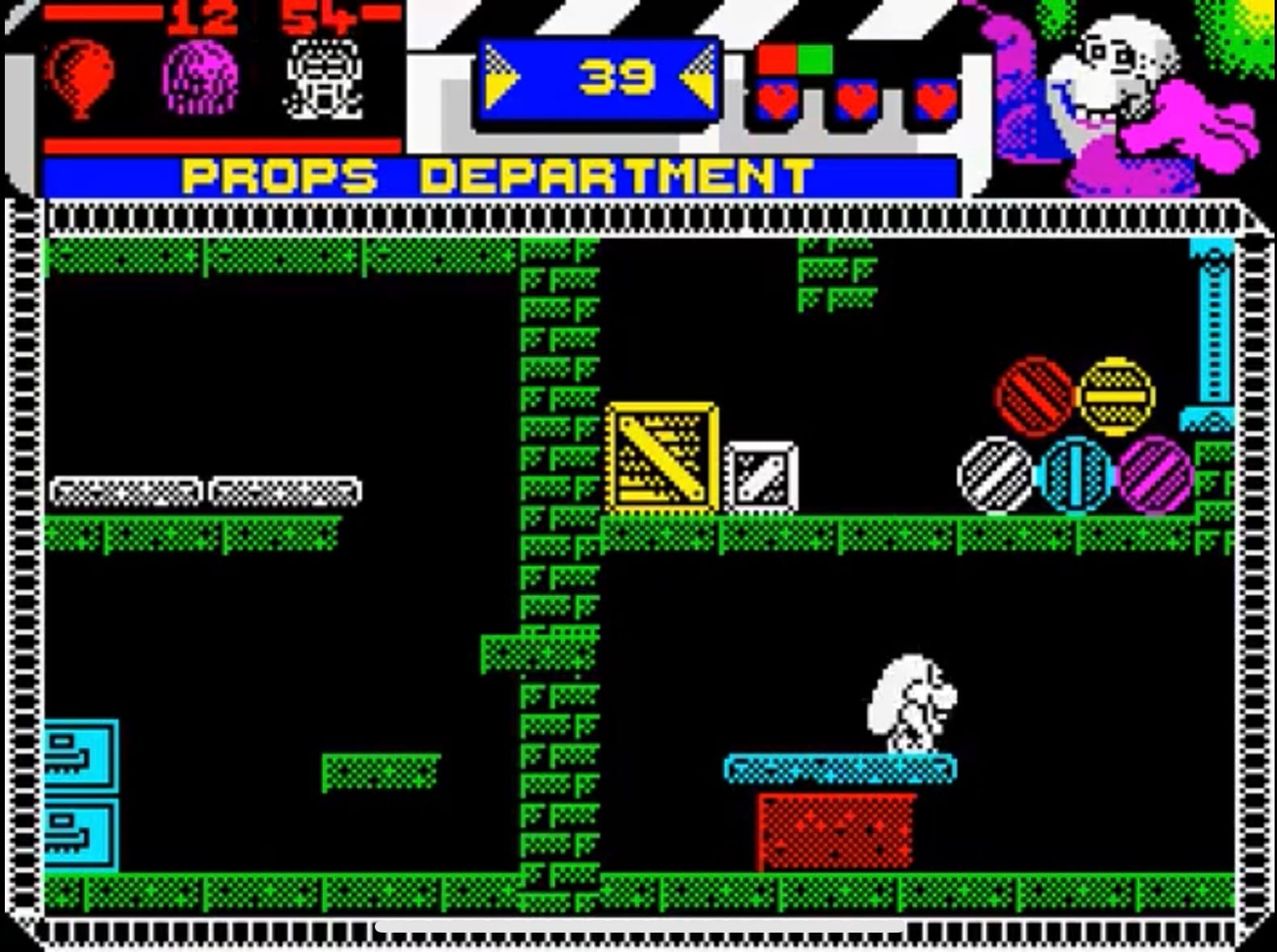
There was a small room labelled the Props Department, accessible via a long corridor, giving it a secret feel. My friend and I attached some significance to it. Like it was a den we’d assembled, in an odd corner of our housing estate, with wood nicked from the project to upgrade all the tenements flat roofs. We’d pile the awards there, but occasionally just head there to chill. Old games felt almost infinite, with our limited hangout time given over to them intensely, but so few finished.
ITEM
Park Life #2: The House in The Valley of Witches
In place of stacked loops and splash zones, Ghibli Park offers immersion without interruption. In Ghibli’s Grand Warehouse this takes the form of large replicas of Ghibli characters alongside a collection of posters and memorabilia. Elsewhere in the park the approach is more ambitious, involving the translation of 2D spaces into walkable environments.
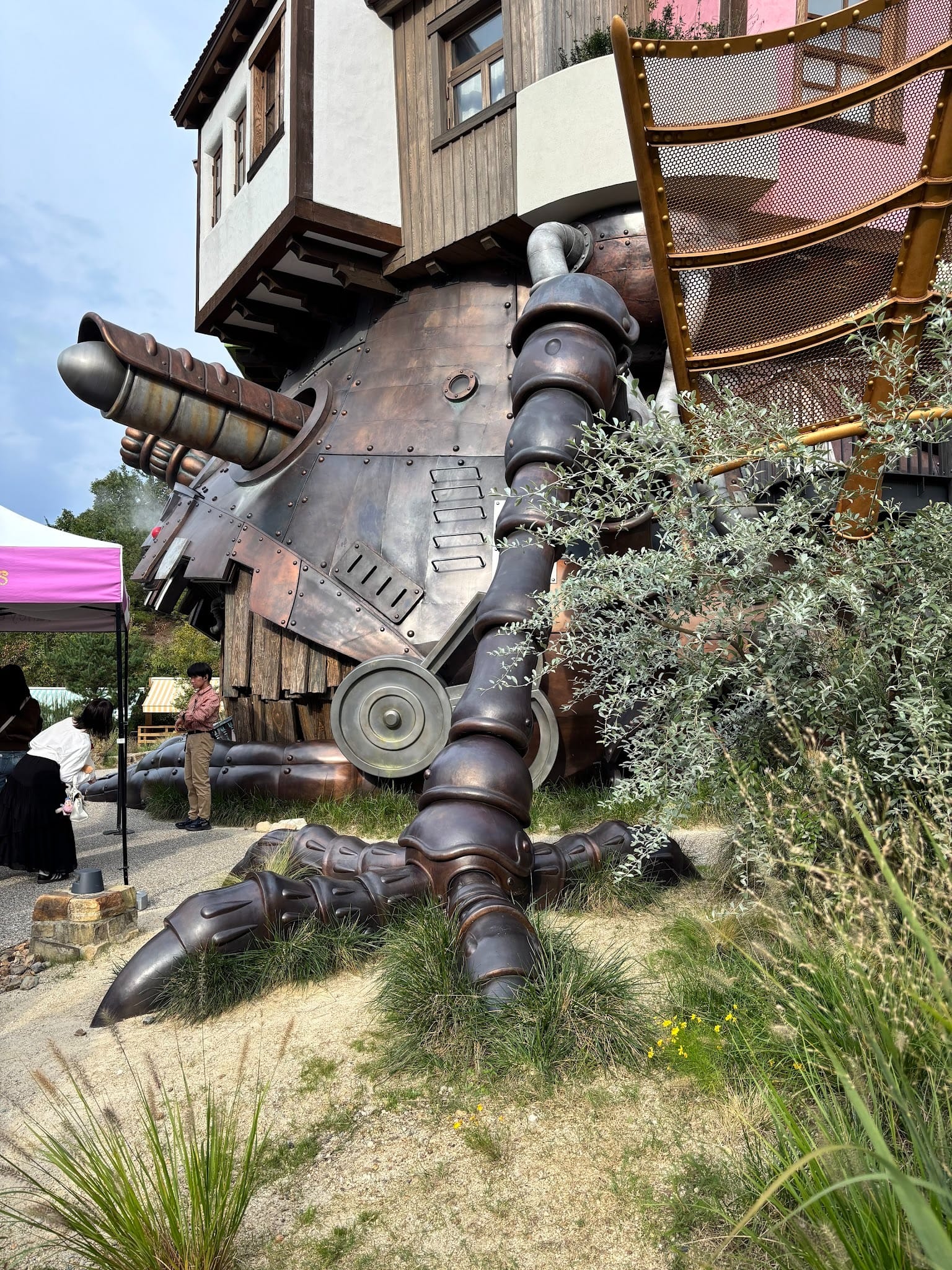
This may sound like folly but the effect of going into the Okino Residence is a shock, confirming sensory experiences you may not even have been aware of. Here, the smell of flowers; there, a certain slant of light in the bedroom corner. Once you’ve spent enough time in the verdant stillness of the park itself you realise how the trick is done: in order to translate these environments into three dimensions, they’ve removed another one: time.

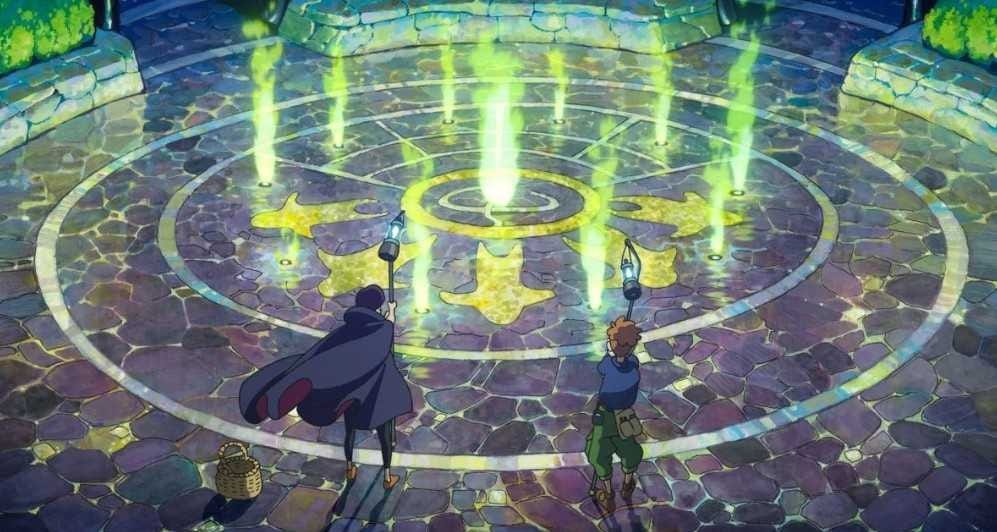
Directed by Akihiko Yamashita and Goro Miyazaki, Night the Valley of Witches (2026) depicts a young Ghibli Park worker struggling to wrangle and maintain buildings from the Park after they come to life. It’s a re-enchantment of the material in which e.g. Guchopiknya Bakery and Howl’s Moving Castle briefly remember the thrill of chronological motion.
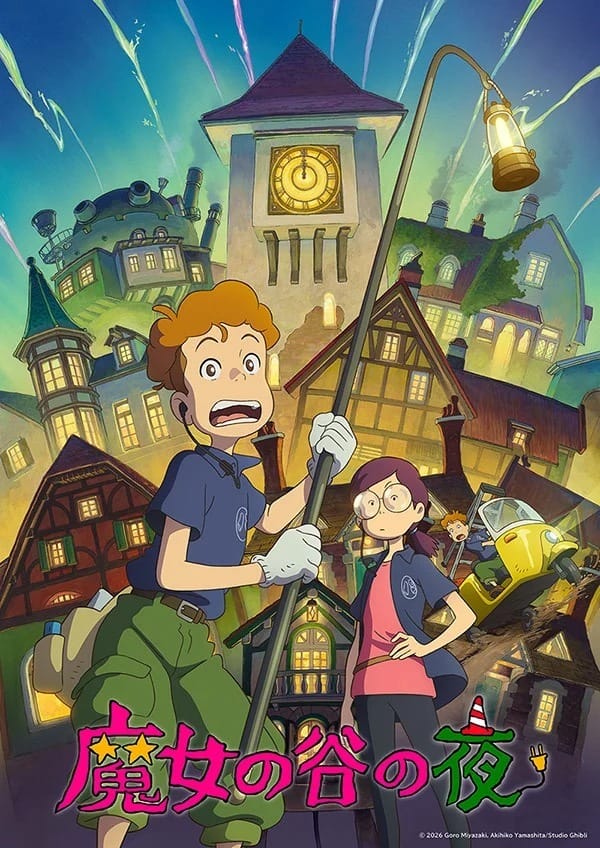
As always with Goro the struggle with Miyazaki senior is less subtext than text, but it’s worth noting the light tone here. These buildings are full of mischief but don’t want to cause any harm and ultimately seem happy to settle back into posterity.
Ghibli Park is largely a tribute to the works of Goro’s dad but it makes room for other artists. Whisper of the Heart has its own area, and Goro’s worst movie, Earwig and The Witch, has a whole building dedicated to it.
There, saved from the need to compete with other moving images, Earwig seems fit to hold all of the magic and mischief it lacks when you hit play.
ITEM
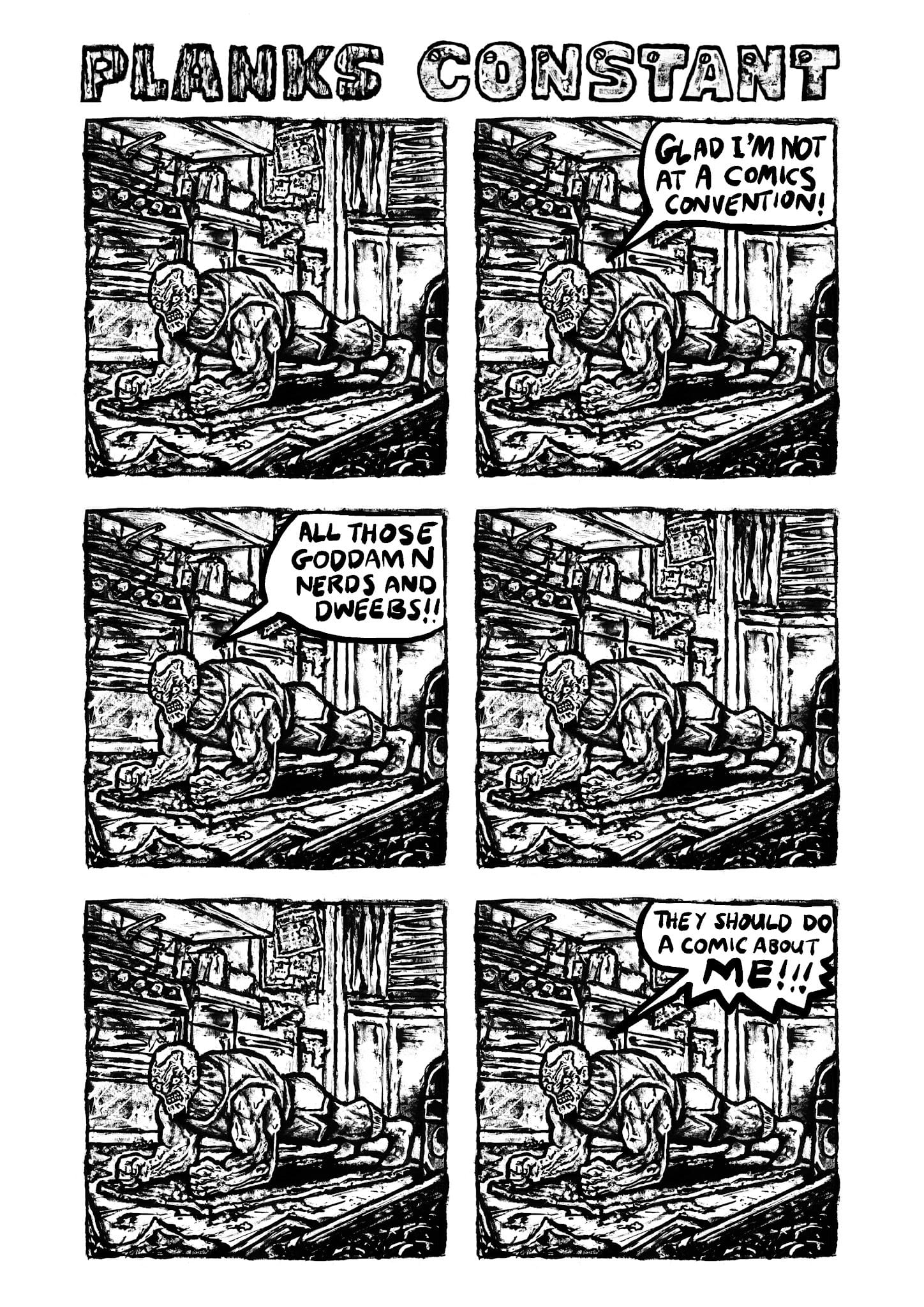
Planks Constant
ITEM
Convenience
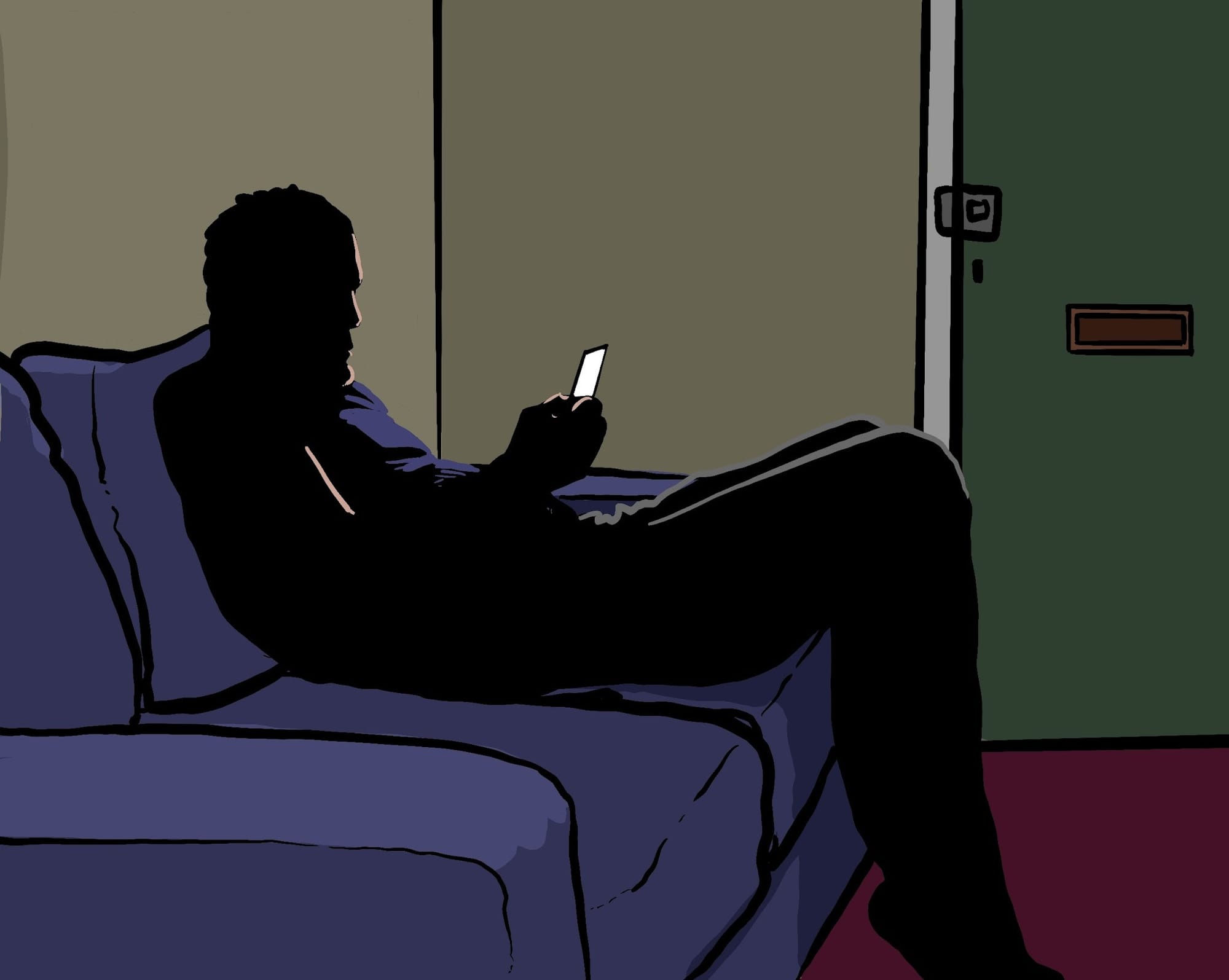
After searching, selecting privacy settings and finding and selecting thing, decide to buy thing. Specify what size and colour of thing. Decline suggested additional purchases. Register with site. Go to email. Confirm email. Close tab to keep browser tidy. Agree to terms and conditions. Enter card details. Enter billing address. Agree to more terms and conditions. Enter pin on banking app. Confirm purchase on banking app. Goes back to purchasing website automatically which is an incredible relief. For some reason decide to check terms and conditions but give up. Agree to terms and conditions but forget to opt out of contact via text and email. Begin to enter delivery address. Select slightly wrong address. Work out how to edit then edit selected address. Enter phone number. Confirm order. Receive email order confirmation.
Time passes.
Receive shipping confirmation on email.
Time passes.
Receive "out for delivery" notice as text. Receive "out for delivery" notice as email. Click on "track your package" Asked to enter tracking number. Copy and paste tracking number. Gain nothing useful from tracking information.
Time passes.
Receive delivery confirmation text. Receive delivery confirmation email. Open email and see photo of package. Find package near home. Open package and now have thing.
Time passes.
Ignore email asking if thing was okay. Ignore email asking if delivery of thing was okay.
Time passes.
Ignore email suggesting other things to purchase. Ignore text suggesting other things to purchase.
Time Passes.
Knock at door. Man at door. Man asks as to quality of thing. Confirm quality of thing. Man enquires as to satisfaction with buying experience. Confirm satisfaction and make up lie about busyness. Man asks opinion about delivery. Express displeasure and begin to close door. Man walks into home. Man is very strong.
ITEM
The Return of Superman (DC Comics, 1993)
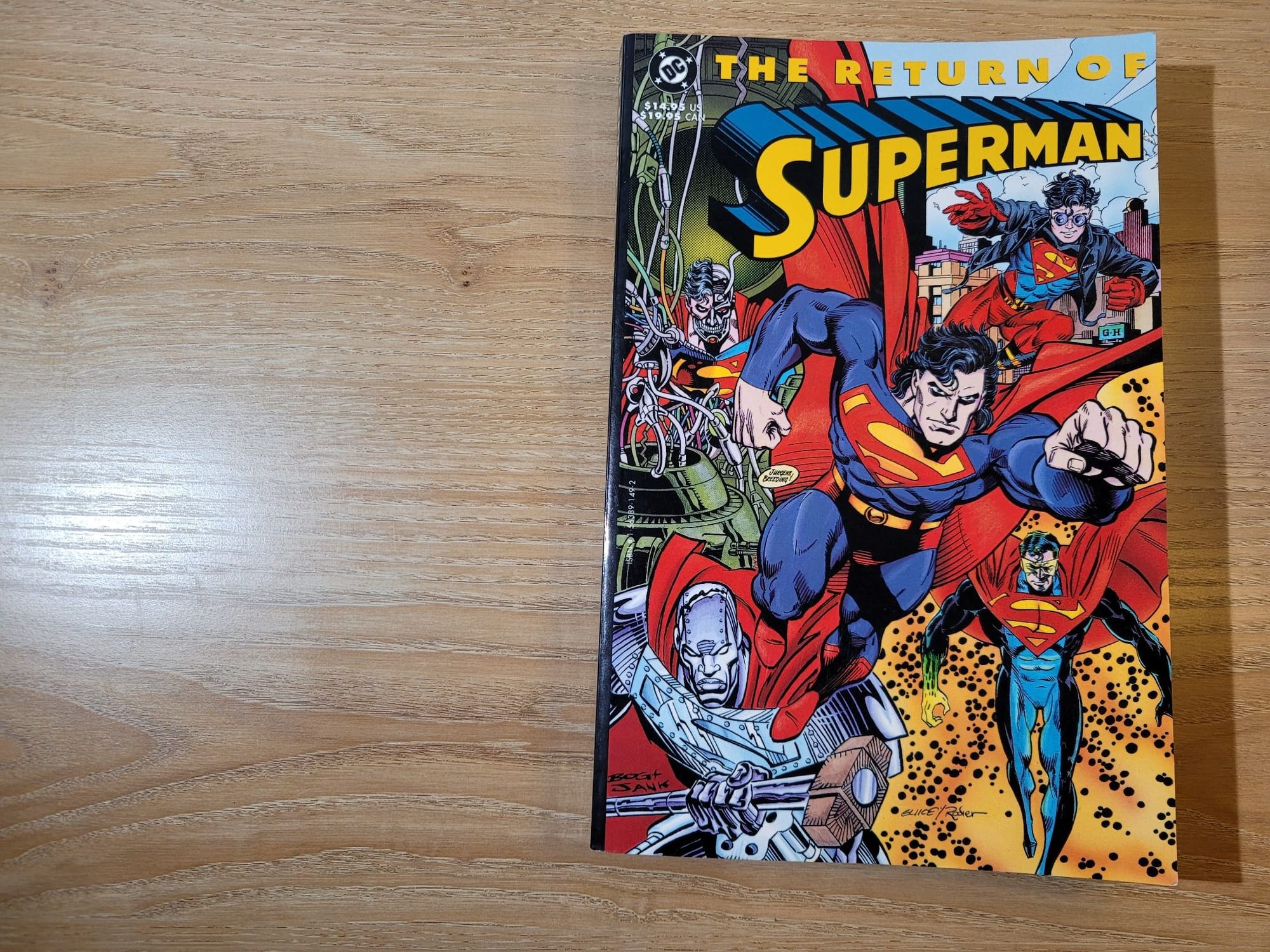
It all happens in the same week, eleven months after Fukuyama publishes The End of History and The Last Man. The Meaning of the Earth dies on the 18th of November 1992.
The skies of the Eastern seaboard, his great blue playroom, share a suitably complex grief, cycling from a bright, grateful clarity over Delaware to a damp, chilly depression in New York City. In the Kansas flatlands, his home, the response is less equivocal. A record-breaking blanket of snow lands scant days after he heaves his last breath, laying dense and unmoved til the March thaw, defying the traditional shade of mourning for months of white, remorseless glare.
In Las Vegas, a place he naturally hated, his replacements are being assembled. COMDEX ‘92 showcases the runway for the emerging field of bioinformatics: the peer-to-peer networking and high-speed data transfer (1.544MBps) that make the Human Genome project possible. Virtuality and vertical tech integration are revealed to the public in the form of holographic workstation prototypes and gen-zero smartphones, telling a future of frictionless electrical spaces, hardskin alloyed people and tech-enabled abstractions that think they are human.
Clinton wins the election, freeing the empire to shed its Cold War stance. Great passions, heroic struggles, and higher ideals lie broken and abandoned on the shattered streets of the mother-city. If man was born to bridge the abyss of nihil, and the overman was history’s destination, the country beyond his extinction is mapped by the four twisted archons that battle to become his new face. A metal jigsaw and a clone child with plastic hands. A man who understands the taste of bitterness and the secret meaning of steel. An alien supercomputer that knows everything that ever happened, and what none of it meant.
Their simultaneous presence in spacetime creates a hole for the superman to return through, but he is powerless now, impossible to describe or even think about without reference to a world that has ceased to exist. The angels of the new world disappear, digested into the narrative, but are never overcome.