No sign of our quarry but what bare rock can tell
Andrew & Steven. Ana Mendieta and Elvia Wilk. Planks Constant. The Diary of Ethan Zachary, September 1986. Ghosts of Stone. The Damned Aesthetic. The Horned God Part Three: The Goddess loves Slough Feg. Mis-Shapes. Hell Drivers.
ITEM
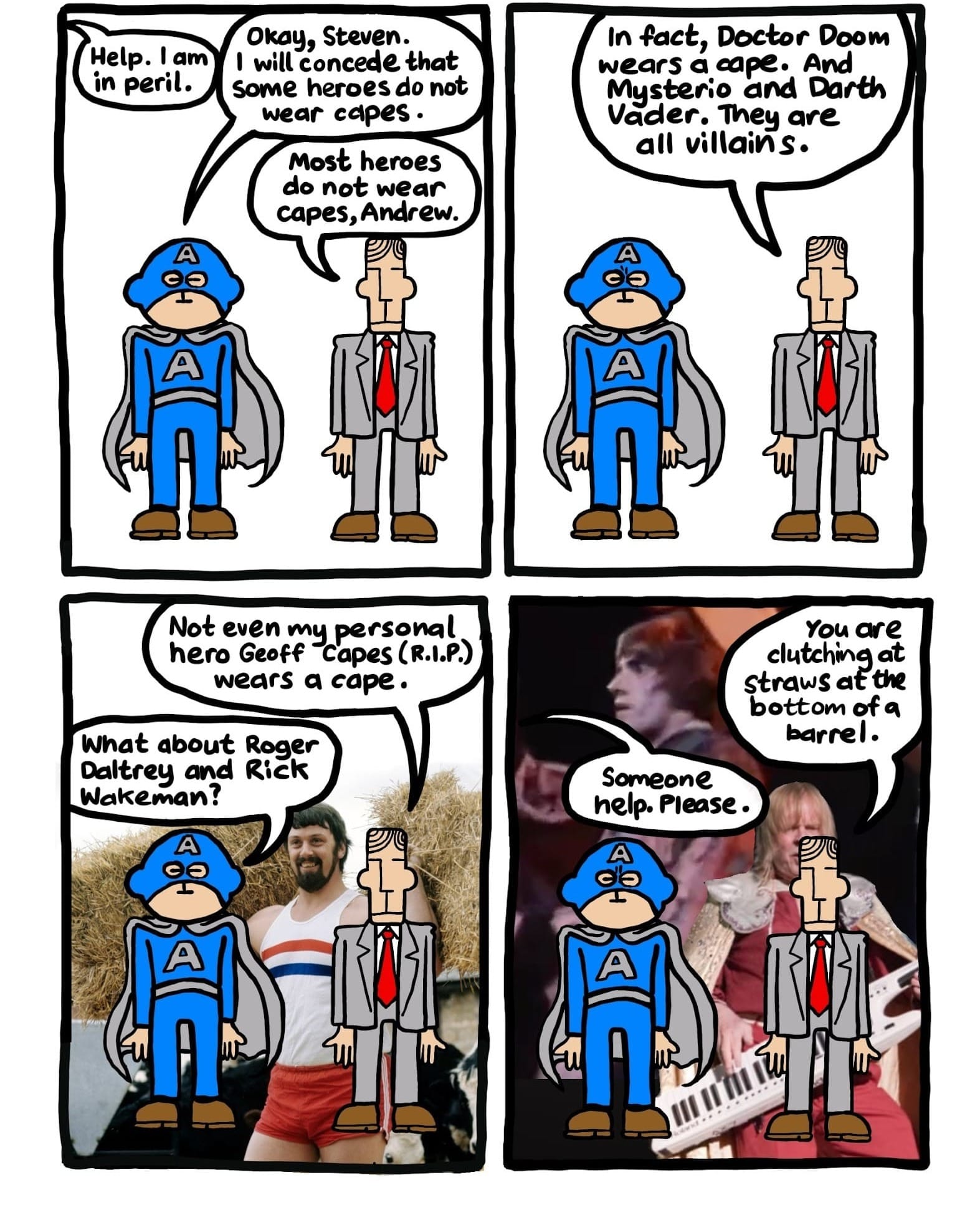
Andrew and Steven, Those Amusing Brothers in We Could Be Heroes Part 2
And so continues this multi-part journey into heroism that is setting the world on fire.
ITEM
The fall
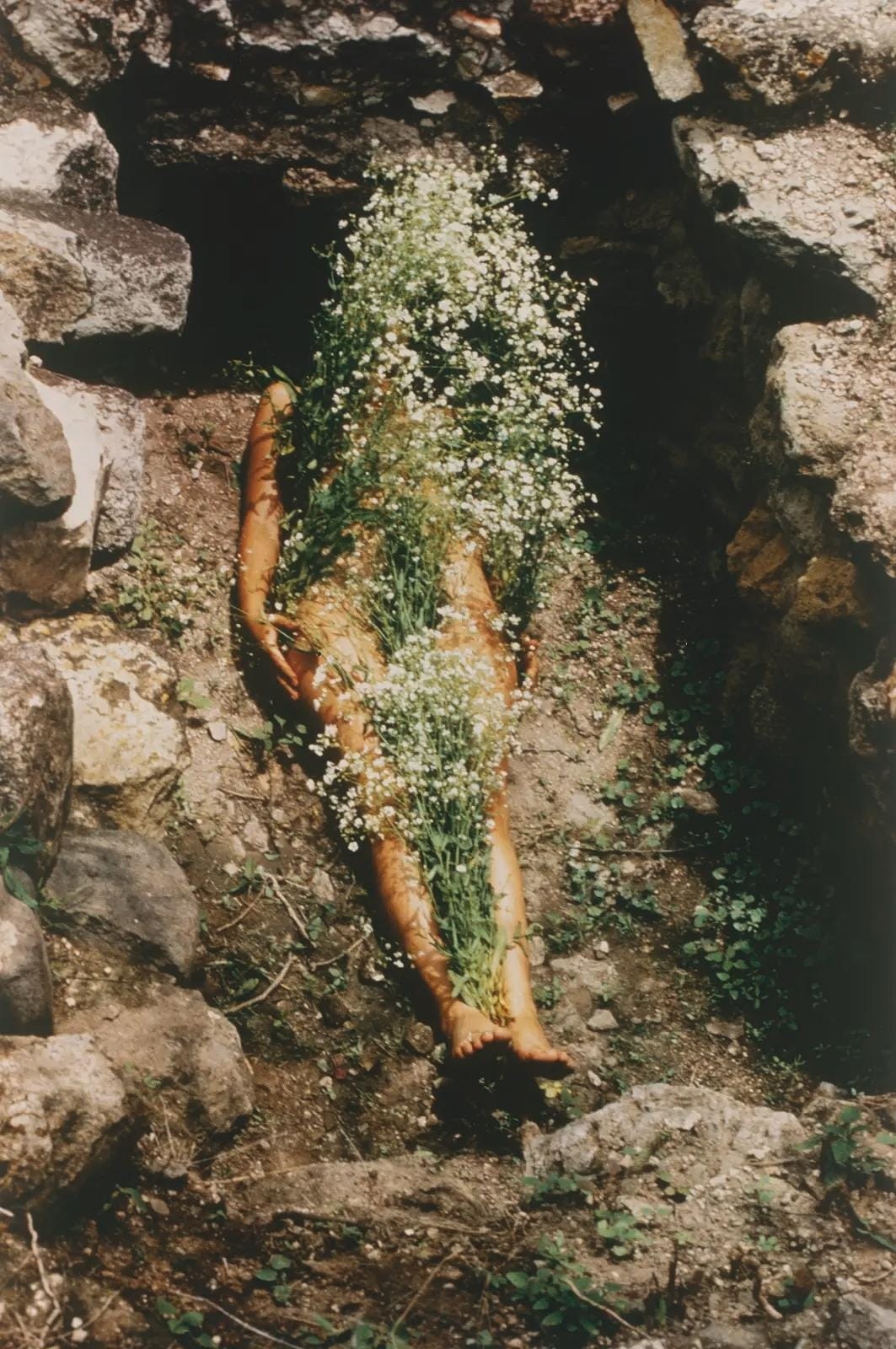
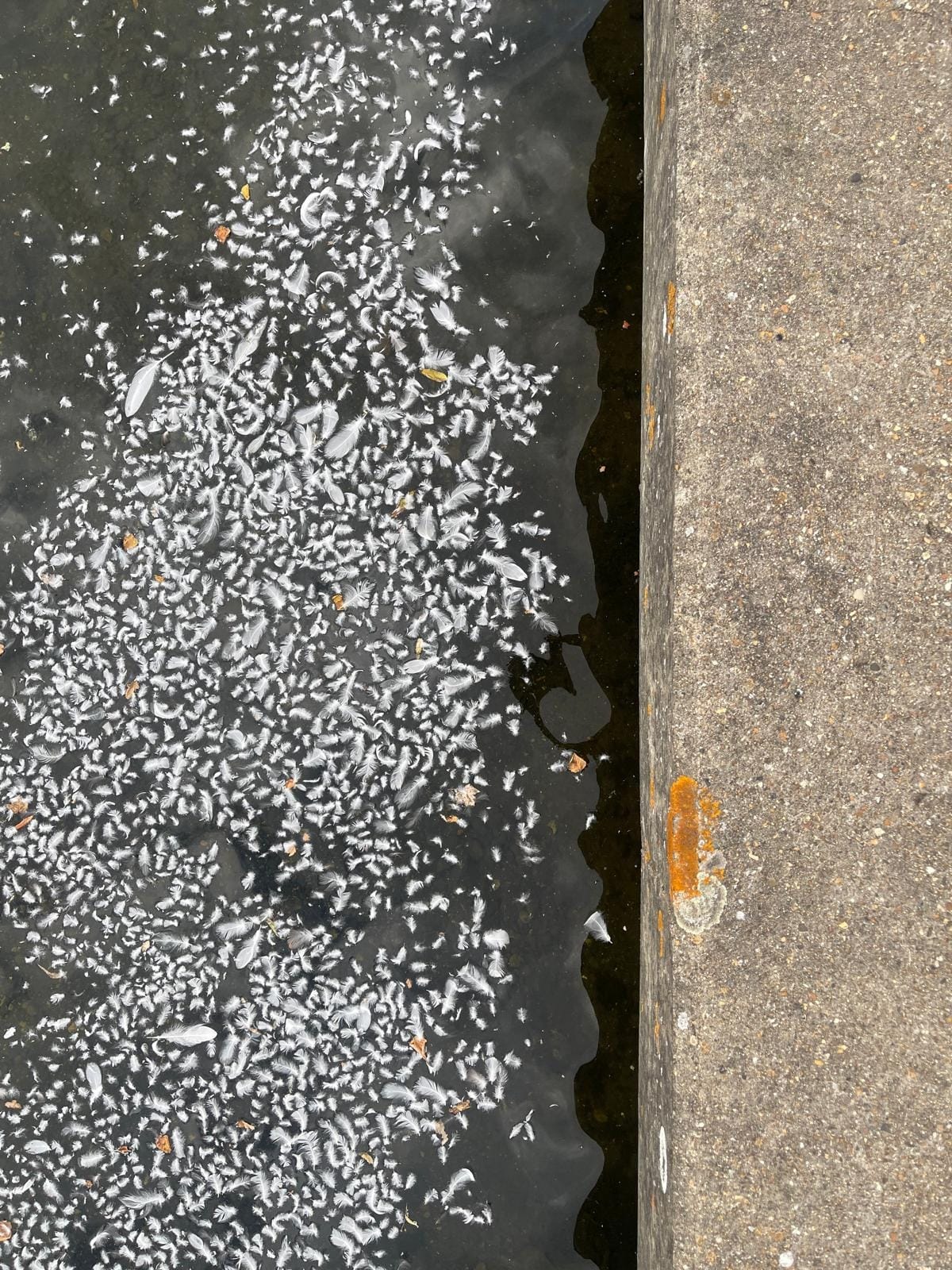
I’ve been thinking about Ana Mendieta’s Tate show, and a connection with Elvia Wilk’s essay Death by Landscape. Mendieta’s art is so powerfully magical, erotic and sylvan: the body merging - disappearing - into earth, grass, mud and trees. Mendieta asks what happens when we stop seeing the human body as separate from the earth. Wilk takes that thought for a wander, musing, ‘what if we stop assuming that humans are chief protagonists, main characters, in the landscape, on Earth?’ I read Wilk while backpacking, so at the time the connection felt physically immediate.

With Mendieta’s husband Carl Andre, accused of her murder but never jailed, the contrast feels horribly charged. His work is the inverse of hers: manufactured, machined, gridded, blank. Where Mendieta dissolves the body into the earth, Andre abstracts the earth away from the body, from itself. There is something almost suffocating about his ‘landscapes’ - as though the living world has been flattened, ordered and sealed. A death of landscape. Inert, mute, flat Andre negates Mendieta. In this light, Mendieta’s untimely death, they were arguing and she ‘fell’ out a window of their 34th floor New York apartment, feels inevitable.
Today, Silicon Valley is the landscape on all of our minds. It is an uncanny name for a world driving AI, virtual reality and, via Andre’s tech analogue, Elon Musk, an obsession with connecting machines to the brain. This landscape has become shorthand for an industry pursuing technologies that seek to loosen us from our physical, earthly selves, to deny us our biology and flesh. The name itself heralds a tension: earth transformed into technology, landscape turned into infrastructure.
Mendieta, then, is more urgent now. She reveals a more likely truth: that the body is not separate from the earth but belongs to it and must return to it.
ITEM
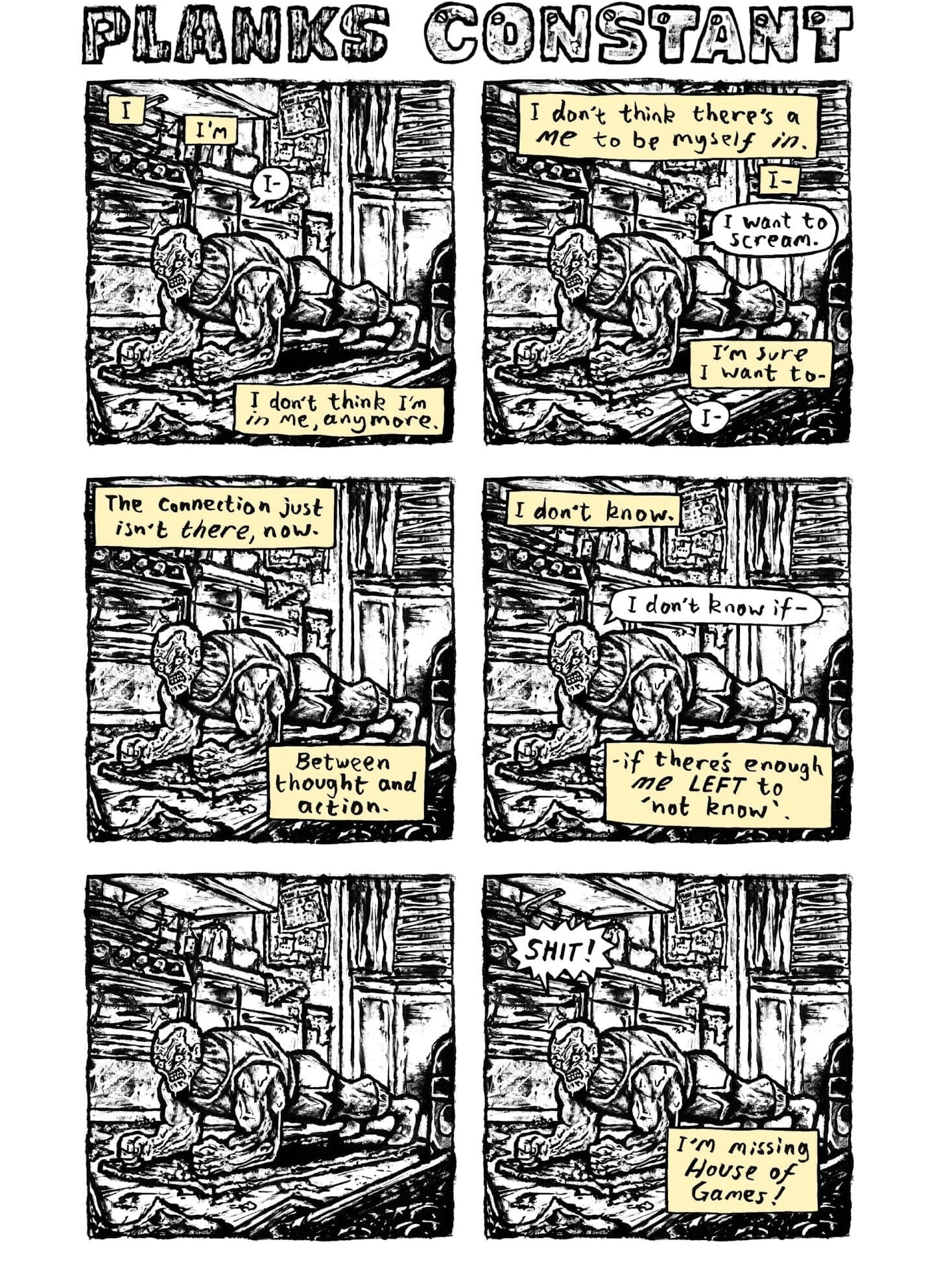
Planks Constant
ITEM
The Diary of Ethan Zachary, September 1986.

I still see the gunmetal face with the glowing yellow eyes. I still hear the booming, raspy, voice declaring ‘THE CONDEMNED HAVE NO RIGHT TO SPEAK’. I’ve slept badly since the Decepticons attempted to seize the hydrothemocline. Since the machine Optimus Prime gave up it’s life, adhering to the rules of a game I set. I have saved a copy of its…
What do I have on this disk?
…
Tried putting it into the GenRad emulator. Thirty lines of code at a time, typing it up on my Apple II. Had to give up. The code is impossibly long. Gibberish. Seems to change every time I disassemble it.
…

Who would program a mere machine for self sacrifice? Or am I merely interpreting it that way? An Asimov robot could not have allowed me to die.
Who would build a war machine like this?
Who would build a product that embodies self sacrifice?
It’s companions used compassion to win the game. But… it didn’t *seem* calculated.
…
I tried talking to it. Matthew Broderick to WOPR.
An alien. Not a machine. Not a human tool.
It knew it would die (could die?). It was self sacrifice.
Who created it? The answers change in texture and complexity each time.
Who is its master?
…
Answers still unclear. Has it grown beyond some shallow purpose?
…
It’s programmed itself a voice. Same as before, when it was a truck robot.
…

In his own words, he has tried to enlighten me. I no longer wrestle with ideas of him as a tool. He is an idea he had. He believes in compassion, with strength as a last resort. A responsibility to those weaker. An opposition to oppression.
His voice brings me great comfort as I face the things ahead.
In memory of Peter Cullen.
ITEM
Roll out
Tell just one person that you liked this newsletter. Word of mouth, more than any other form of promotion, is how creative works get noticed and sustain themselves. Thank you very much for reading.
ITEM
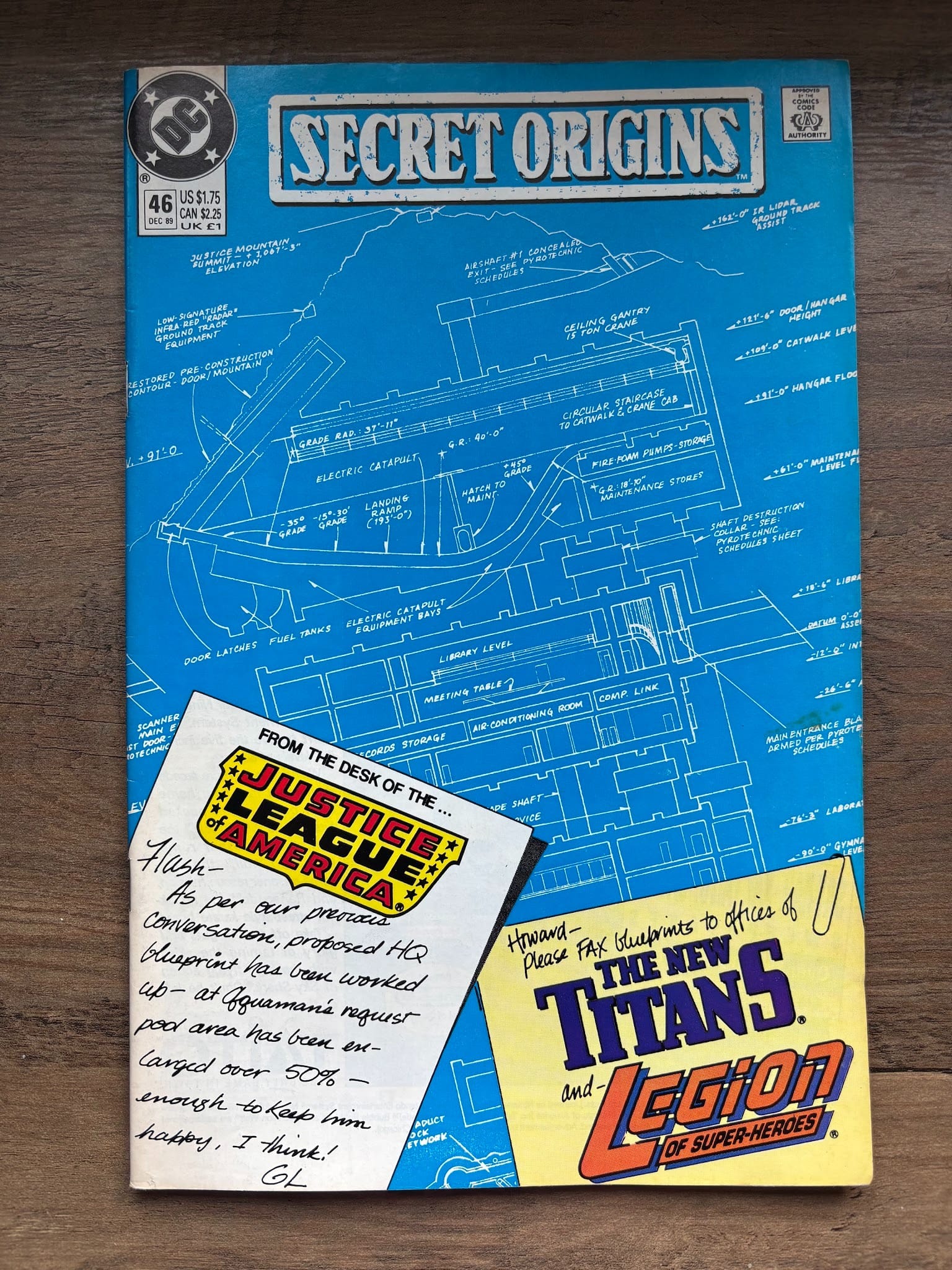
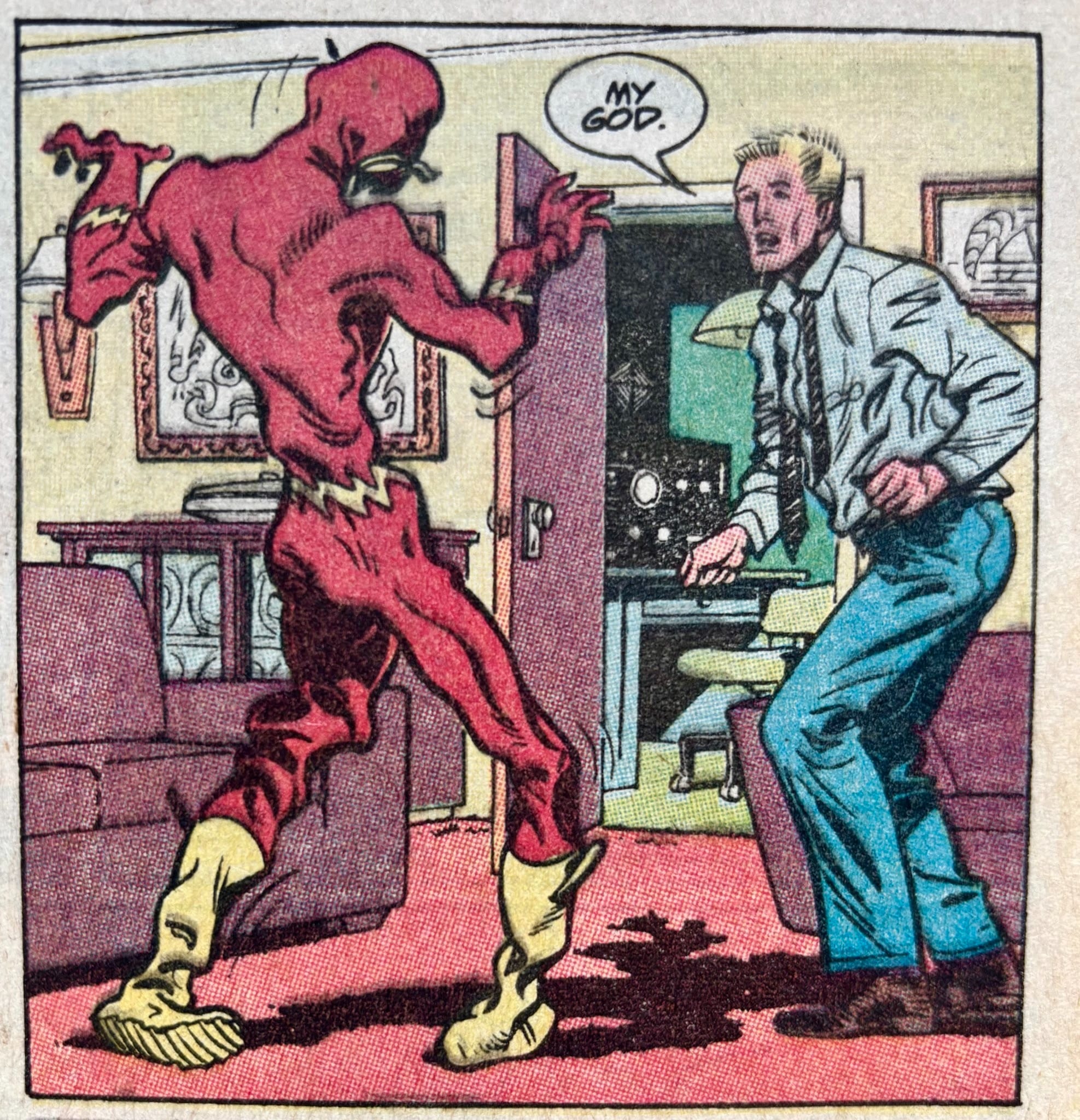
Secret Origins #46, ‘Ghosts of Stone’ (Grant Morrison, Curt Swan, 1989)
We are living through an era of fake earth magic, ruled by men who say they’ve taught the stones to speak. That these captured minerals can only amplify the vision-free fantasies of their owners is, we will be assured, a confirmation of the natural order.
Other approaches are possible. We might think of The Stone Book Quartet, and the story of Alan Garner’s great grandfather showing the way to initiation through deep earth: “Mary was in a crowd that could never have been, thronging, as real as she was. Her feet made prints no fresher than theirs.” We are never allowed to forget the participation of the stone in this or the other stories in the Quartet: “He couldn’t stop it and he couldn’t put it down and it was fighting him.”
We could also consider how the protagonist of the Stone Telling sections of Ursula Le Guin’s Always Coming Home comes into that name. How she becomes Stone Telling after she has journeyed into consumption and sickness and war and returned. A history of movement that can only be expressed through extended inaction, less paradox than sequence: “the rest has been lived and will be lived again.”
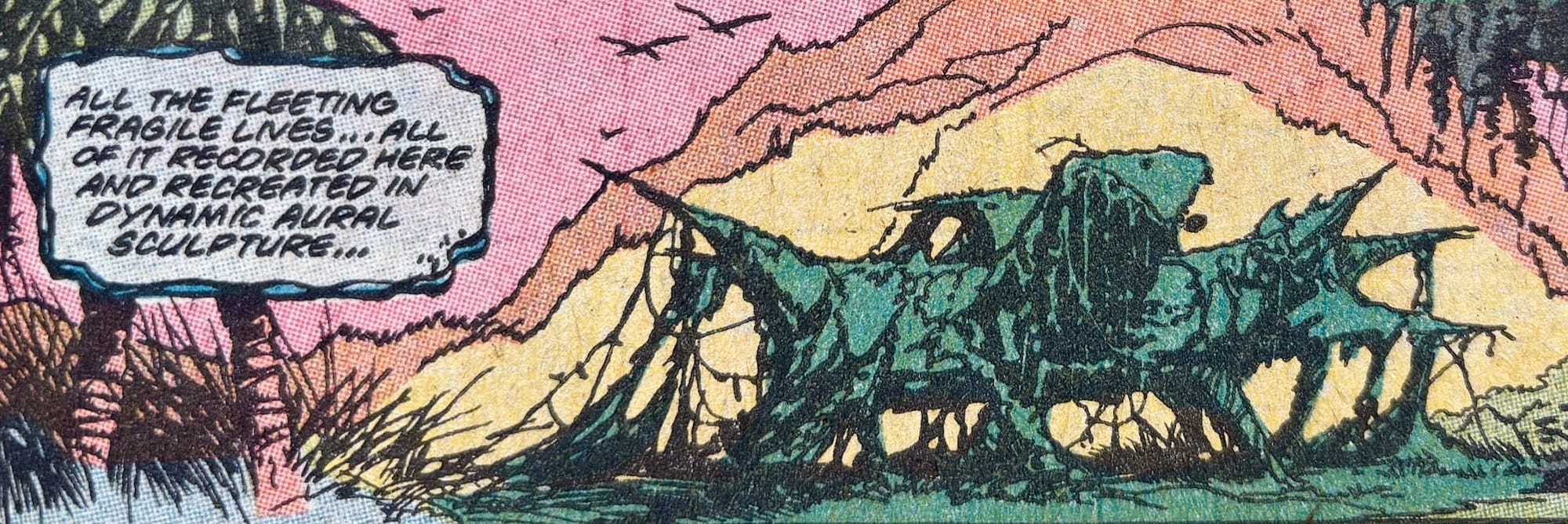
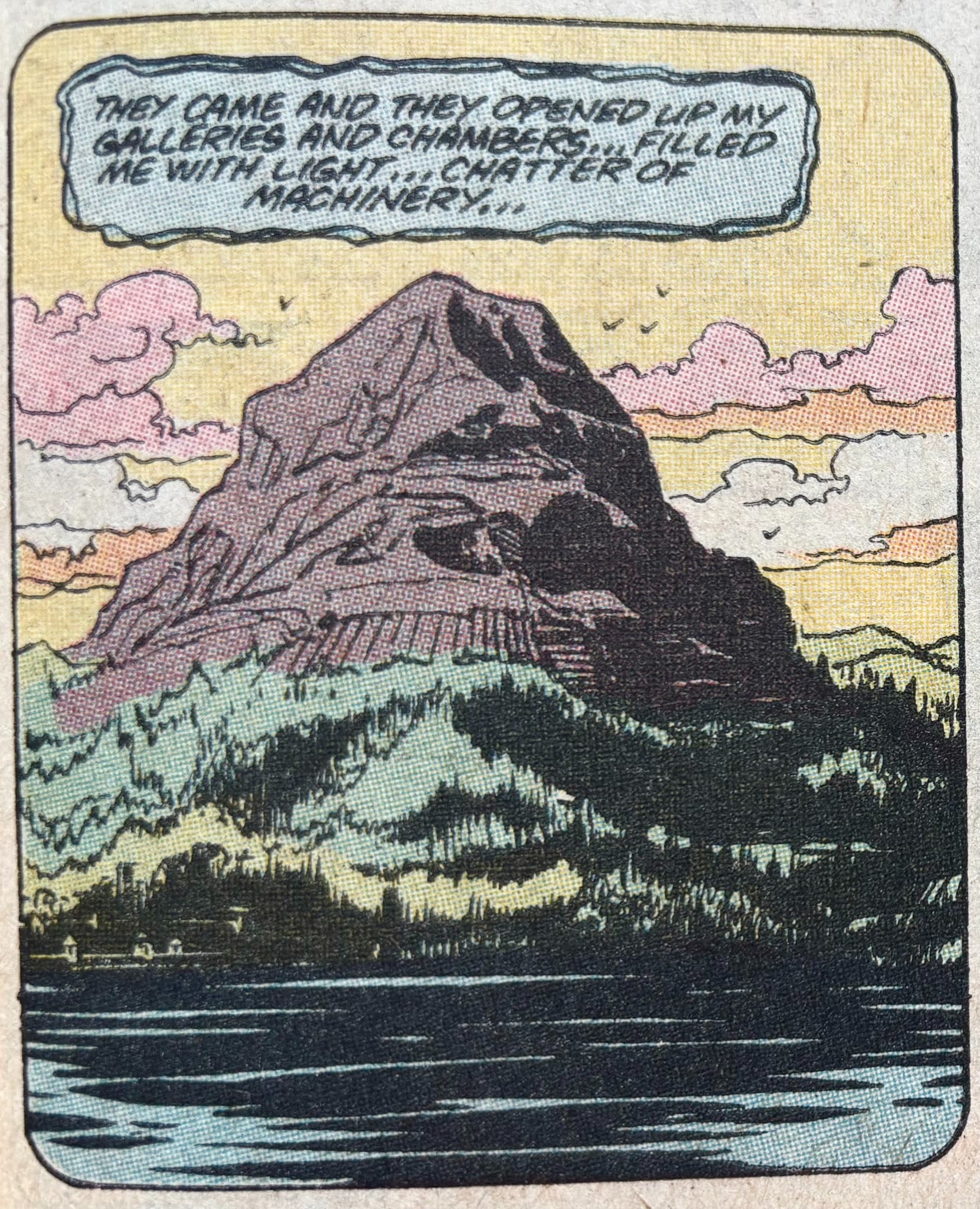
Or we could look at the gentle fantasy of ‘Ghosts of Stone’. Classical figures that could have been carved out of rock but which still look recognisably human, even when tusseling with rogue costumes.
The mountain that will become a home for heroes isn’t anthropomorphised in Swan’s art. Its status as an aged witness is the story’s rhythm and reason, conveyed by events as much as captions.
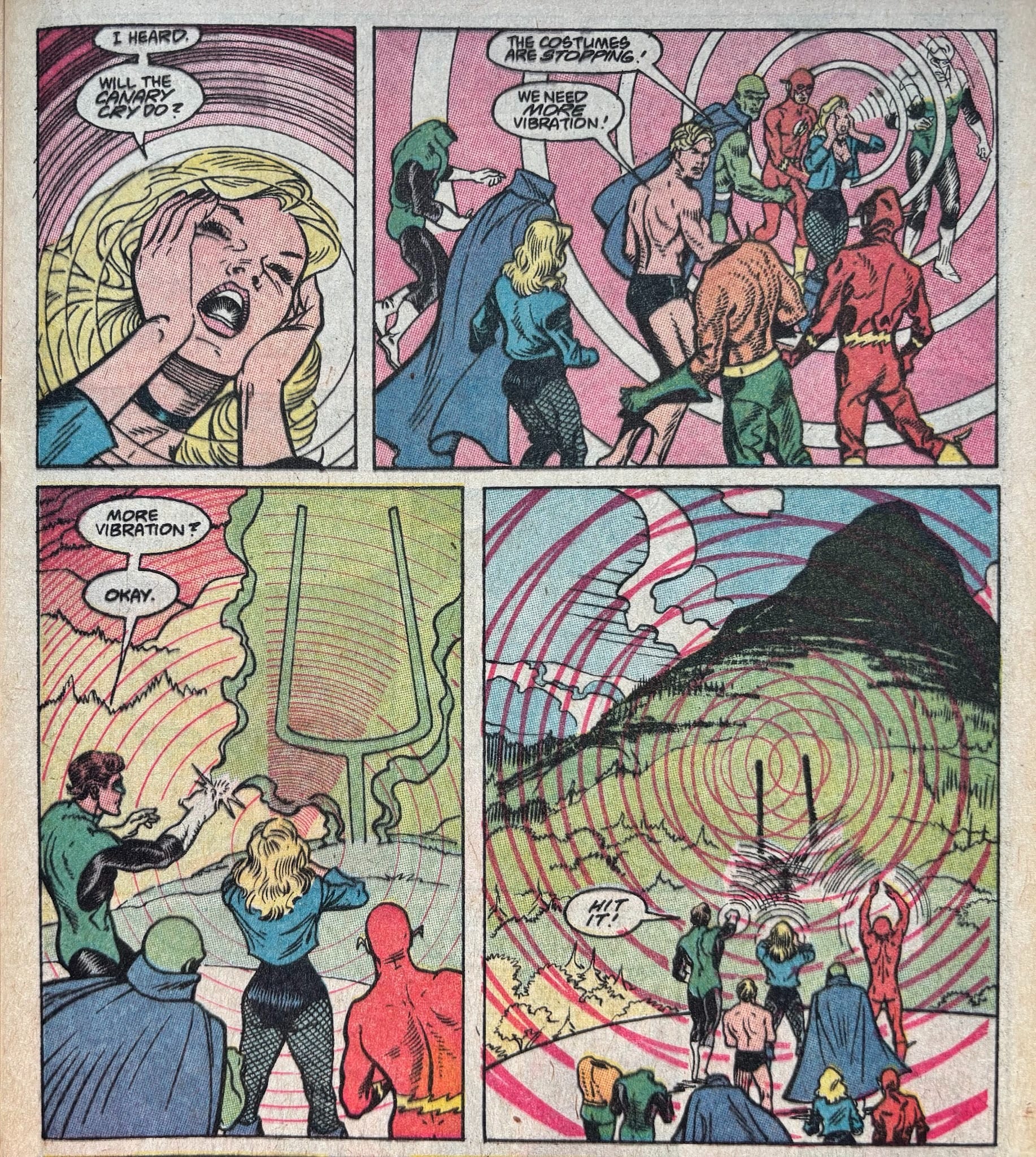
Against the endless consumptive fantasies of our rulers, consider the ghosts all around. Ghosts of stone and those who lived through it. The true costs need no further unearthing. The voice is ours to amplify.
ITEM
The Damned Aesthetic
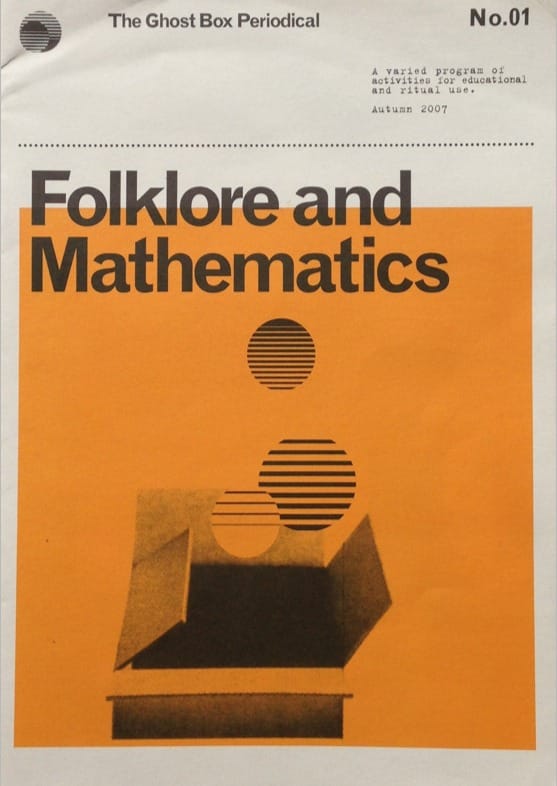
When I wrote last, I pondered the aesthetics of the fortean, and the concept’s relationship to hauntology. Settling on the idea that it can be conceived as a kind of ghost haunting the scientific record. An archive of “damned” wonders that must be fantastical in their content while formally presenting in the scientific style, albeit with however much irony, seriousness or even poetry that Fort felt inclined to throw at the task. I say “must” because it's their identification with and exclusion from science that makes their wonderment possible. They are damned precisely because they cannot be defined or limited by it.
The fortean aesthetic was most vivid to me as a young teen searching the Mind, Body and Spirit rack in Waterstones for proof - the kind that might convince a scientist - that the world was a mysterious and inexplicable place. Today’s tidal wave of Unexplained and adjacent content not only reaches me at a time in life when I’m considerably less credulous, but in an era when we’re drowning in nonsense. There is no wonderment in its excesses. It's weird, sure, but like a faintly luminescent toxic sludge.
It’s perhaps for this reason that the Ghost Box music label has long fascinated me as a rare 21st Century outpost of fortean energy. The public-safety poster boys/girls of hauntology - Jim Jupp, Julian House and Kate Brooks - were working distinctly within its aesthetic mode when they created their original slate of albums. Presentationally the voice of the modernist mid-twentieth century - a world of institutions like Belbury Poly, where reason, enlightenment and progress hold sway - but in terms of its content hovered over by ancient powers and flying saucers. All within a context of humour, irony and solemnity that surely would have appealed to Fort.
ITEM
The Horned God (Pat Mills, Simon Bisley)
Part Three: The Goddess Loves Slough Feg
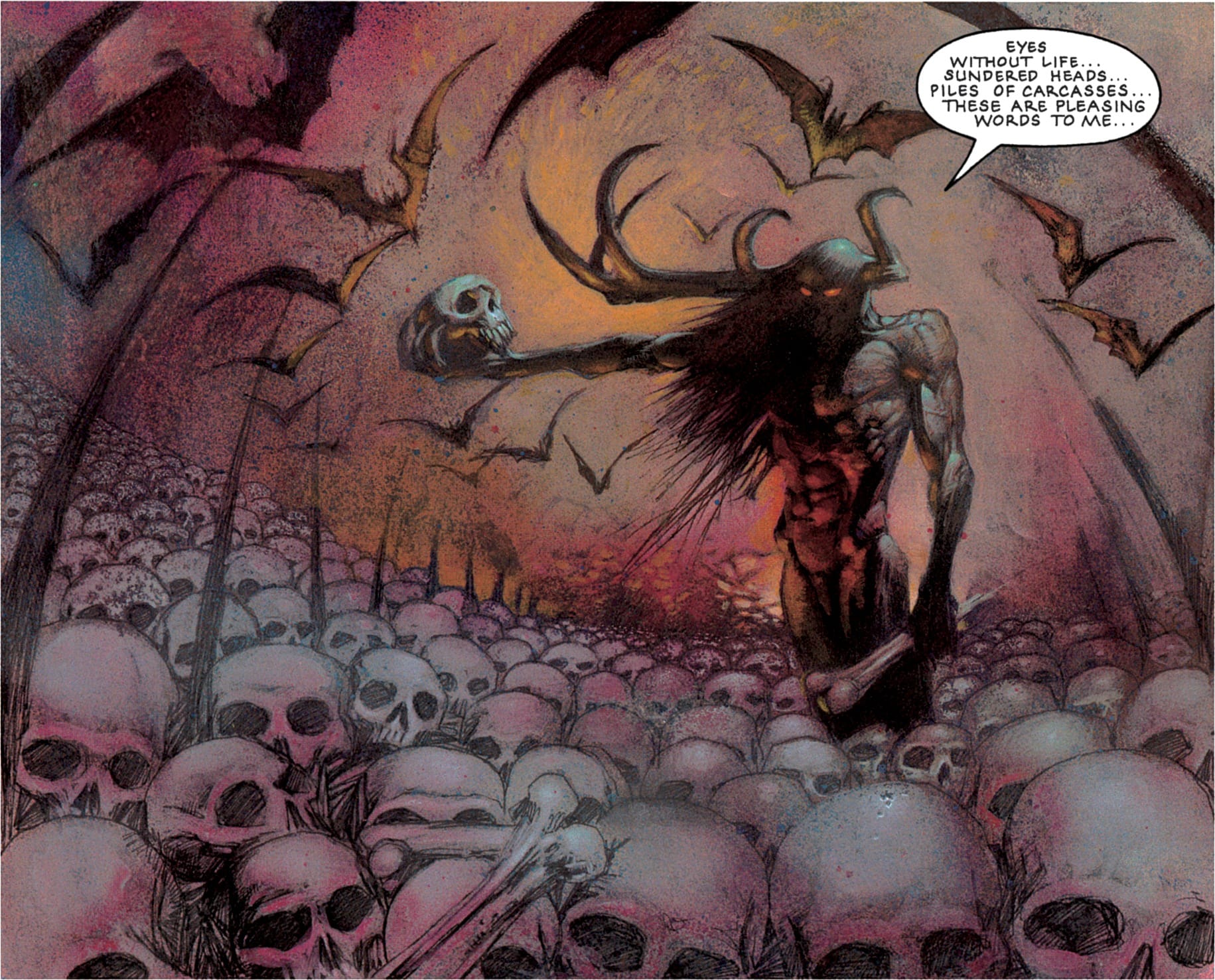
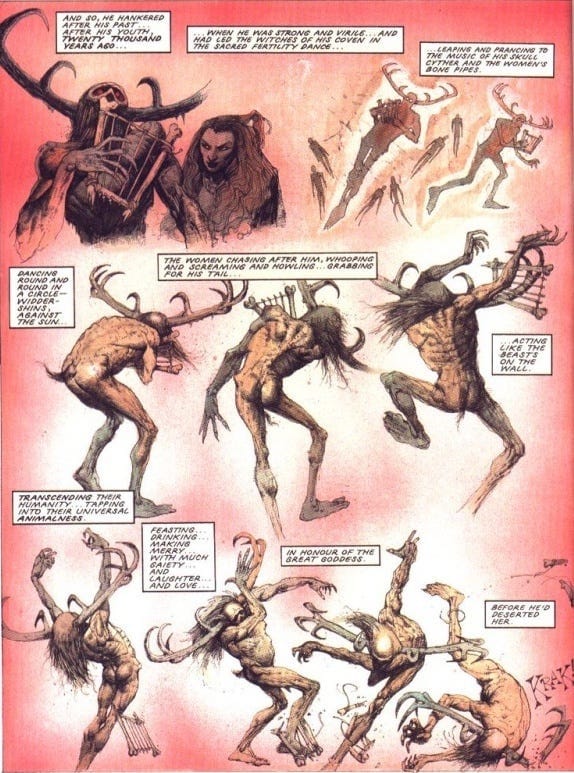
The Horned God is lord of the animals, consort of the goddess his role is to manifest the kingdom of pleasure on the earth, to be ‘the laughter in the woods.’ He is also a god of death, guardian of the underworld. The Horned God is the dying god, bound to the wheel of the year he waxes and wanes mirroring the goddess. His reign lasts seven years after which time he must die to return to the womb of Danu. His is cyclical time.
Slough Feg, the current Horned God, refused to return, expanding his reign to thousands of years. Feg takes his role as death too far, seeing mass slaughter as an end to suffering, feeding the dead to the maggot god Crom Cruach for the pleasure of the dark gods. Refusing the Goddess feeds his world-hate. This madness corrupts. He inserts weird stones into ley lines corrupting their power, turning the earth into the sour lands. He breaks cyclical time for linear, eternity locked in one body. Where once he danced with the witches in the Time of the matriarchy he now gibbers alone, rotting and impotent. He destroyed the witch cults he mourns.
Feg blames the Goddess, for the sorrow he writes upon her. He blames her for his hatred of life. A hatred that slaughters others while he remains, afraid to cross over and merge with her. Feg is the cycle perverted, death made unnatural, industrialised.
He dies when Slaine castrates him with a gae bolga, the thirty barbed spear. He dies when the pulsing penis maggot god of Crom Cruach gobbles him up. He dies laughing finally understanding the joke of his life in the Goddess, but he dies wanting more time. another day, another week, another year.
The Goddess tell Slaine ‘The Horned God is the only one of my gods that never betrayed me’. He should have paid more attention to that.
ITEM
The Future That You’ve Got Mapped Out is Nothing Much to Shout About
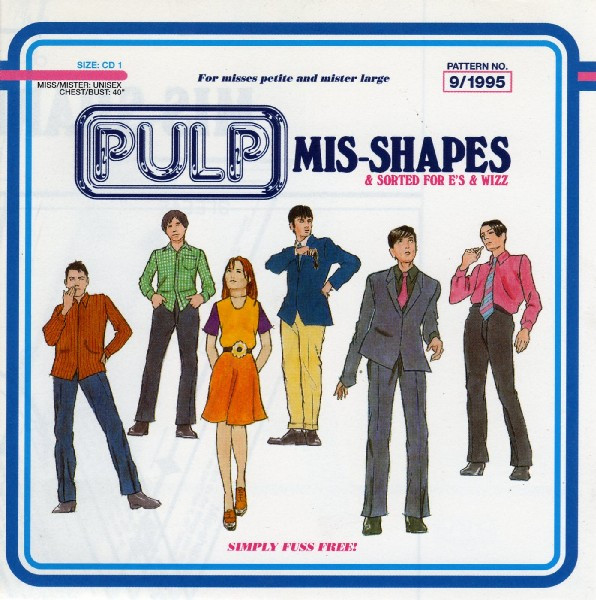
I saw Pulp live last night. Releasing an album of new material last year, their first since 2001, seems to have revitalised them and made them feel like they're a real band again, not just a nostalgia act.
Maybe because of that, or maybe just because I've been having a rather strange time of things, I ended up having very emotional reactions to two tracks in particular. I broke down in tears at "Common People", which short-circuited all my emotions. But the other was "Mis-Shapes", the song that made me a Pulp fan when I saw their first ever live performance of it at Glastonbury 95.
That song, to sixteen-year-old me, was a revelation -- this was someone who *understood* what it was like to be the strange kid who got the shit beaten out of him by roving gangs of lads out to destroy the non-normative.
But in later years, Pulp seemed to get embarrassed by it -- it's their only hit not to make their "Hits" compilation -- and I can see why. With the rise of a particular type of nerd fascist this century, the bragging about cleverness beating the normies took on a very different air. It's a song you can imagine Elon Musk enjoying for the wrong reasons.
But... last night I felt it again. All the trauma of being a bullied kid. And I'd proved the song right. I've got a good life now, better than the bullies, because I used my mind, just like Jarvis said. It became affirming again, even though I can also see the ways in which it's problematic.
The mis-shapes can triumph over the bullies, both in our lives and the cunts who are still running the world. But we can't forget that we're still the common people, or we become them.
ITEM
Hell Drivers (Cy Endfield, 1957)
“Do you always know why you do things?” asks Peggy Cummins, Irish actor playing English, playing American girl next door, sassing from behind the desk at the trucker depot. Stanley Baker’s demobbed ex-con keeps his own counsel, bound in a leather flight jacket, eyelashes giving away what his jaw won’t.
Three score years and ten ago, the imperial creature is losing its grip, withered claws pried out of the earth’s surface and junked. Sudan, Kenya, Ghana. Cyprus, Jordan, the Malay Peninsula. Nasser nationalises the Suez artery in late summer, and by Halloween the old superpower is reduced to an abject colony. Bloodied and terrified of mirrors, England revs up to ingratiate itself into the American future.
Blacklisted from Hollywood - or affecting a cover story palatable to ACTT, Equity and the Electrical Trades Union - Cy Endfield noisily smuggles a noir-western template into the home counties and forces a combustible new distinction into British landscape cinema: a stark collage of concrete industrial zones and green rolling hills.
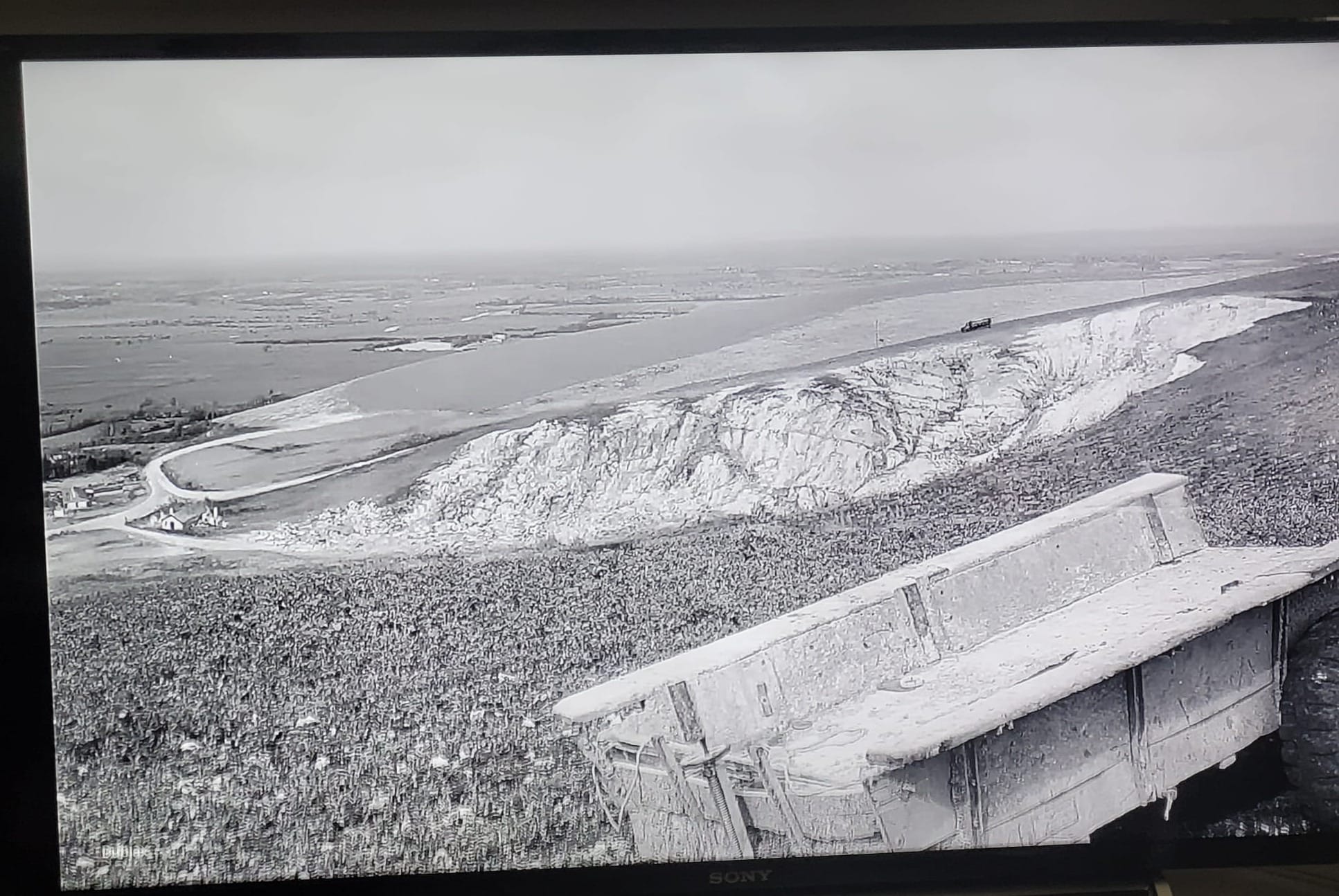
The Dodge Brothers of Detroit had run their Kew factory since the 20s, and by 1956 the Dodge 100 truck was nearing the end of the road. Through either a surplus of dead stock or last investment of promo budget to avoid the cliffside, abundant 100s muscle out a brutal cast including Sean Connery, Herbert Lom and Sid James. Pat McGoohan’s Fenian foreman, another red exile, is taking shortcuts across the unstable chalk ridge of Truleigh Hill radar centre (decommissioned 1957), a serpentine cleft claiming doomed drivers' souls. The 100s’ hookbilled hoods covered a Chrysler flathead engine built for motorways that didn’t exist yet, too much for the quiet lanes of West Sussex and powering an excess of alien vitality that crashes through the frame.
The vistavision cuts deep into the land, releasing a mass of energy into the lens from Geoff Unsworth’s jagged monochrome and Yvonne Caffin’s wardrobe - the driving crew of scabs and desperados wrapped in rugged animal skins, tung-oiled to deflect every broken chunk of data back into the camera. A prehistoric tribe slaved to a deathless imperative, aggressive and irresistible.