No one knows who they were or what they were doing but their legacy remains
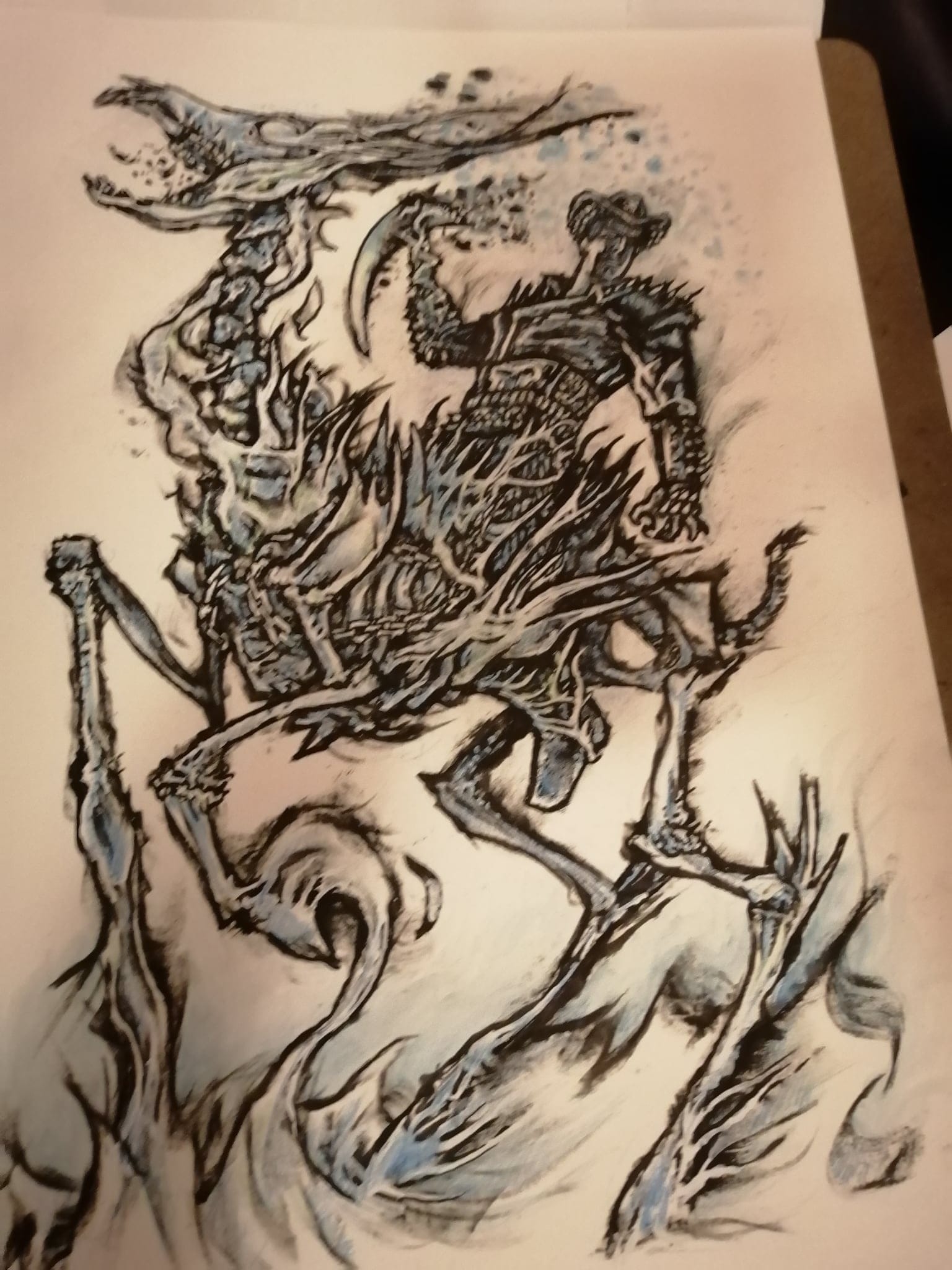
Seals. Disappointment haunted all my dreams. Dead Demon Rider WIP. Jacob Jugashvili. Zentist. On the Natural History of Destruction.
ITEM
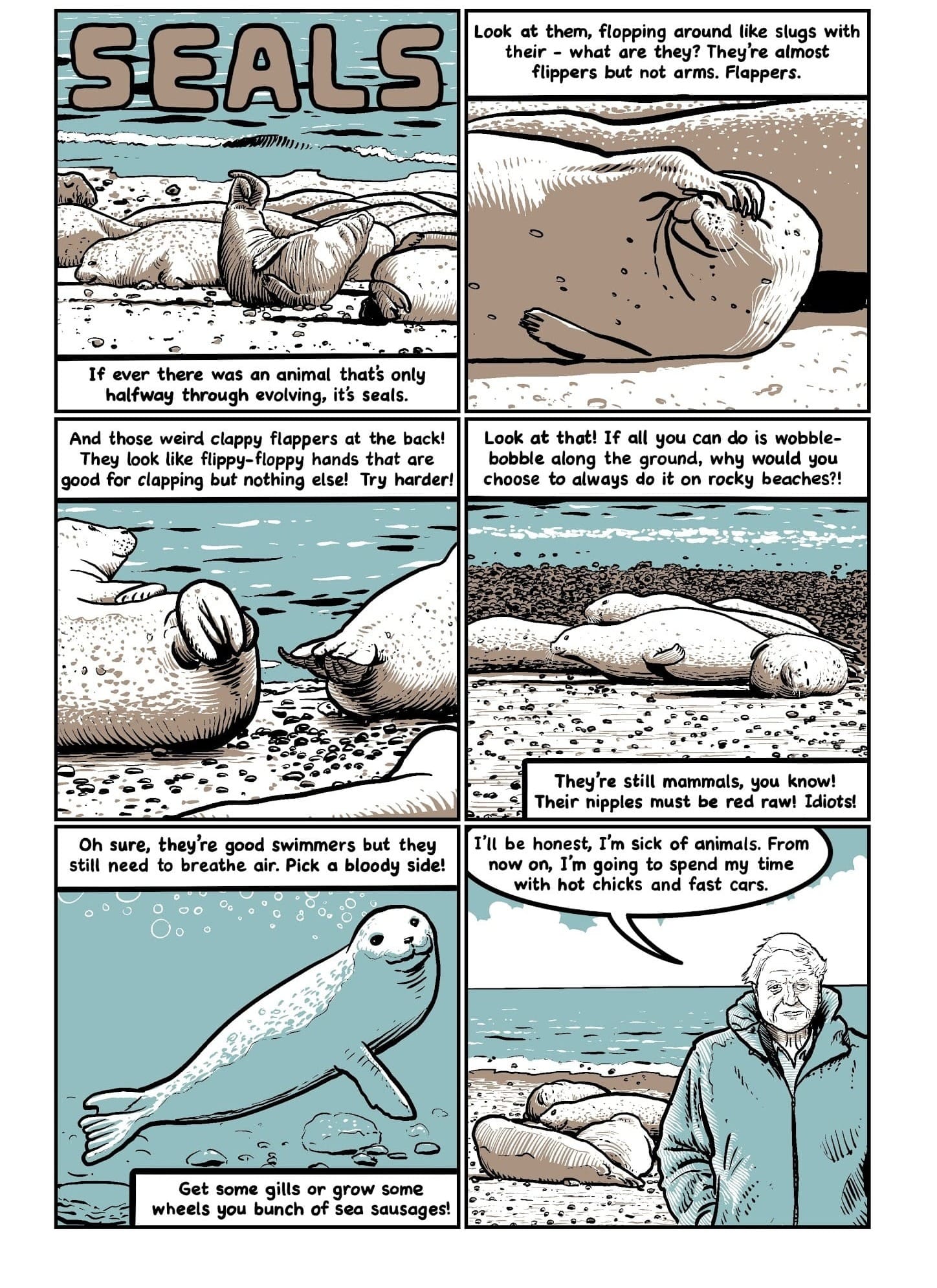
Seals
ITEM
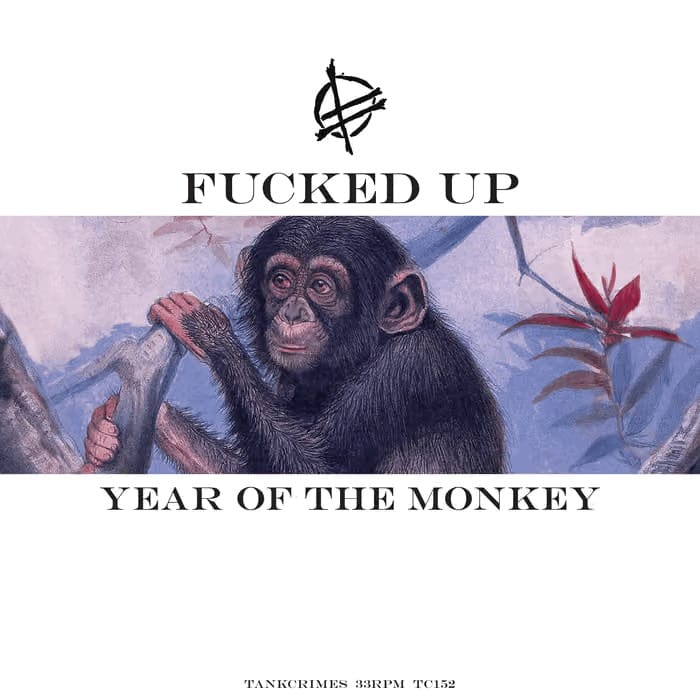
“Disappointment haunted all my dreams” - Grass Can Moves Stones Part 2: Year of the Monkey (Fucked Up, 2026)
Outside of the dream someone is screaming. It’s a confession turned intervention; they’re telling you the time has come to try and get someone sectioned. Inside the dream you’re screaming too, of course. Shouting safety instructions to someone two hundred miles away, unsure of the nightmare they’re living in and whether they have any concept of home as a sanctuary, as opposed to a prison you built to rot.
“Which you are we talking about here cowboy?” Alright. Cheap conceit, but the above might explain why I’ve found myself crying real tears™ over hours two and three of five hour rock opera this week.
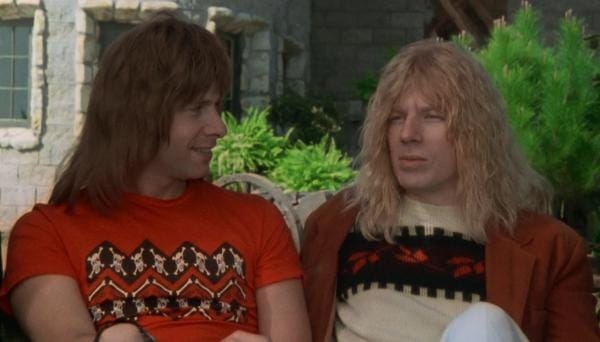
“Where is the gate that the snake said to find?/How will I know what’s to come on the other side?” It’s all very Spinal Tap, of course, but I end up caring about how ageing bodies relate across space and time there too. Harder for the drummer to choke on puke if you take your turn to kiss the sick from his mouth. Harder for him to explode if you embrace him.
Anyway, Year of the Monkey! This being the culmination of the long-running Zodiac series – Horse and Tiger are my current favourites FYI – Fucked Up works through references to the older entries here without ever losing track of the moment-to-moment flow. Hence the section where they drop the dual lead shredding and get Dan Bejar to make it sound like folk wisdom. Or the way they layer unbelievably beautiful synth rock into their heaviest fantasy bollocks. And how often they get Tuka Mohommed to sing something simple and moving when said bollocks has you properly occupied, lines of human connection in a world of noise.
Sometimes it feels like there’s nothing outside the dream. Sometimes it feels like there’s nothing but outside the dream.
ITEM
DDR WIP
ITEM
Carl Sagan Atley by Jacob Jugashvili

A girl - she’s maybe 15 - strides past my front window. From somewhere out of sight a friend calls to her. She shouts in response, flicks back long blonde hair and trails her iPhone behind her head. Its transparent pink gel case wraps white metal, shining in the low summer sun. The girl pushes forward, still trailing her phone, as if it’s caught in her slipstream.
I imagine that the phone is the latest model - because why wouldn’t it be? – and wonder what she’s feeling. To be young, with your friends, holding a virtual world in your hands. Something so valuable. For it to be 9.30 on a June night, so bright it might as well be day. Maybe to be drunk. I remember what these moments were like: anticipatory, yes, but also present. More present that you will ever be again. It won’t be enough.
Because the phone still trails behind her as she disappears from view. This artefact from the future, that lends the world the glamour and madness of an advert, a voice command away from a data centre that demands an ocean. How could this possibly be the last thing to vanish? Shouldn’t it race ahead, far beyond the jolting shrieks and teenage laughter, which soon will be all that remains of the girl. I wonder how any of this can be lost in the world’s undertow.
But its already gone. All already in the slipstream of something else. Something we can’t quite see, which out paces us all, ever faster into a receding distance, with the girl and phone dragged behind it, and me in my seat, looking out the window, moving with the rest, as fast as the planet spins. Too slow.
ITEM
“They've renamed it Zentist” - a dialogue
PHASE 1
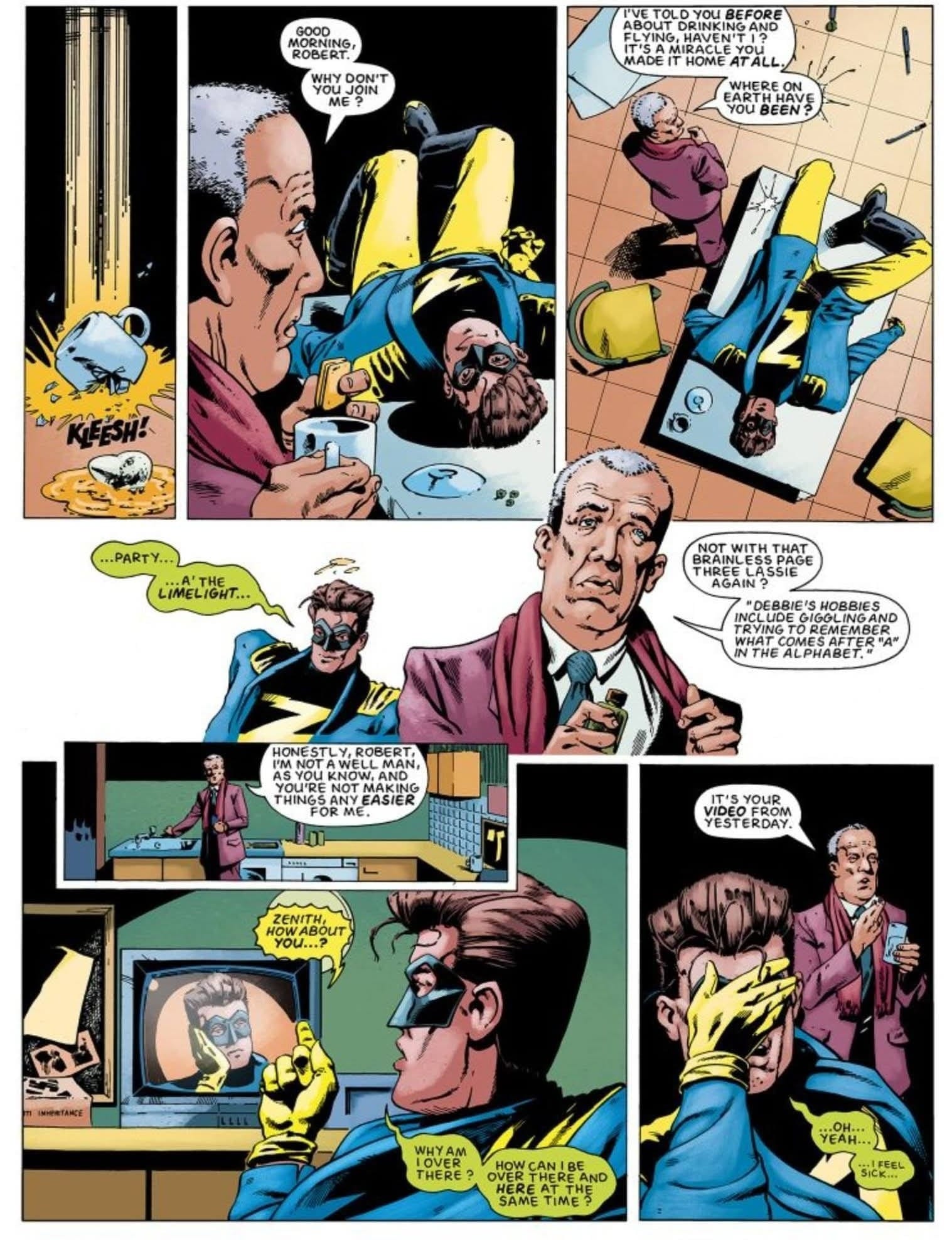
“Fuck off!”
“It looks 50 x worse. I will cuddle my Titan editions extra tight in bed tonight.”
“Dogshit.”
“Looks like they did this in… half an hour?”
PHASE 2
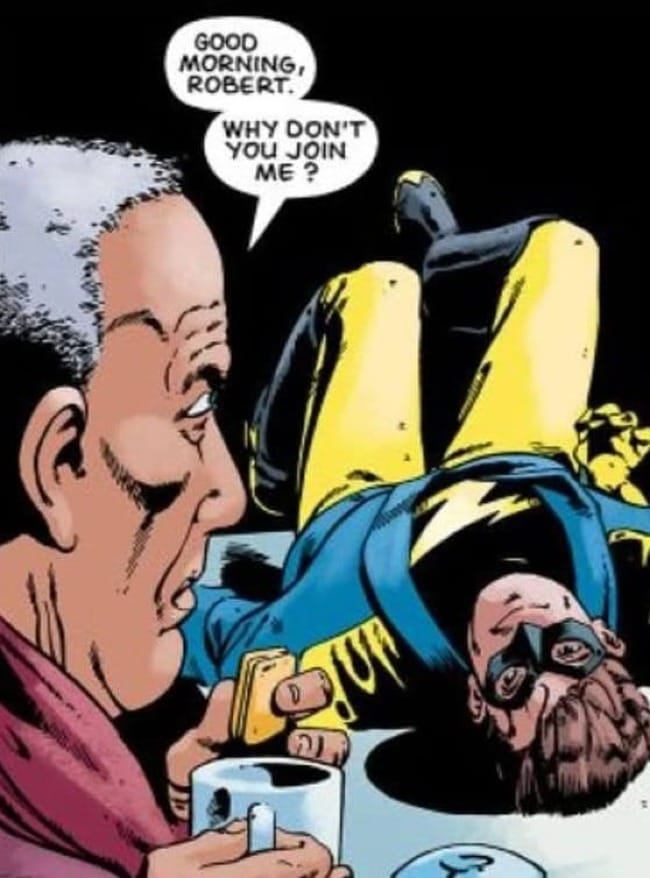
“Jesus fucking Christ! Panel 2, they’ve coloured his eyelid as if it’s the white of his eye, which is not just bad taste but a misunderstanding of Yeowell’s drawing!”
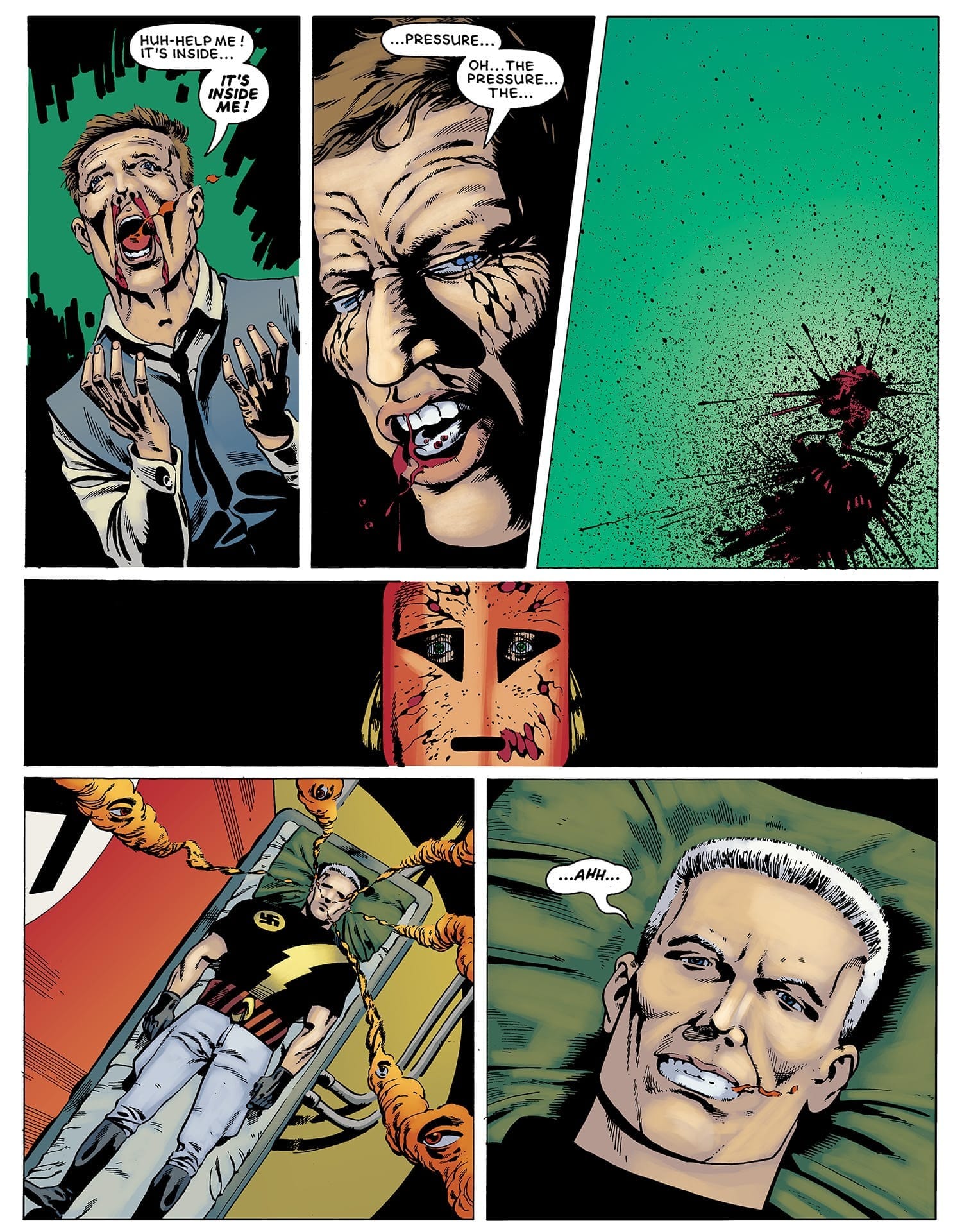
“So atmospheric! MORE ATMOSPHERE THAN EVER BEFORE!”
“Amazing how much this dulls the linework.”
“100%”
“The shitty Quality Comics reprints were better than this.”
PHASE 3
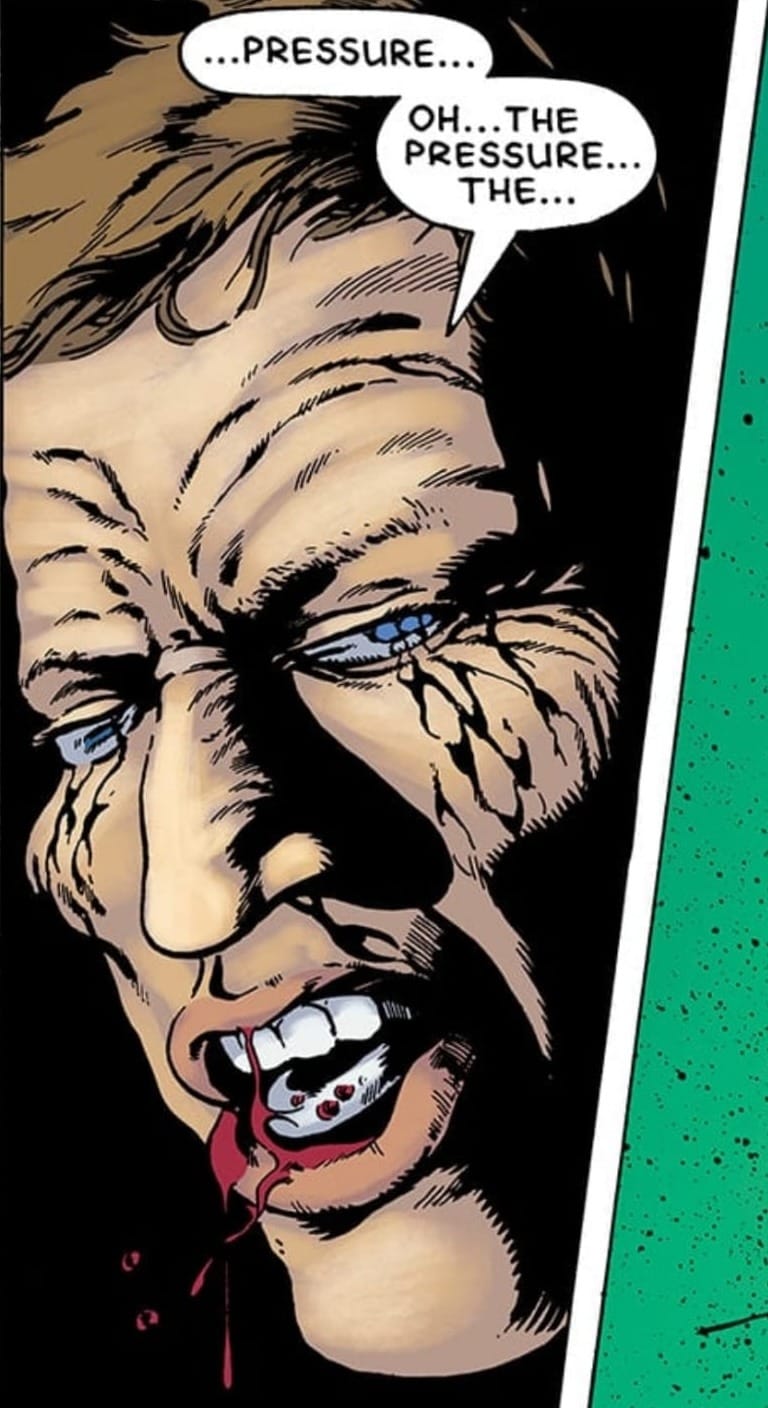
“Tongues are teeth!”
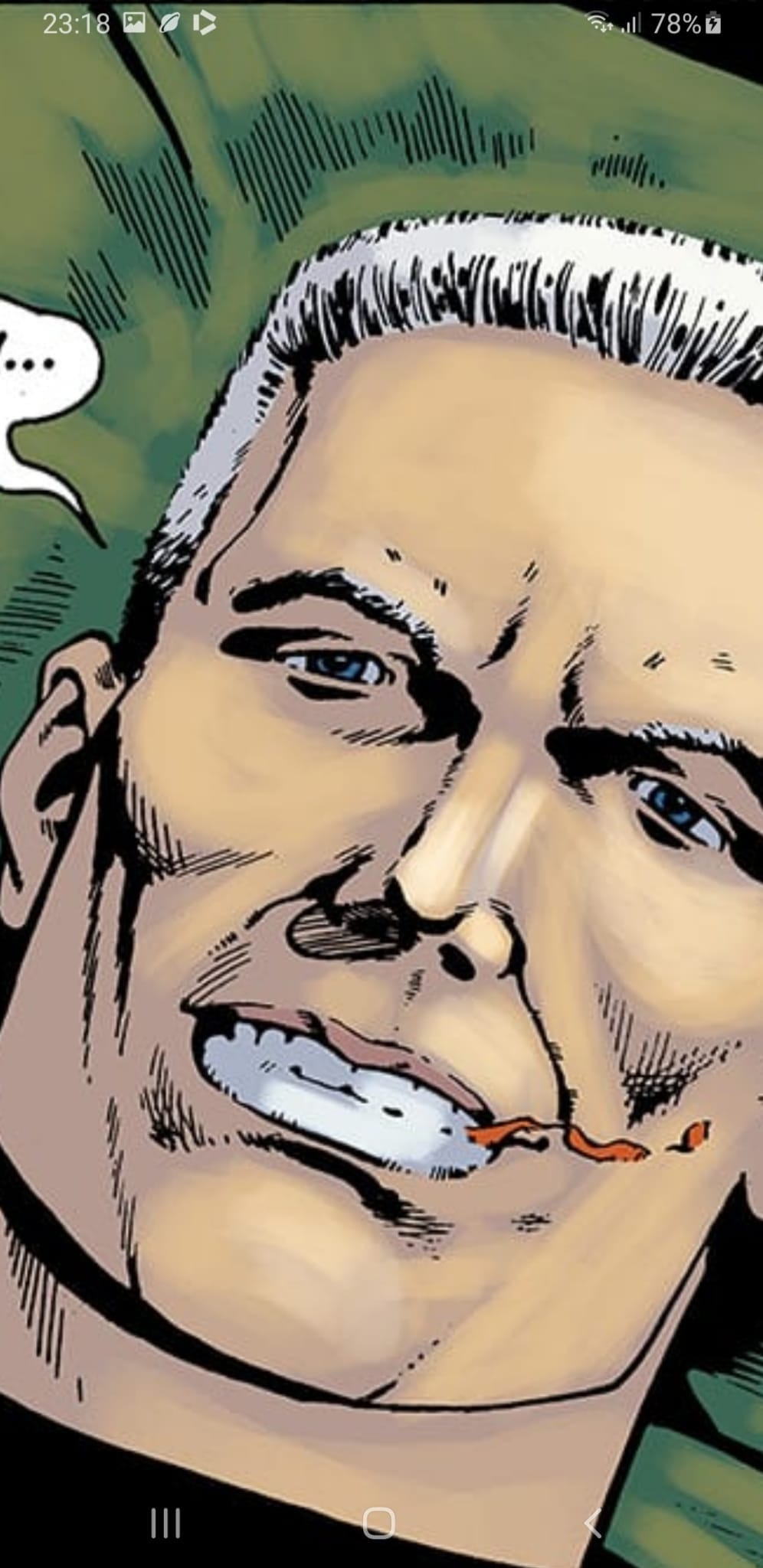
“Lips are teeth too! MORE TEETH THAN EVER LIKE YOU WANTED!!!!”
“Everything is teeth you say? Actually I take it back, this is a horror comic.”
“Always assumed Masterman was blonde, not white haired. Oh, no of course! His hair is teeth.”
“Does he brush his hair with toothpaste?”
“Yes because it's teeth.”
PHASE 4
“Why were the Nazis so into teeth?”
“Anyone got Pynchon's number? Pretty sure he could give us a smooth 900 pages on the subject.”
“Looking for links between Nazis and teeth, I found an article about Hitler's dentist:
"During interrogation, Blaschke criticizes Hitler, but not for war crimes. Instead, he blasts Hitler as a frustrating patient who delayed appointments, was careless about dental hygiene, and only called when he was in pain. Blaschke mentions the war as a side note, and only as it relates to Hitler’s stalling tactics."”
“Typical dentist.”
ITEM
Life on Earth
Tell just one person that you liked this newsletter. Word of mouth, more than any other form of promotion, is how creative works get noticed and sustain themselves. Thank you very much for reading.
ITEM
On the Natural History of Destruction by W.G. Sebald (trans. Anthea Bell, Penguin 2003)
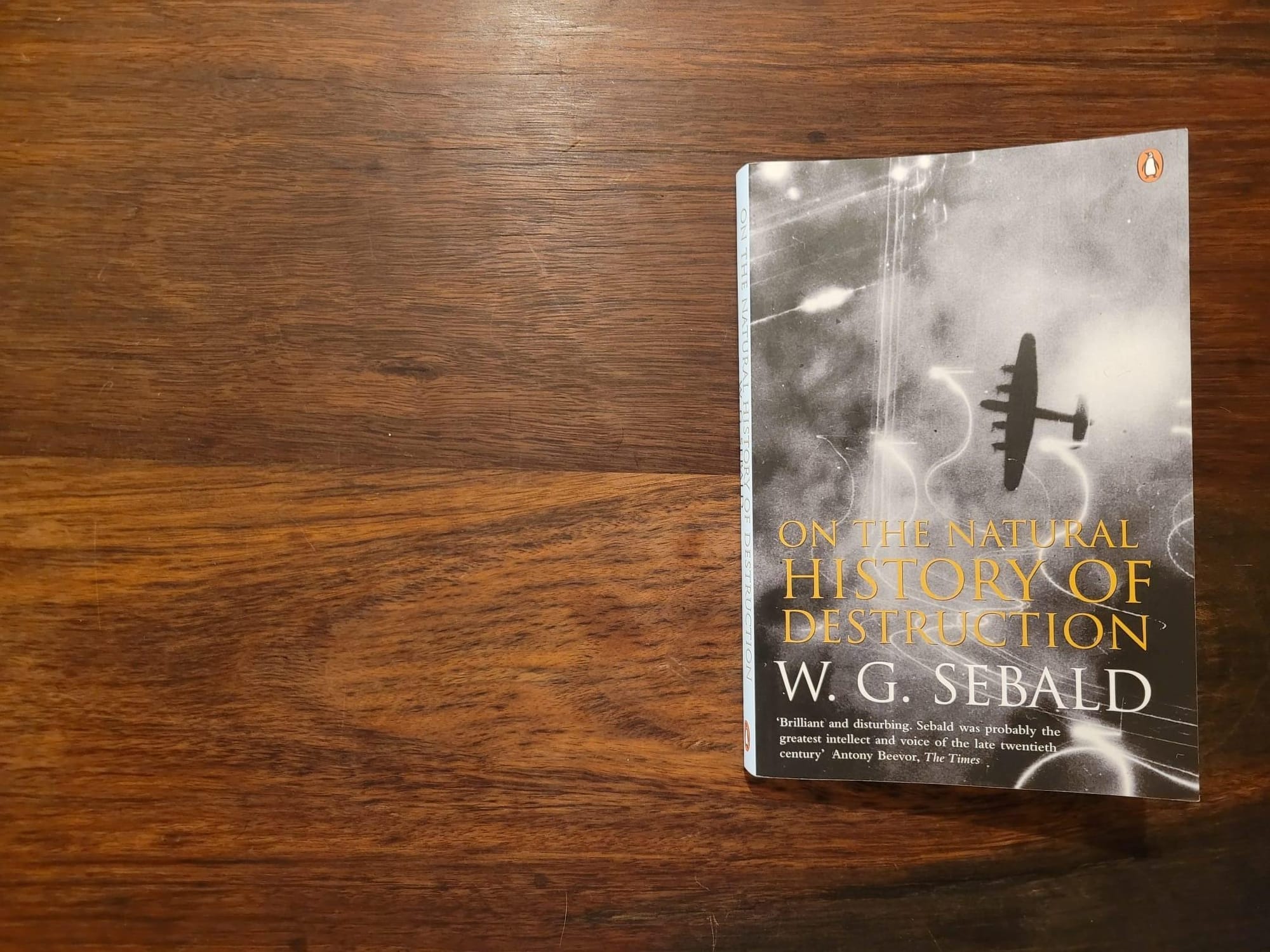
A display of supernal malice unseen on earth since the Mahabharata, the Anglo-American air attack on Germany’s industrial towns and cities was more than an overture for the solar spectacle of Tokyo-Kobe-Hiroshima-Nagasaki. Of sufficient scale and intensity to sear the psychic and physical worlds at once, its surviving witnesses were dumbstruck and mindwiped, left with no words or memories to share.
Sebald traces the outline of this absence through the contours of postwar literature. With a clinical disdain for the fantasies and banalities he finds, he arrives at a theory of ethics and aesthetics which prescribes a dispassionate precision in describing atrocity. To retain proportion and dignity against that which threatens to immolate what values we hope to preserve.
Simultaneously demanding a collective effort to fill the void with a memorial to a monstrous excess, yet insisting on the modes it may use to keep within Euromodernism’s sense of good taste. A decade since Britain’s jagged extraction from the superstate, halving the island into a nameless perpetual antagonism, from our barbarian periphery this technocratic assertion feels meagre and remote. What presents as a quiet act of defiance, to honour the experience of the dead without surrendering to the temptation to mystify and adorn, now feels like its own wilful perversity, a mannered performance of decorum.
The words of the accountant or surveyor cannot speak for slaughter, where an extravagance of shock is appropriate, and where, pushed, language might achieve a brokenness which finally aligns it with reality’s tendency to appal. And which acknowledges that life under the hakenkreuz, with the fascist insect forcibly embedded in the brainstem, a wet black mantis with black mandibles shearing the medulla, is to live begging the sky for the fire of release.