First you find a flea, preferably under the armpit
Orlando. Andrew & Steven. The Pilman Radiant 1: Ground Zero. In the Frozen Infinitesimal Moment. Requiem for a Village.
ITEM
“If you’re going to buy a pair of pants you want them to be tight enough so everyone will want to go to bed with you” – Orlando (adapted by Jules Scheele, art assistance by Garry Mac, 2026)
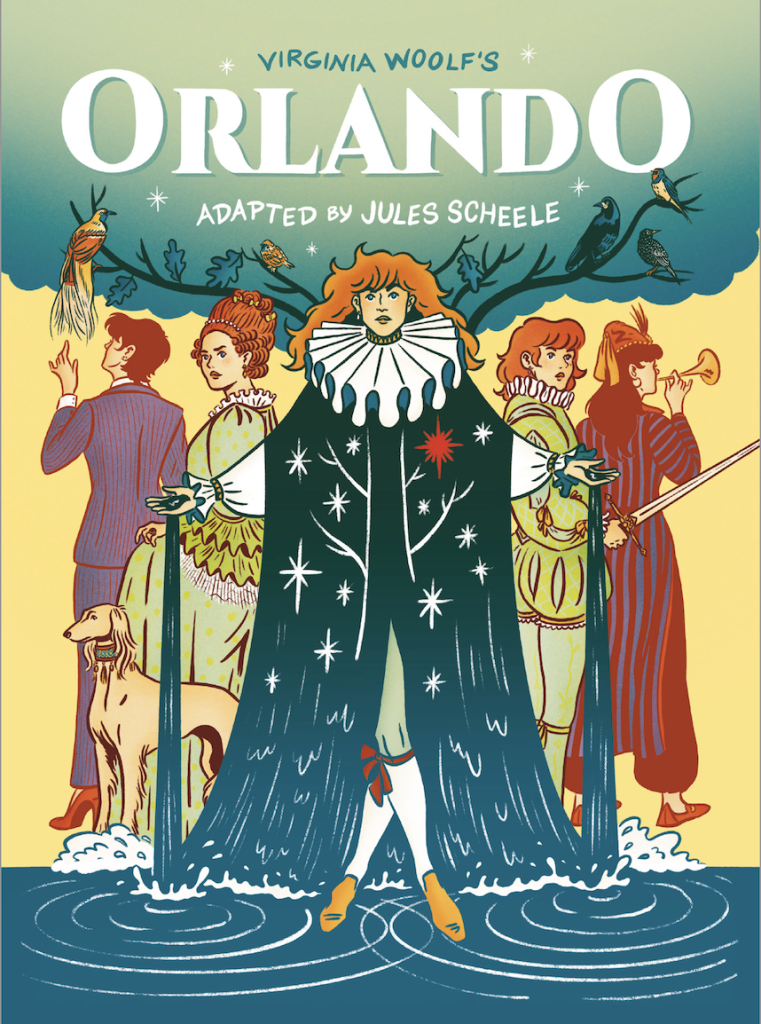
The story of an undying English nobleman that becomes the story of an undying English noblewoman halfway through, Virginia Woolf’s Orlando is considerably more variable than its premise might suggest. Just when you think you’ve got it sussed it reveals another face, another style, another parody or tribute.
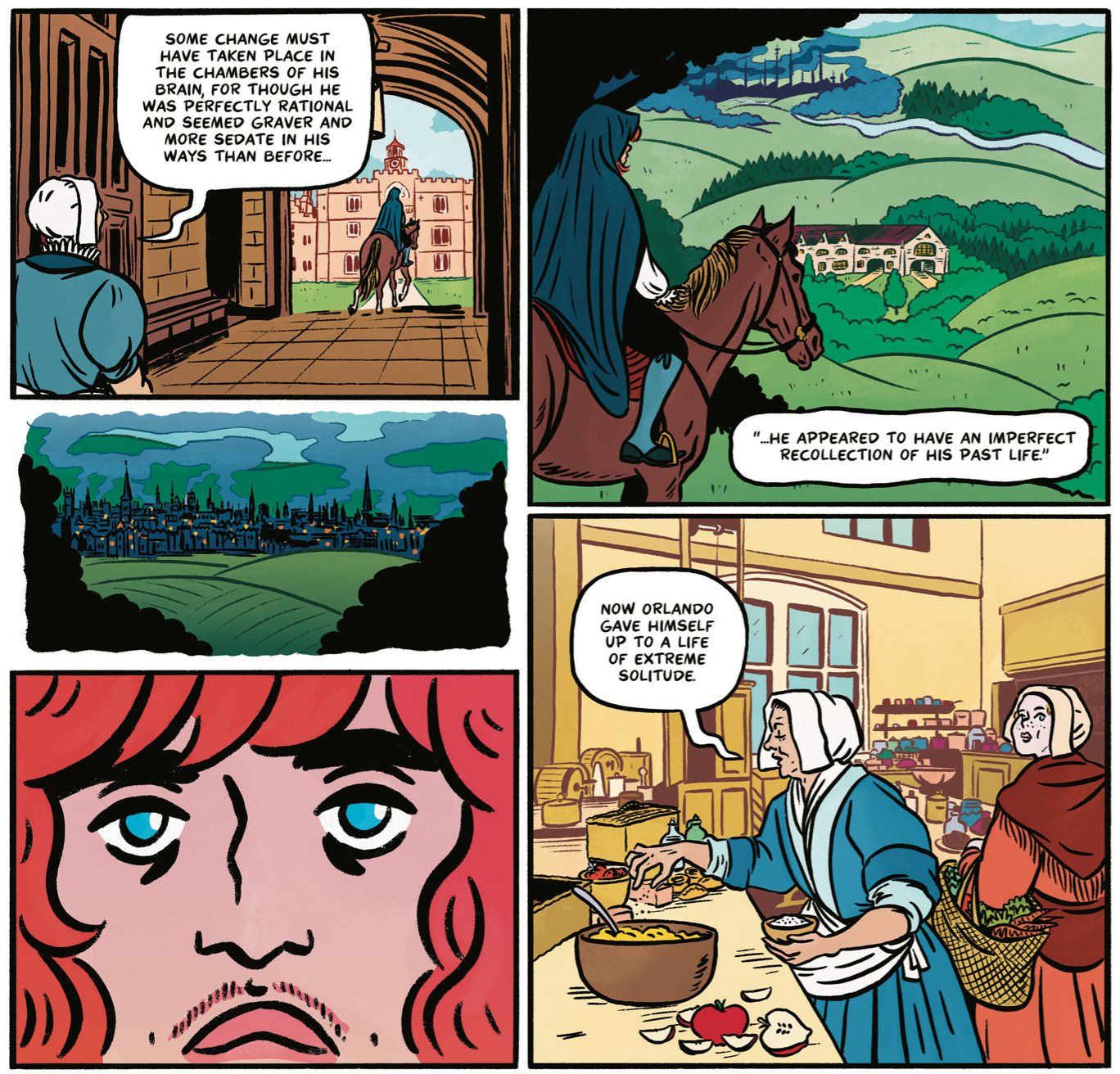
Jules Scheele’s adaptation doesn't so much capture the protean nature of the novel as expand on it. Scheele preserves Woolf’s dialogue and narration but redistributes much of the latter to those on the edges of the story. Live birds, dead enemies, people from other classes and cultures - all get to have their say in this version of Orlando.
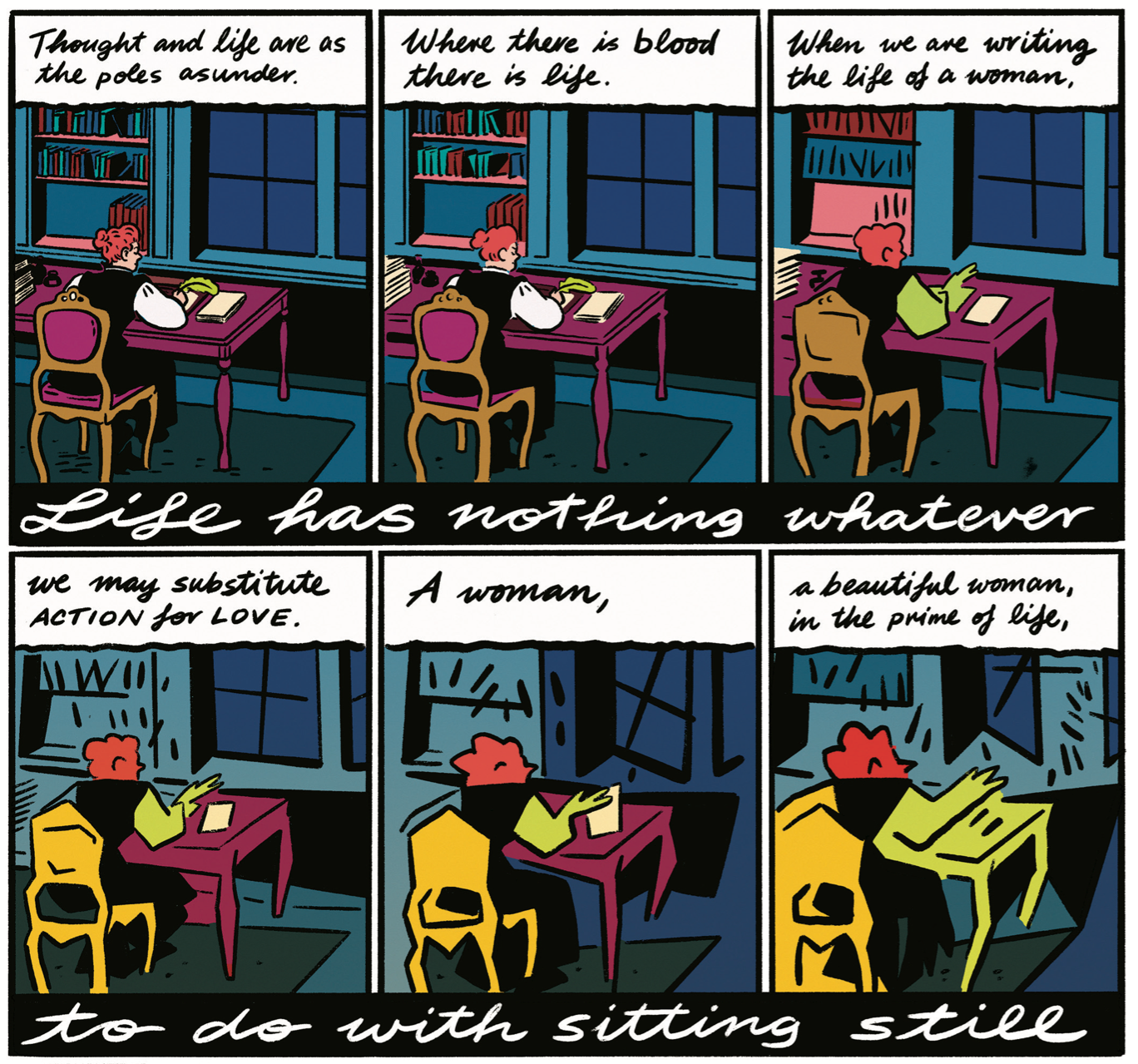
More than a critical revision, this dispersed authority is central to Scheele’s approach. There’s a deceptively complex interplay between the internal and the external in Scheele’s art, a sense of fluidity that he brings to the surface only when the moment demands it. A sequence on the verge of modernity stands out. As Orlando sits at her desk and writes through a series of statements on life, love and sex, Scheele’s line becomes abstract; the tensions between action and feeling, and between the rigidity of social structures and lived reality, are present in all their vivid improbability.
Steady and sensuous as the linework and colouring are elsewhere, close reading will reveal that the more traditionally illustrated sequences are as charged and changeable as the big set-pieces. There’s a lot of conflict in Orlando - aesthetic, fiscal, legal, literal, romantic, sexual (SPOILERS: this book fucks). Scheele conveys this sense of contested possibility through subtle shifts in character design and layout. By depicting all of this on the same continuum, he finds a way to give voice to the true richness of the worlds we know, and to suggest even queerer and richer worlds yet to come.
ITEM
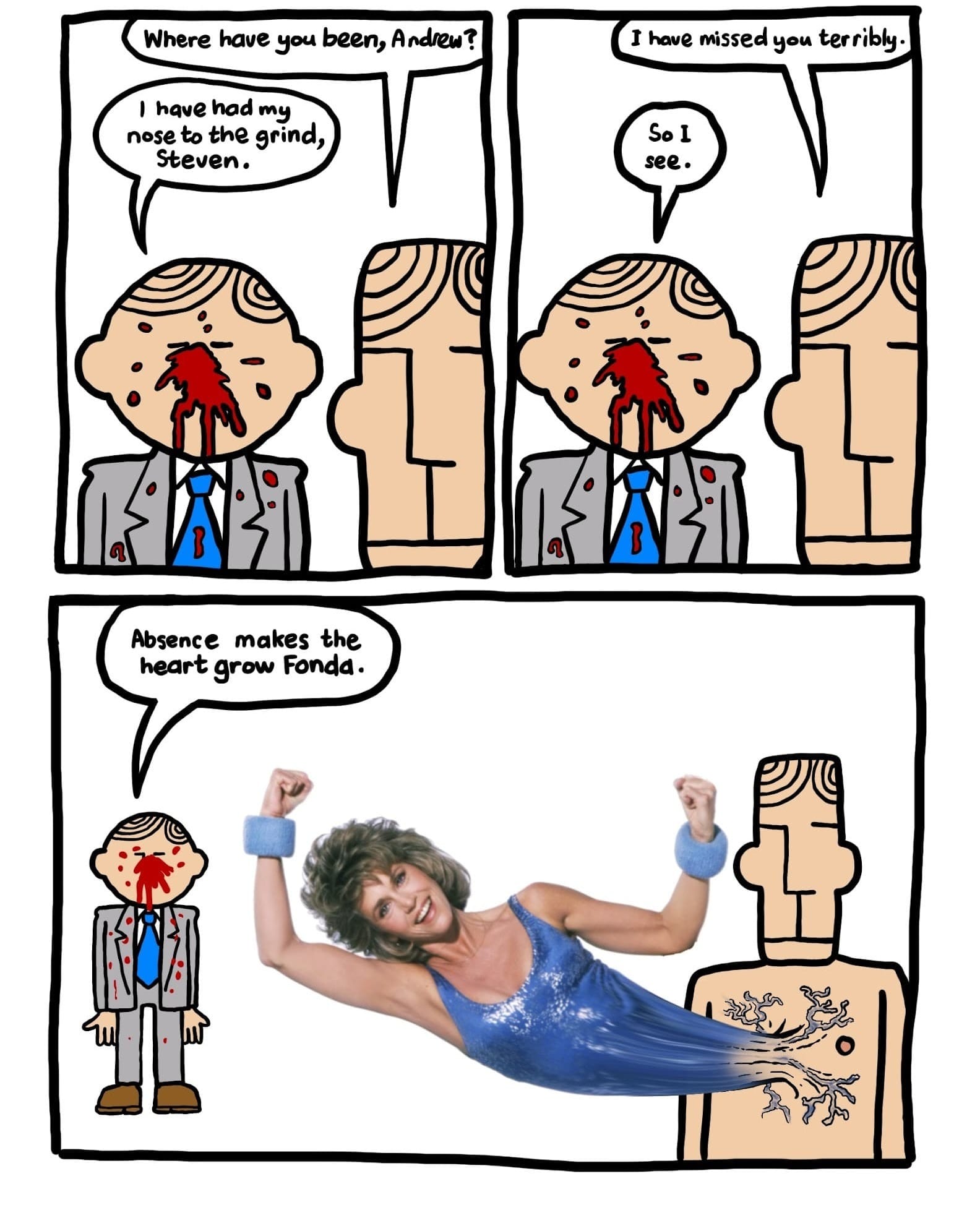
Andrew and Steven, Those Amusing Brothers
ITEM
The Pilman Radiant 1: Ground Zero
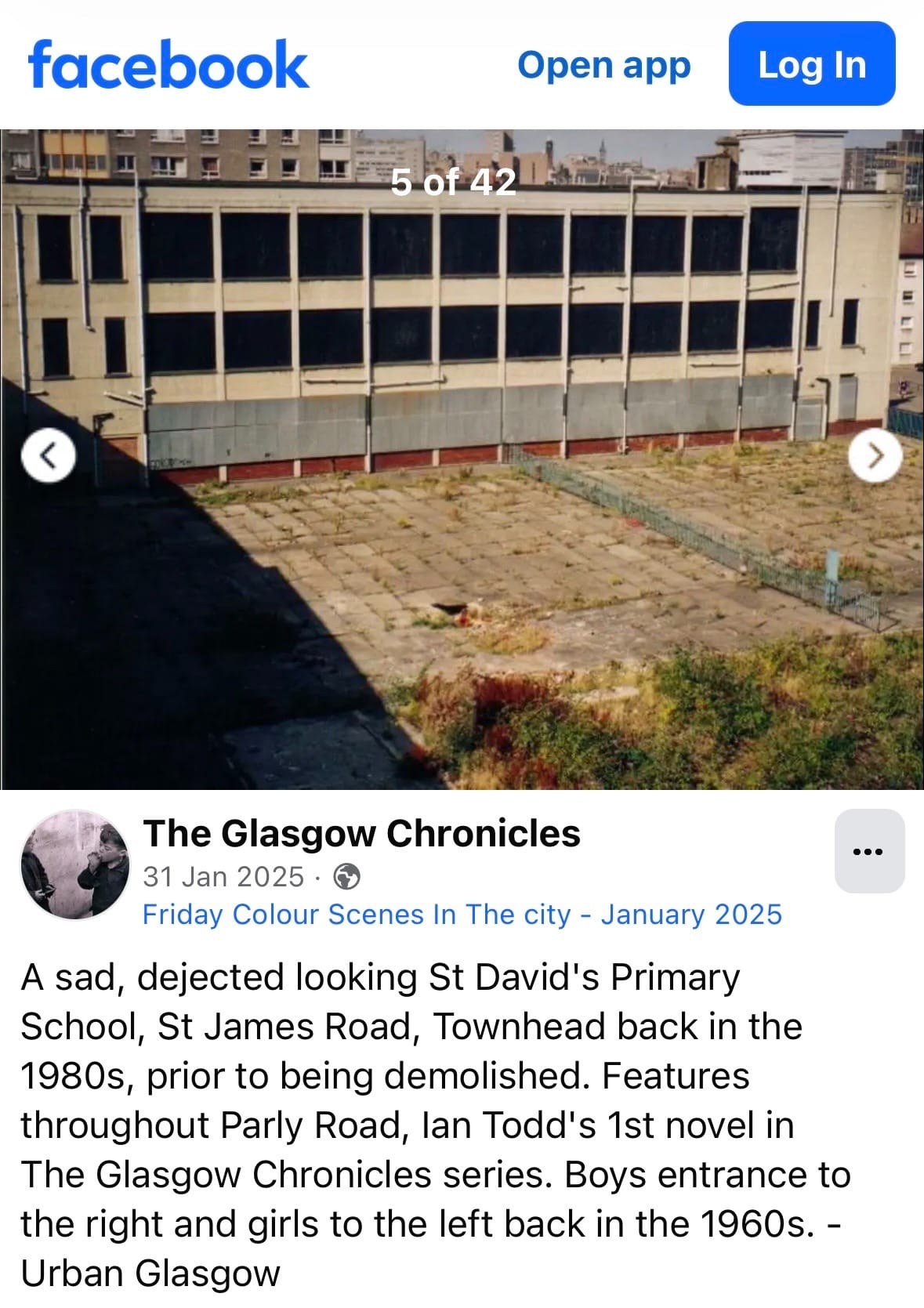
Much of the primary school was empty. We used three classrooms on the ground and the gym. One room on the first floor, occasionally. The top had the dining area and a room full of musical instruments we occasionally glimpsed. The basement? A mystery.
A gas leak saw us evacuated by a short corridor on the first floor to a playground of the secondary school that loomed over us. Waiting in a first floor room with stacked chairs, someone saw a dead rat. Horror spread. The older girl I was evacuated with clung to me for dear life as we crossed the threshold to safety.
The upper floors of the outdoor toilets in the back playgrounds had walkways fenced by tall green bars. We were never allowed to use the upper floors of them, and the ground floor was eventually closed. The other toilets were only feet away, inside the building, after all. The empty buildings loomed.
The Visitation happened after we changed Head Teacher. Mr Calorie would gather everyone together, after the P1’s and 2’s left. He spun yarns inspired by the school’s crest. Winker the Ram performed mischief.
Then came the afternoon where a spectre haunted the school. Soon, the ram walked the empty halls, the vacant toilets. Sometimes it was The Man In Black.
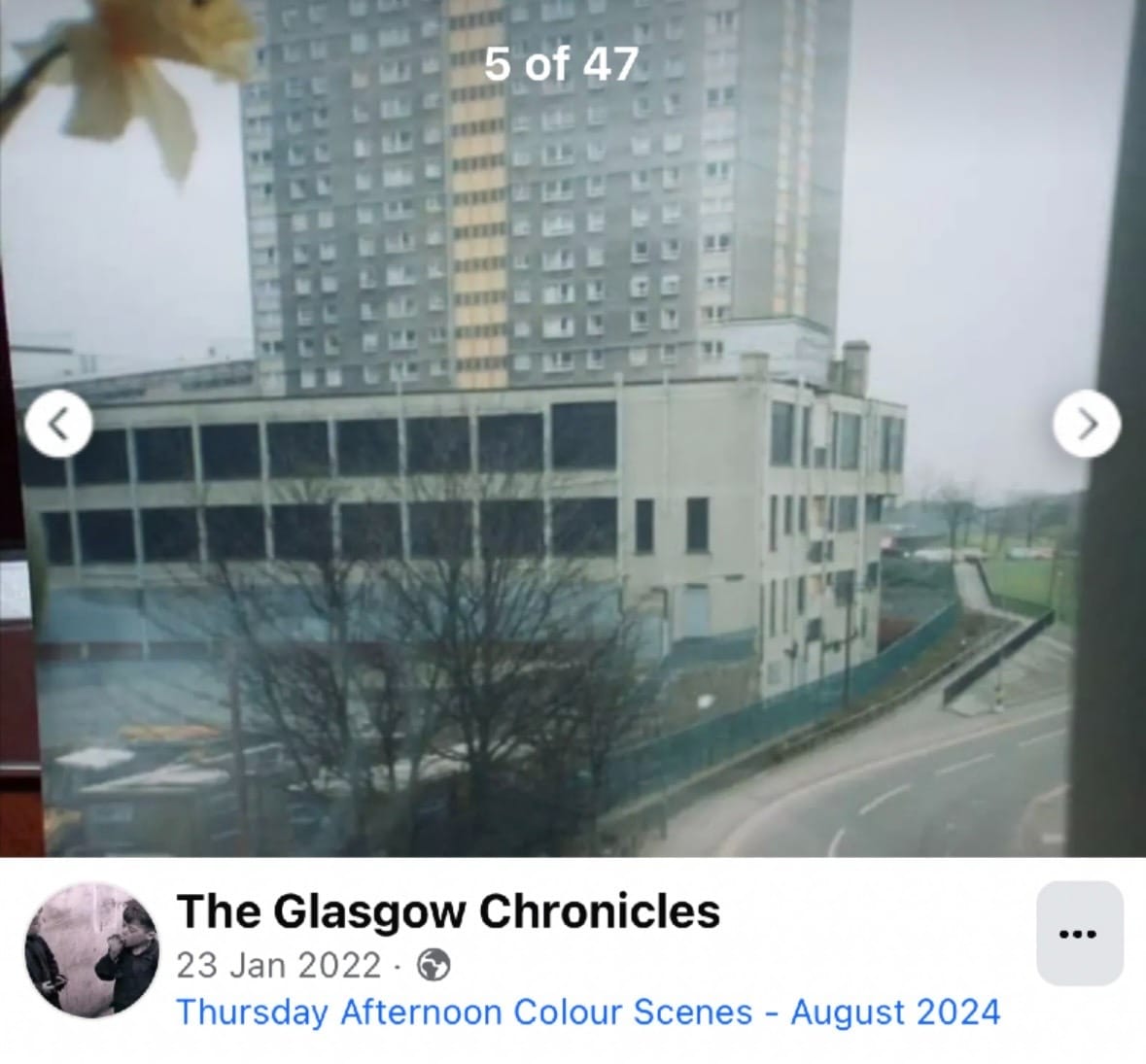
Across the main playground, barred by panel fencing was the disused older building. To me it looked like a massive pink barn. All windows and exits sealed. I was about eight when our side also shut, and too feart to look in when the harder kids broke in. The Man In Black was abound. Someone pinned his empty cloak with a knife, but he vanished.
At five, I pictured the devil as a gray haired man with burning eyes, shrouded in a gray cloak.
ITEM
None so valiant beneath the heavens broad
Tell just one person that you liked this newsletter. Word of mouth, more than any other form of promotion, is how creative works get noticed and sustain themselves. Thank you very much for reading.
ITEM
IN THE FROZEN INFINITESIMAL MOMENT IT TURNS NOON OR MIDNIGHT, IT IS NEITHER AM NOR PM
And other stupid, finicky, niggly disagreements I have with my dad. Ironic, with Scotland at time of writing approximately 1500/1 to progress in the World Cup (listen - if Ghana can beat Croatia by 3, DR Congo can't beat Uzbekistan and ehh Austria can beat Algeria by 2 thereby doubling The Disgrace of Gijón, then we do actually deserve it)... ironic that my love of football is so regularly defeated in outcome by the impossibility of mathematics, which he taught; two interests I developed at the age of 7 or so that were rudimentary bases for paternal love and attention. Anyway I have ten… eight now is it African sides to be intermittently disappointed with before the secretly African side France win the whole thing again and it fails to come home. It is the British game and I can understand English entitlement to quite a large extent but if centuries of colonialism taught us anything it's that just cos you invent or find something doesn't mean you own it.
THE FALCON HATH BORNE MY MAKE AWAY
I have been mostly thinking about collage and reappropriation and archivism in modern music - can’t watch any other telly during the World Cup, the new Dragons thing just reminded me during a distractive watch that it is far more entertaining if you imagine it more like Dr Strangelove with them all riding a nuke - particularly struck by PinkPantheress ability to bestride 00s era club classics like Basement Jaxx, Underworld and MJ Cole and make them her texture - you can see this in Fred Again… or Jim Legxacy, it is a post-Kanye approach, obvious thefts like TS Eliot, the highest art frankly, all these people have good taste and referents and I imagine future canons more and more will be built by artists rather than critics.
ITEM
Requiem for a Village (David Gladwell, 1975)
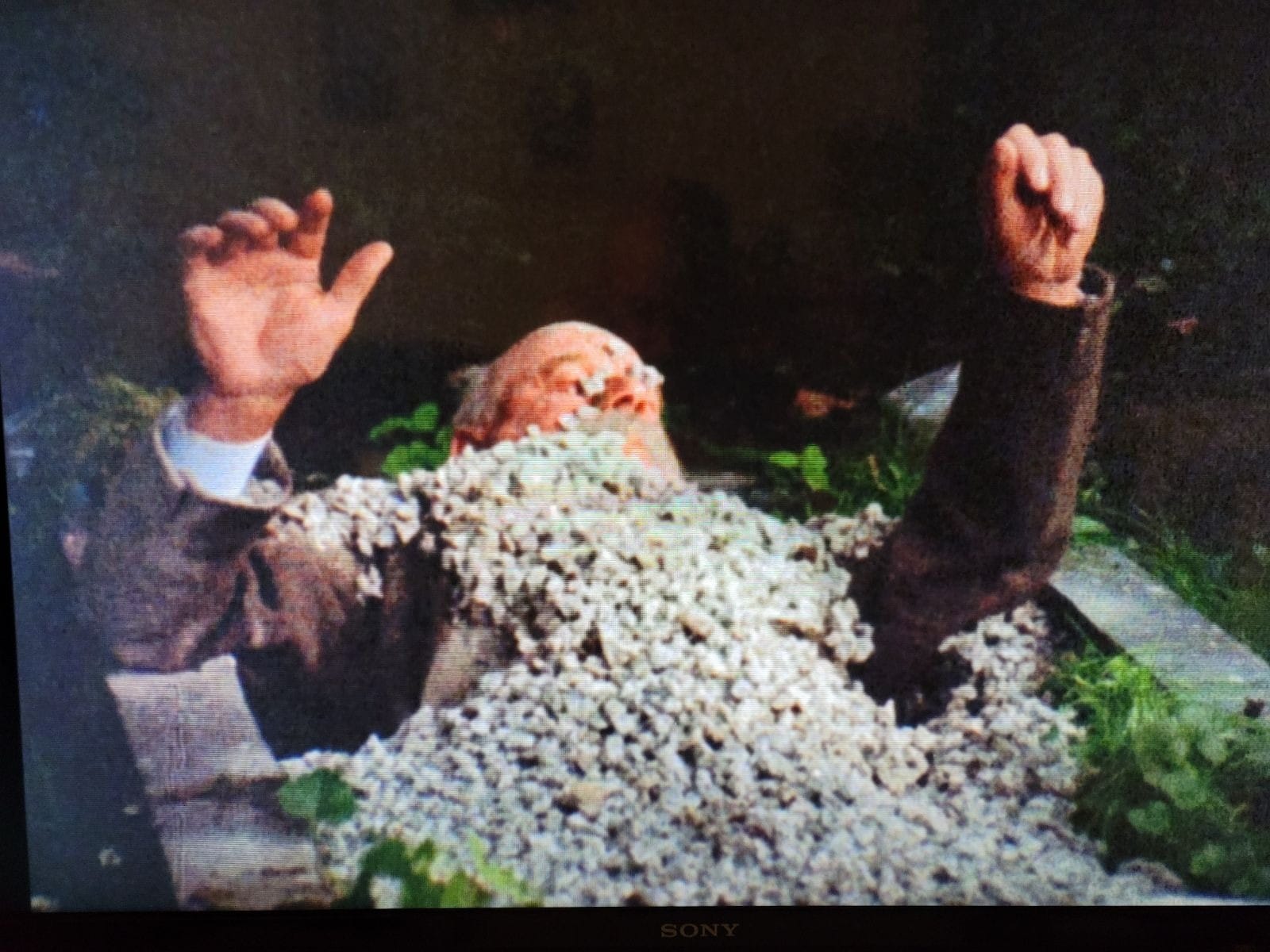
Much as water everywhere is the ashes formed by a fire of hydrogen and oxygen, the past and everything in it is the ubiquitous remnant of the moment-to-moment burn of space and time. Stacked up behind us and growing every second, we move through its inert fathoms like fish, unable to ever sense the shape of our only home.
Despite our ignorance of our condition, and our helplessness before its consequences, we somehow know that the greatest validation of being is to beg the things that were here before us to return to our presence. To find what’s been lost, dig it up and cast it back into the light so we can give it the dignity of our witness and appraisal. There is an expectation here as deep as the bible: God’s job, the one way he makes himself useful, is his cosmic promise to one day bring back everyone who ever lived, to recall every detail, record every instance of moment and experience on the landscape of everything that’s gone.
Developing his lyrical masterpiece while old land was cleared to make way for new houses by gigantic earth movers, rolling over Suffolk soil like greedy dinosaurs, eyeless and empty, pretending to a mechanical disinterest while secretly projecting the avarice of combustion, Gladwell showed his understanding of the deep similarity between the arts of editing and dissection. Although one looks like a bringing together and the other a pulling apart, both require the rearrangement of discrete elements in the service of a new reality.
As such both are a direct rebuttal of God’s role and authority. He won’t be required to raise and judge the dead. As the new aeon unfolds we won’t need him to subject those we’ve loved and lost to do more in death than they could in life - his cold demand of accountability, to prove their worth to heaven’s court. When we see them again we will happily swim alongside them, not haul them into sharp nets to be cast upon an unyielding shore.