Workers with their own factories contributing to world chocolate making
The White Diamond. Andrew & Steven. ABHOBC: Death's Head. Now Let’s See What You’re Gonna Do. Toxic Protection Faililng. The Past isn’t Dead, it isn’t even Past. Sussex Coils & Loops.
ITEM
“May the road rise with you” – The White Diamond (Werner Herzog, 2004)
Coming into sustained contact with a scam artist or someone who’s in the middle of a psychic break – these categories aren’t always totally distinct – can make it hard to keep an eye on the ground. It’s a bad high, like spending a week blasting the Joker gas: after a while you start to see the same face smiling out at you from objects near and far.

(Photo by deaddemonrider!)
It’s a common feeling nowadays. We live in a leaden age, presided over by ultradense humans out to convince the world they’re walking on clouds. The desire to shake off the dirt and drift above it all is not reduced by exposure to bullshit or suffering. In fact, Italo Calvino argued that this is the very function literature perpetuates: “in villages where the women bore most of the weight of a constructed life, witches flew by night on broomsticks or even on lighter vehicles such as ears of wheat or pieces of straw.”
The White Diamond’s notional subject is Graham Dorrington, an endearingly damaged engineer who plans to fly over Kaieteur Falls in a balloon of his own design. His story comes with a warning of the risks of flight, a dead cinematographer. Herzog is combative and enchanted but eventually his gaze drifts elsewhere.

It drifts to local Marc Anthony Yahp, who yearns to use Dorrington’s airship/Herzog’s movie to reunite with his family in Spain.
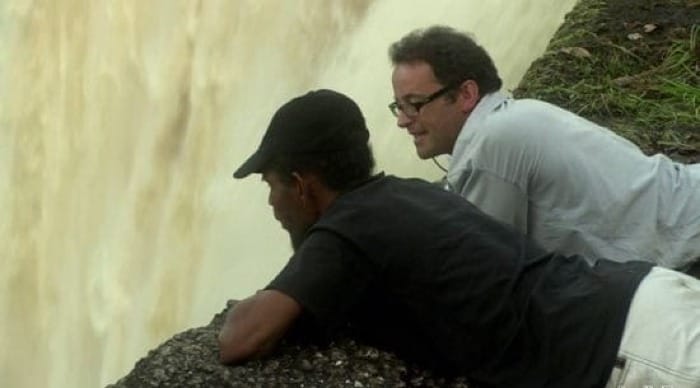
Ultimately, Herzog’s gaze is pulled back to the falls themselves. The downdraft is strong enough to pluck balloons from the sky, but it also shelters an inaccessible cave occupied by swifts; the crew manages to film this hidden world but the footage isn’t in the movie. A useful bit of perspective. After all, what would it mean to dream without something left to dream about?
ITEM
Yes?
Tell just one person that you liked this newsletter. Word of mouth, more than any other form of promotion, is how creative works get noticed and sustain themselves. Thank you for reading.
ITEM
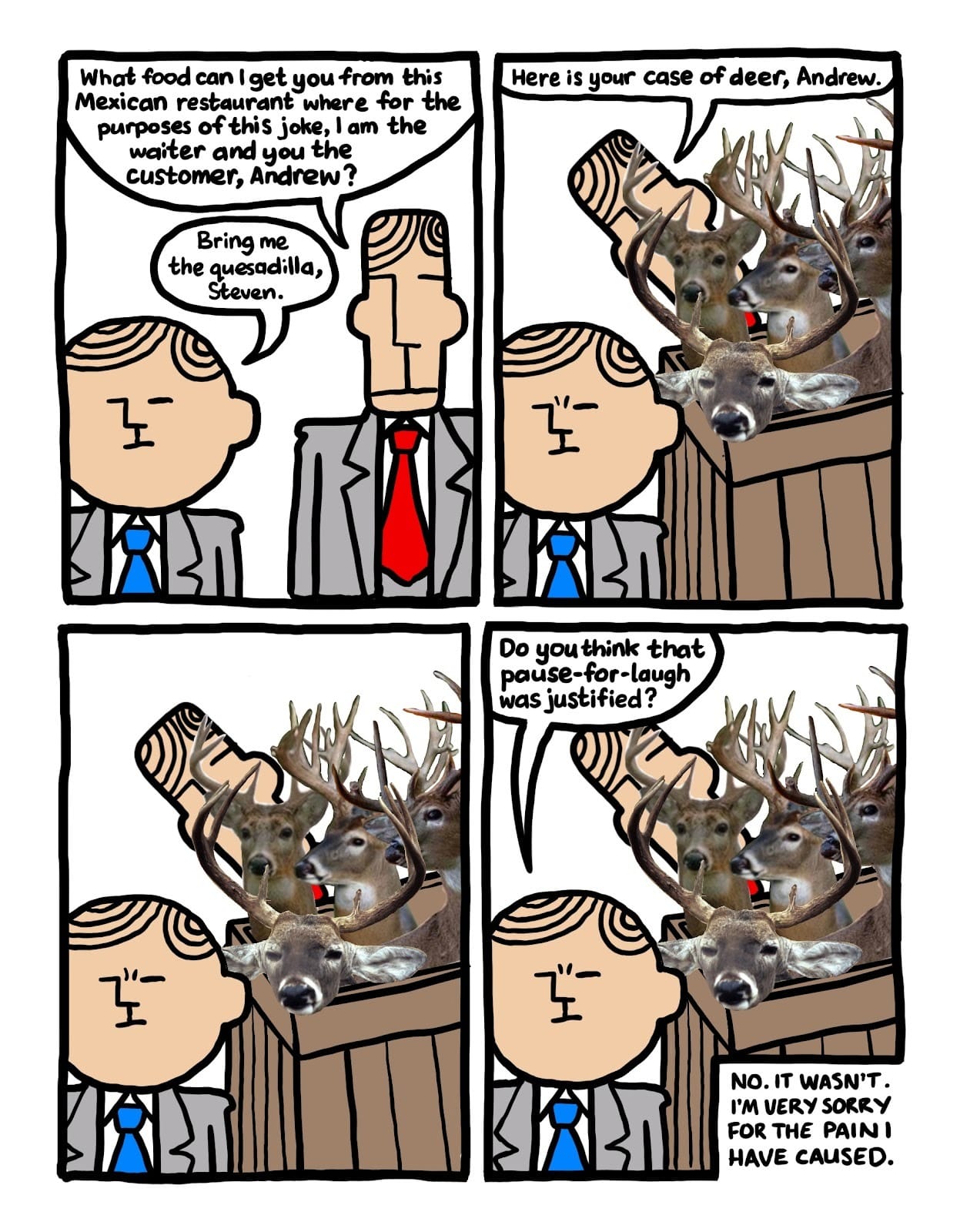
Andrew and Steven, Those Amusing Brothers
ITEM
A Brief History of British Comics
19: Death’s Head
- Publisher – Marvel UK
- November 1988 – August 1989
- 10 issues
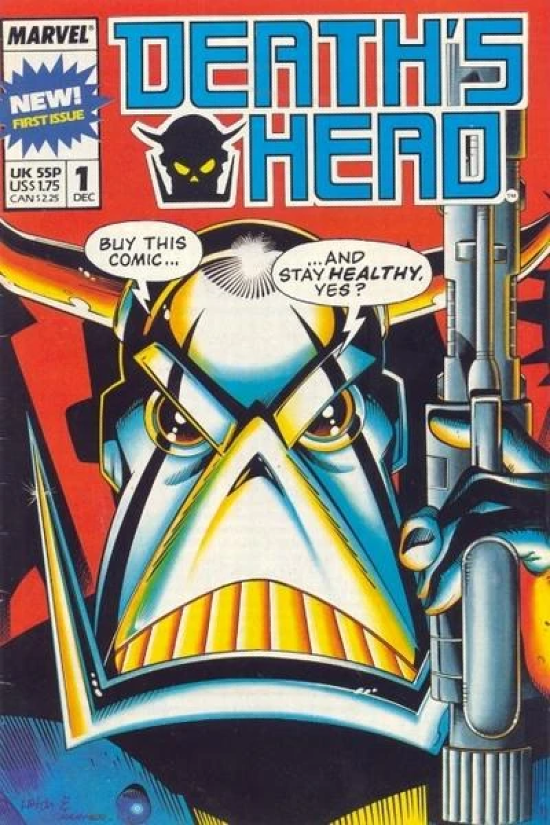
Sometimes it takes the collective psychic energy of charged up twelve year old kids to lift the ridiculous into the sublime.
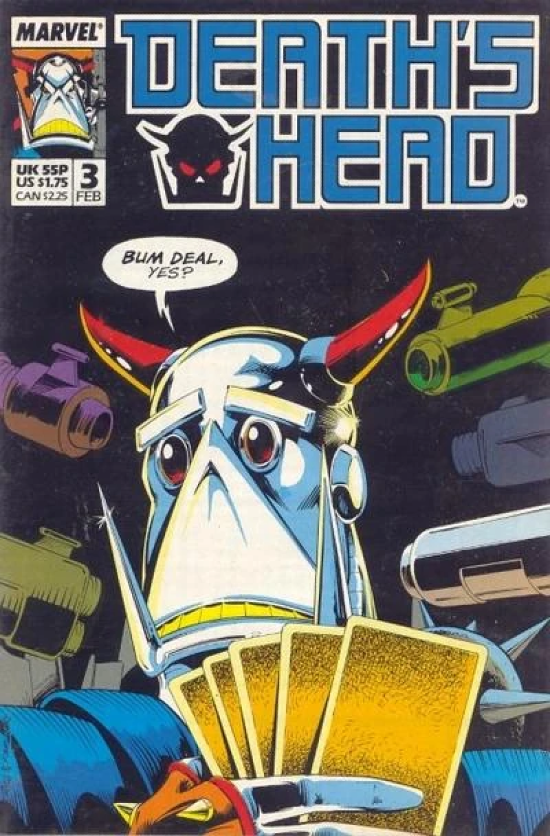
Death’s Head is objectively a very silly character. A robot bounty hunter with a Heavy Metal skull head, a cape and interchangeable killing hand. He bounced from universe to universe, alternately bothering Doctor Who, the Transformers, Dragon’s Claws and finally the Marvel Universe proper. In that time he changed size and design and was drawn by a variety of artists. Oh and he seemingly had a South African accent.
He’s like a playground one-upmanship argument made manifest.
“Oh yeah, well my character has a skull head and an axe for a hand”
And yet.
He’s also one of the greatest comics characters of the 1980s.
I was one of those 12-year-olds raising Death’s Head into the pantheon by sheer willpower and misplaced love.
Maybe it was the fact that most of us were first exposed to him rendered by Geoff Senior in seminal Transformers bangers like ‘Target: 2006’, mixing it up with Unicron, Galvatron and the rest of the gang.
Maybe it was his zero fucks, MVP energy and delightful sense of self-importance. Like some shitty Thatcherite spiv, Death’s Head sought nothing more than respectability.
“Freelance Peacekeeping Agent, yes?”
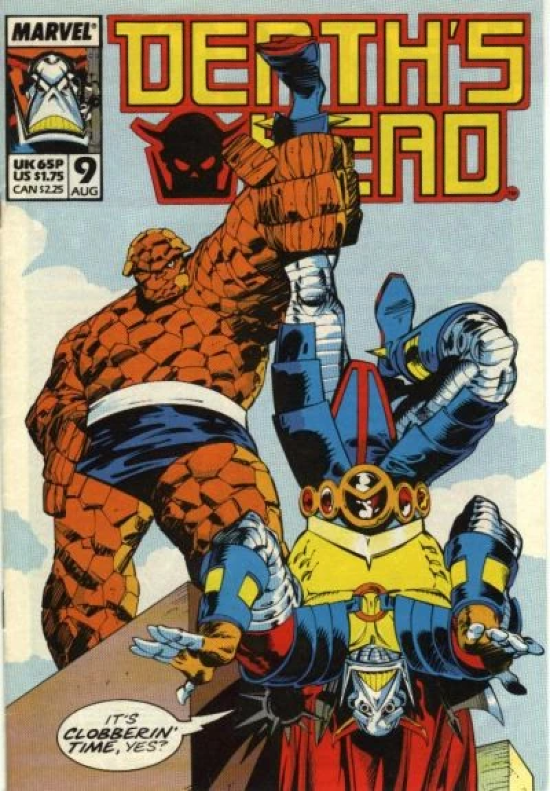
Maybe it was his lethality; his indestructibility. As Cameron’s Terminator came clawing back through the flames, Death’s Head kept on bounding back from destruction. A cheerful robotic cockroach contract killer.
Maybe it was that we wanted new characters that we could call our own, no matter how idiotic.
Maybe it was that Simon Furman, architect of so many pre-adolescent fever dreams, invested this silly sausage with weird levels of humour and pathos and just wanted him to succeed in the big wide world.
Maybe things that don’t matter, really matter.
Yes?
ITEM
Now Let’s See What You’re Gonna Do - Katerina Gogou

For a terrible moment you think she’s going to kiss you. But then she slaps your face, nicks your fags and tells you to buy her favourite brand next time. You’re relieved, you know that like the revolution you’ve let her down. Your timid words, your failure to become are pathetic in her eyes.
She doesn’t do myth. The myths of the Republic, the myths of the Junta obviously but she won’t play along with the heroic myths of the Left. She upsets them by writing about prostitutes, by writing about dirt, by writing about those all revolutions leave behind.
She gives benefit concerts for imprisoned anarchists that spark riots.You can’t understand her really. You get the coffee and the fags, the precarious living, the hope of change that calcifies as it’s constantly postponed. But the textures of the places she inhabits, the political reality of cascading acronyms and factions, the music she loves, the films she wants to make, all this is beyond you. You’ve never stood out so far that you’ve been beaten by the police. At least not in their official capacity.
For a terrible moment you think she’s going to slap you. But then she kisses you and lays you down and takes you inside and opens up the terrible reality of her body and her head and what this world has done to her.
She smokes too much, she drinks too much and takes too many pills. And then one day she does that deliberately and finally.
She leaves the poems but tells you not to look for her there. ‘…I lied…’ she says. She probably did. All those truths building up becoming a loadstone that distorts into one enormous lie. The honest kind. Maybe one day you’ll write something that hurts.
ITEM
Toxic Protection Falling
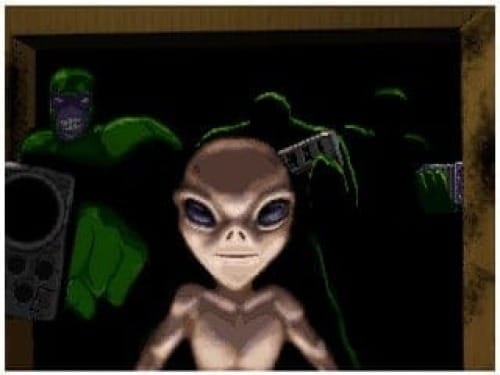
In a retrospective look at the first XCOM game from 1994, UFO Enemy Unknown, creator Julian Gollop revealed the seemingly fiendish behaviour of the aliens was rather simple. If they could potentially shoot at the player’s units they should. If they couldn’t make a shot, they should change position. In typical human fashion, players anthropomorphised the little bastards. Seeing a brutal calculus in their actions. Active malevolence.
Something not unlike the human ability to become overinvested in a soft toy. To ascribe it an inner life. What we project in determines the outcome of an artificial system.

Early on in the release of video game No Man’s Sky, two players attempted to coordinate and meet up. They couldn’t, proving that the players in the Euclid galaxy’s nine trillion planets were only connected by a database of entries and not a shared communal space. This would be rectified in subsequent years. Hello Games even added an in-game tale based on this incident. The player, a Traveler, encounters another of it’s kind called Artemis. Communicating over long distance, you arrange to meet but are unable to. You eventually learn Artemis is dead and may choose to preserve them in a simulation or allow them to die. A mild plot twist or an aching heart? How invested are you in lines of code? Does it prey on you like a Sectoid with an 88% chance to hit?
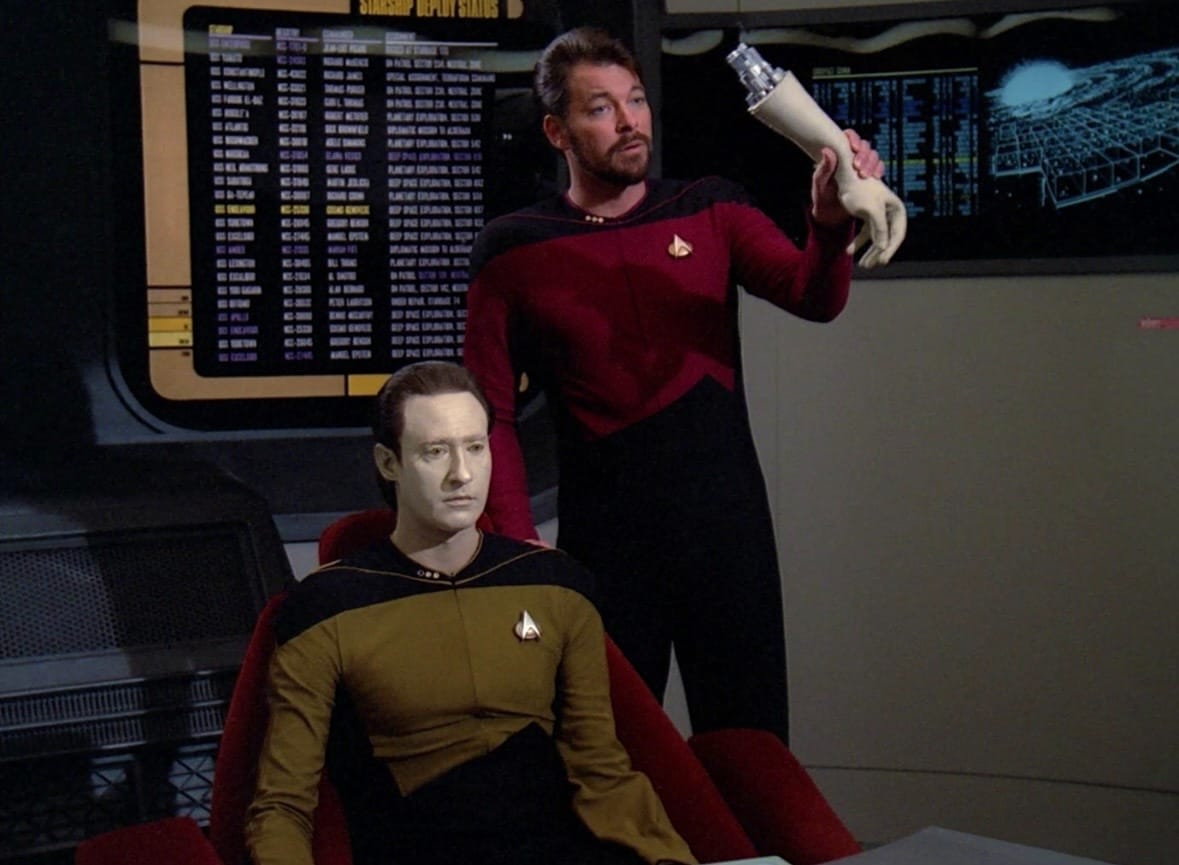
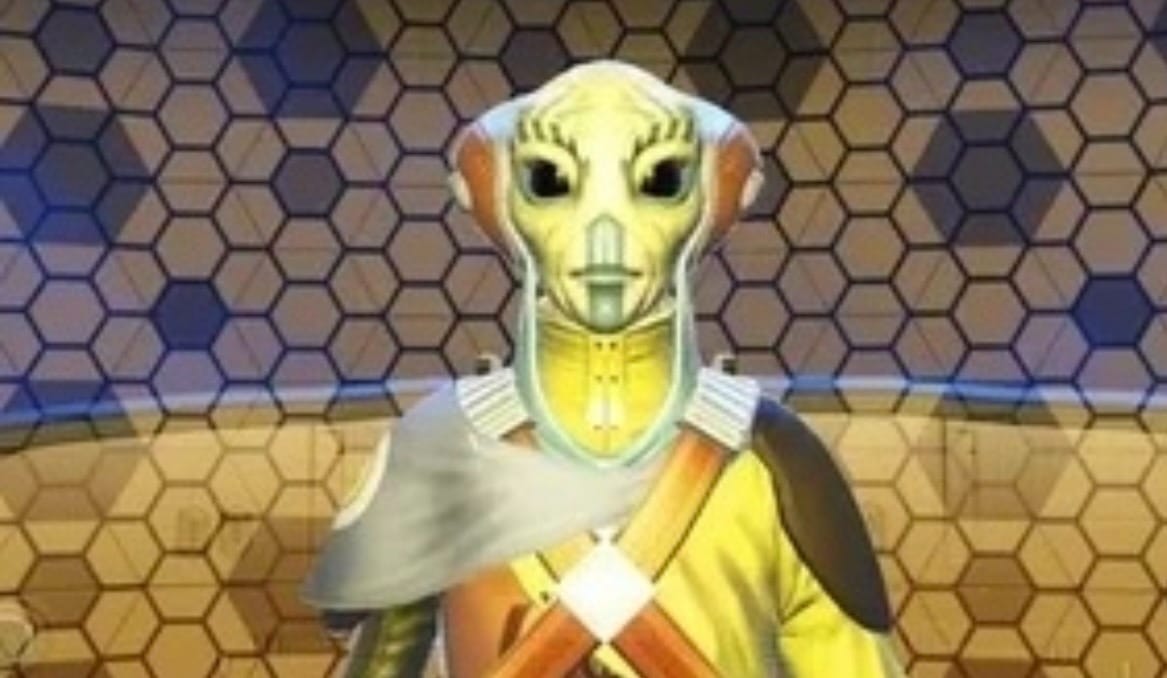
The fictional sympathetic AI is defined by spontaneous attachment. Affection. Love. Data mourning Tasha Yar. Genuine empathy projected back at us. The corporate AI we see has attempted to weaponise empathy against us. A corporate thumb on the scale, it masquerades as humanity’s children. An angler fish, searching for those of us weak enough to cry over the fate of a simulation of a simulation.
ITEM
The Past isn’t Dead, it isn’t even Past
I've been thinking a lot recently about rewriting and revising previous works. To what extent are we entitled to have access to the works as originally released, and to what extent are authors, filmmakers, musicians, entitled to revise their own past works? Pretty much everyone thinks that Tolkien's revised version of The Hobbit or Mary Shelley's revised Frankenstein are the "correct" versions, pretty much nobody believes that about Star Wars – although almost everyone now refers to the film originally titled Star Wars as A New Hope. It's all about what the work we first experienced is, not really about either authorial intent or historical accuracy for the most part.
The downside to things remaining permanently available is that no creator who's made anything at all popular can ever leave their past behind. If we're buying some eighty quid giant hardback on glossy paper collecting fifty issues of some superhero comic from the eighties we loved as kids, there's going to be at least one issue in there where the artist or writer was on such a tight deadline they hoped nobody would read it a month later, let alone forty years or more. I know I've written books that I sincerely hope nobody ever asks me about, because I'm embarrassed by them now.
Most mass culture was created as disposable, to be read, watched, or listened to once and thrown away. Those like myself who think of ourselves as scholars of this material have to reckon with that, and with whether we're in some ways forcing artists to have their dirty laundry repeatedly aired in public, to never be able to move on from who they used to be.
Now if you'll excuse me, I'm off to complain about the quality of the upscaling on the new Doctor Who Blurays.
ITEM
Sussex Coils & Loops by Paul Holman (Scarlet Imprint, 2026)
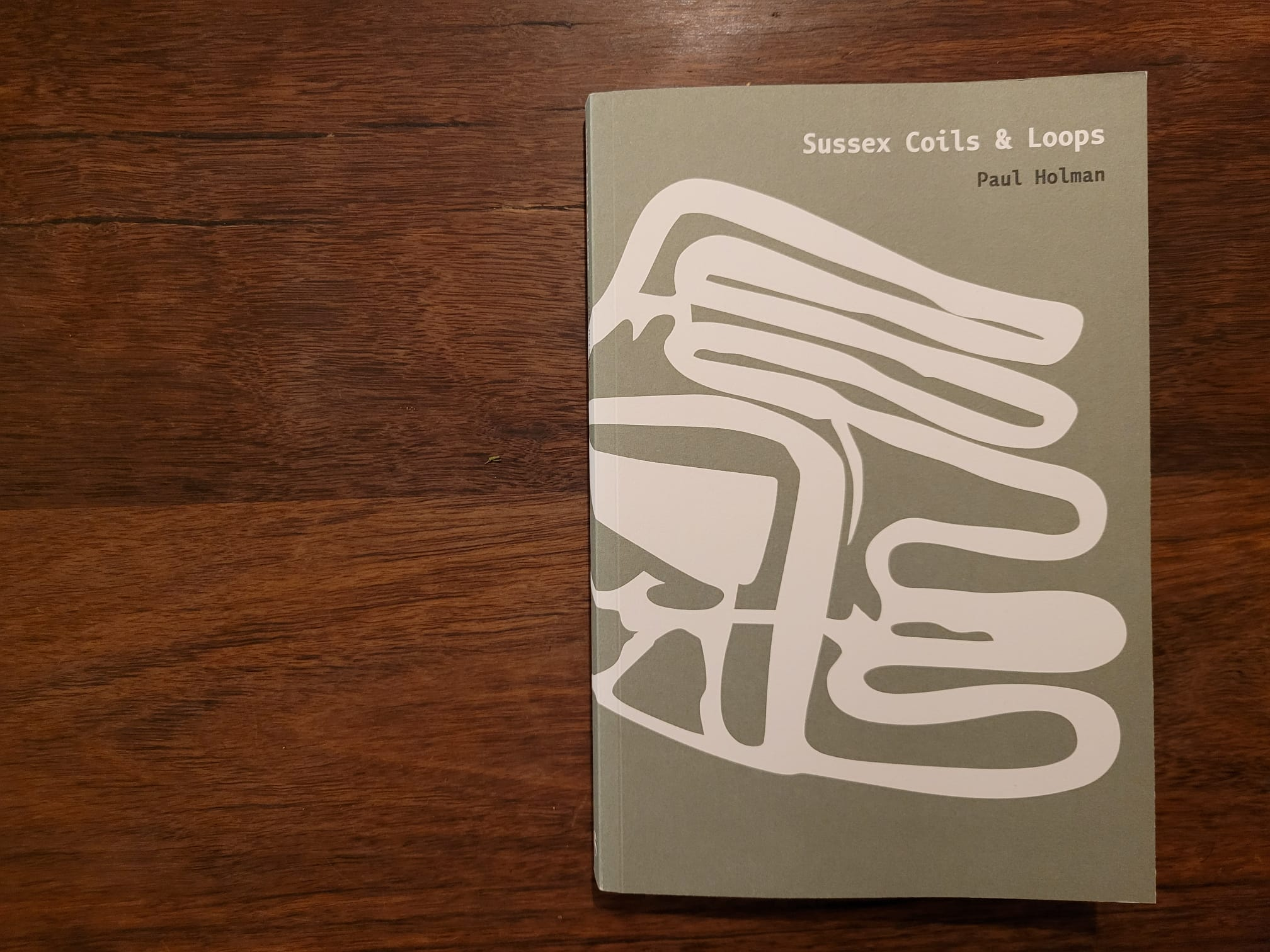
Caught tight between two radiant hyper objects, the surging continental channel below and the rippling London impact crater to the north, the geology of Sussex is uniquely prepared to distribute these opposing densities. The soft, porous Downland chalk meeting the hard sandstone ridges of the Weald writes a sinuous cursive into the landscape. Serpent tongue. Inscriptions only legible to poets and the possessed, alchemists black and white.
These energies, interrupted, gather and pool in secret places. They condense and cohere, taking snake-form, growing organs of flight, desire and sentience, becoming dragons. Holman’s walking record of discovery, an instant classic of modern English land magic, exposes these hidden ophidian stories of knuckers and wyrms, and shares along the bridleways a set of imaginal techniques for receiving and channeling these vital influences into unexplored territories. Instructions for seeing the snakesigns curling through the too-perfect commuter villages.
Throughout the rest of the island, Sussex bears the shame of invasion. The first British land to fall to the conqueror, just as it was last to accept Christian rule. Ground zero for England's thousand year reich. A conflicted zone, ever-contested, its power sites are layered and obscured under strategies of misdirection and inversion, masking and mimesis. Even in the sun shrine at Brighton, between the regency burial vaults of the dog lands, and the churchyard where the tombs crack and the underworld pushes up, its tunnels sucking the grass into reticulated furrows, the squat tower of St Nicks/knucks – patron of sea trades, sailors and fishermen – overlooks a deep water mystery.
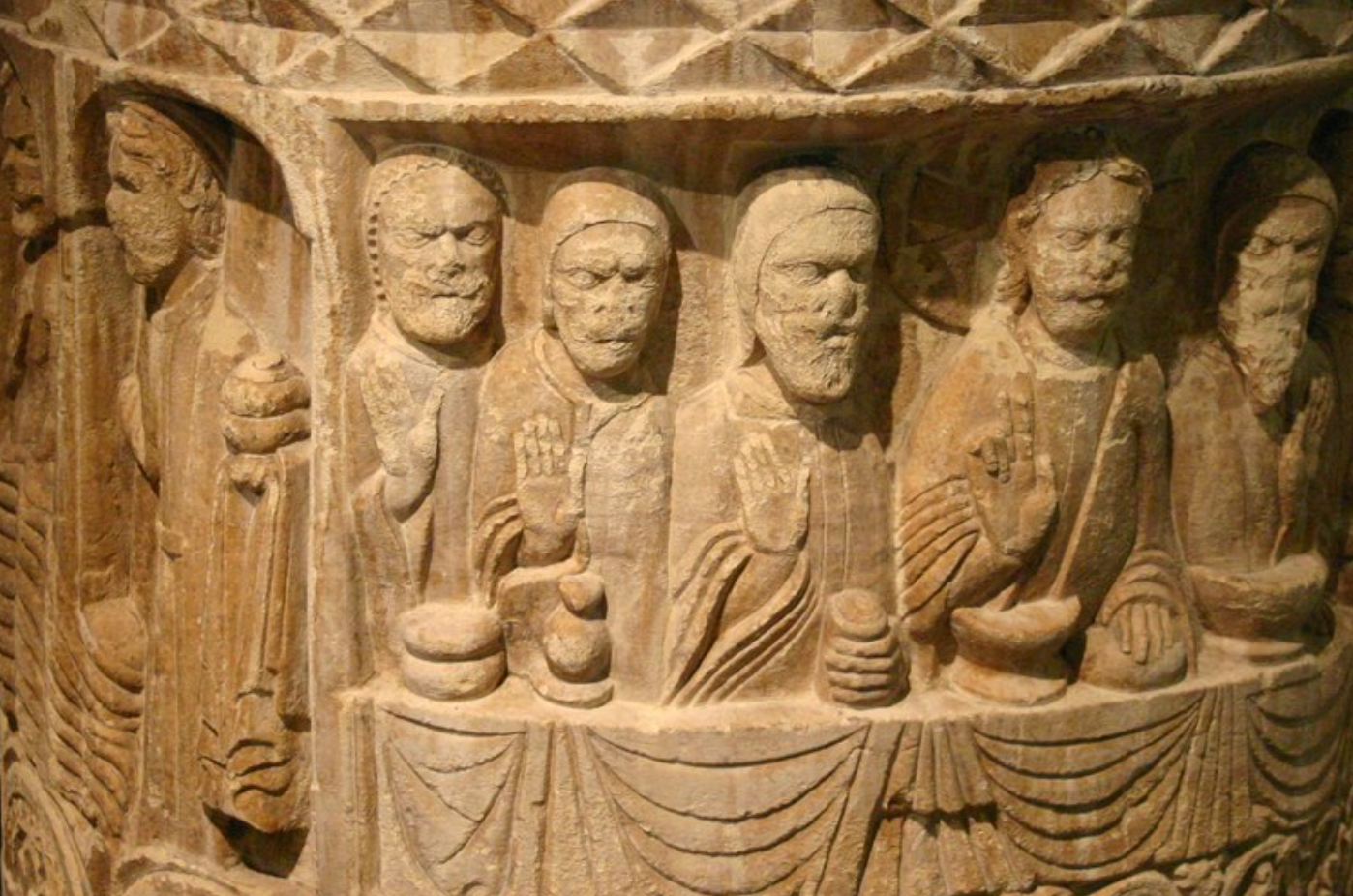
The solar mother temple hides a plain sight secret in its twelfth century baptismal font, a local heresy chiselled onto the holy pond. Time and the puritan reforms conspired to deface and decode the Caen stone’s developing intent, there in the water bearer, revealing baleful reptoid figures flanking Christ, snakefaced and stone-eyed, where apostles used to be.