We have come to judge you
ABHOBC: Scream! The Ghost of a Flea. Andrew & Steven. With Acknowledgment to the Works of Harlan Ellison. Judge Death. Friendship. The Backrooms. Take me to my beach. On Dracularity II.
ITEM
A Brief History of British Comics
7: Scream!
- Publisher: IPC Magazines
- 24 March - 30 June 1984
- 15 issues
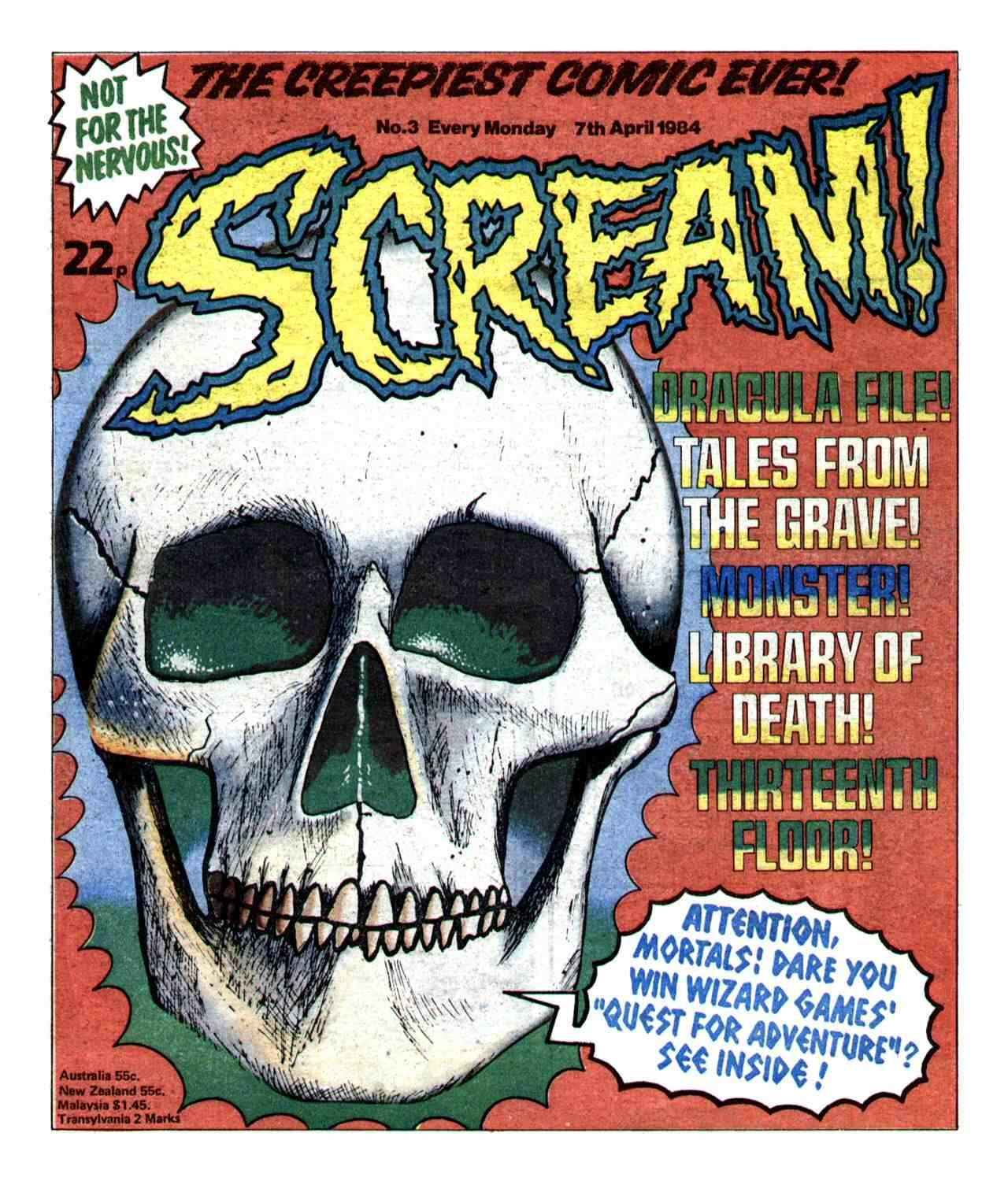
Scream! should have lasted longer. It should still be going now.
The British have a knack for horror fiction. Arthur Machen, M.R. James, Ramsey Campbell, Clive Barker, Adam Neville. It’s in the blood. A bone-deep sense of unease, of the gristle and meat below the surface, of the arcane bleakness of the countryside and the fear-stained concrete of cities.
A weekly horror title should have been a given in the 1980s heyday of British comics. Girls’ comics of the 1970s had smuggled brilliant and chilling horror strips between their covers. Sadistic governesses, haunted ballet schools and social-realist dystopian sci-fi were commonplace in the pages of Jinty and Misty.
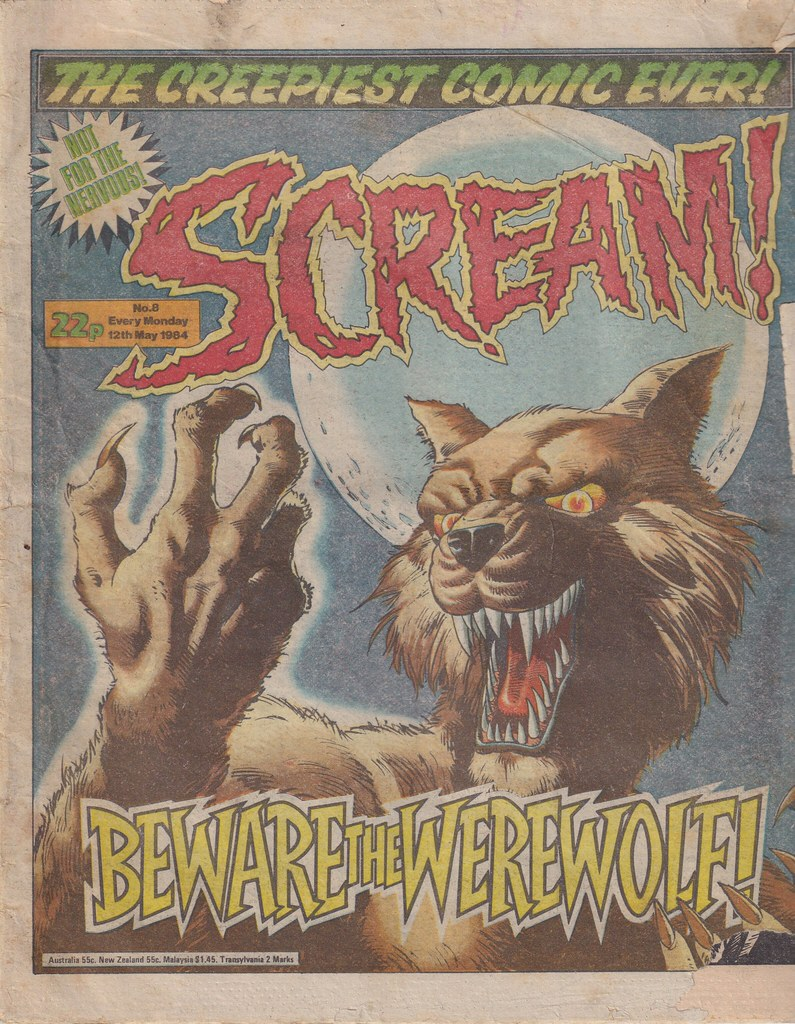
Scream! though, was the first dedicated horror weekly, helmed by Barrie Tomlinson after successfully re-launching the Eagle. The steely blue-rinse grip of Mary Whitehouse still held moral sway at the time, so the title trod cautiously, seeking to avoid any ‘video-nasty’ style outrage.
It skewed younger than 2000AD and lacked the bravura pyrotechnics of that title’s band of inspired creators. The sturdy linework of Eric Bradbury and assured euro-style of Jesus Redondo were the artistic touchpoints.
The stories were fun, often cribbing from familiar texts, but tame. Alan Moore notably wrote the first episode of ‘Monster’. ‘The Thirteenth Floor’ was an obvious standout. Truthfully though it just didn’t have the visceral weirdness that was required. It disappeared after a paltry 15 issues, bar the occasional holiday special.
It’s criminal what we didn’t get though. There should have been multiple eras of Scream! Jamie Delano should have got his start writing brutal rural horror strips. Grant Morrison should have flexed their cosmic horror muscles there. Garth Ennis could have used his vicious storytelling chops to grisly effect. John Smith would have had a permanent residence.
The British should have the horrors they deserve.
ITEM
Flea Circus
ITEM
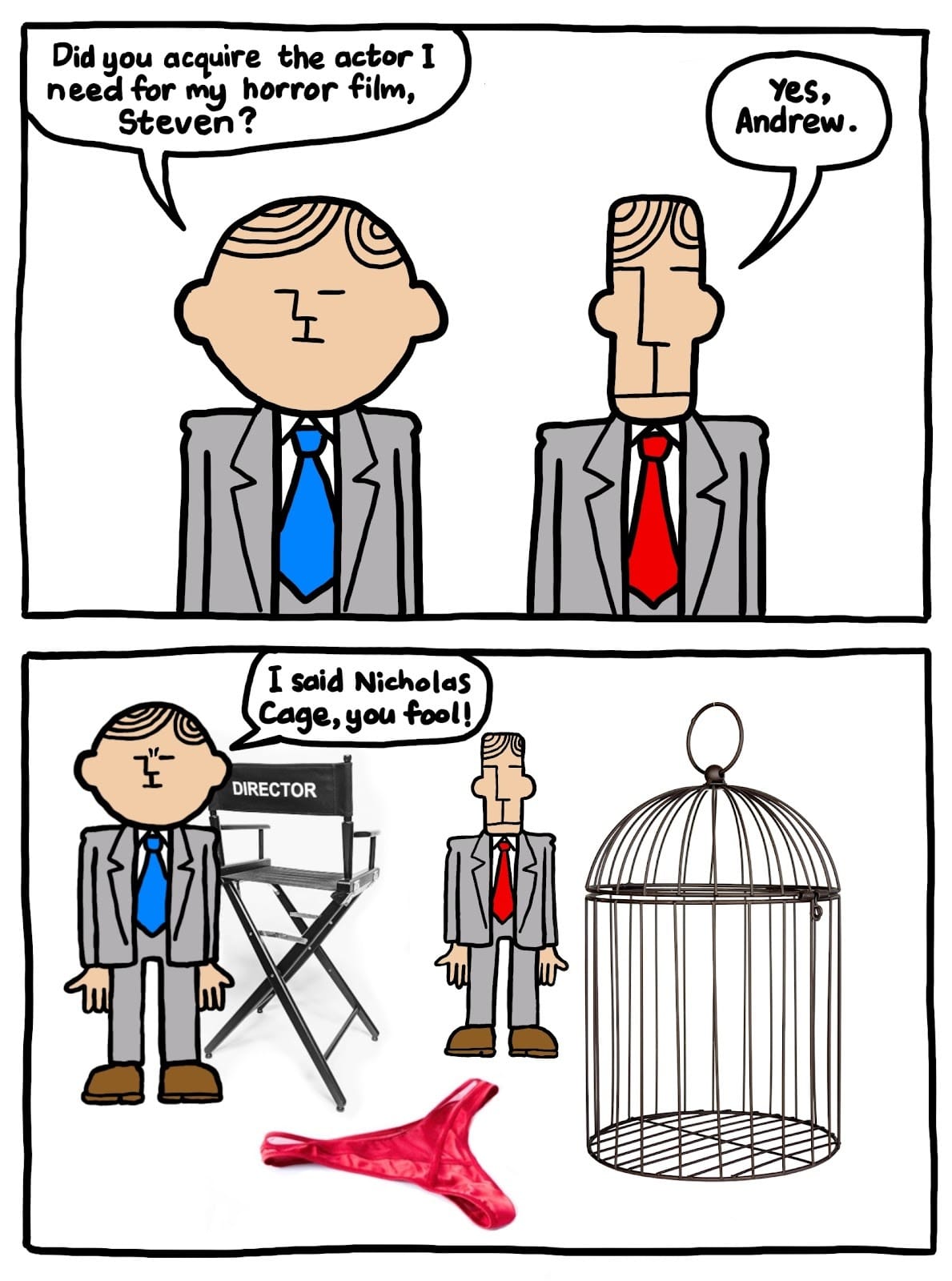
Andrew and Steven, Those Amusing Brothers
ITEM
With Acknowledgment to the Works of Harlan Ellison
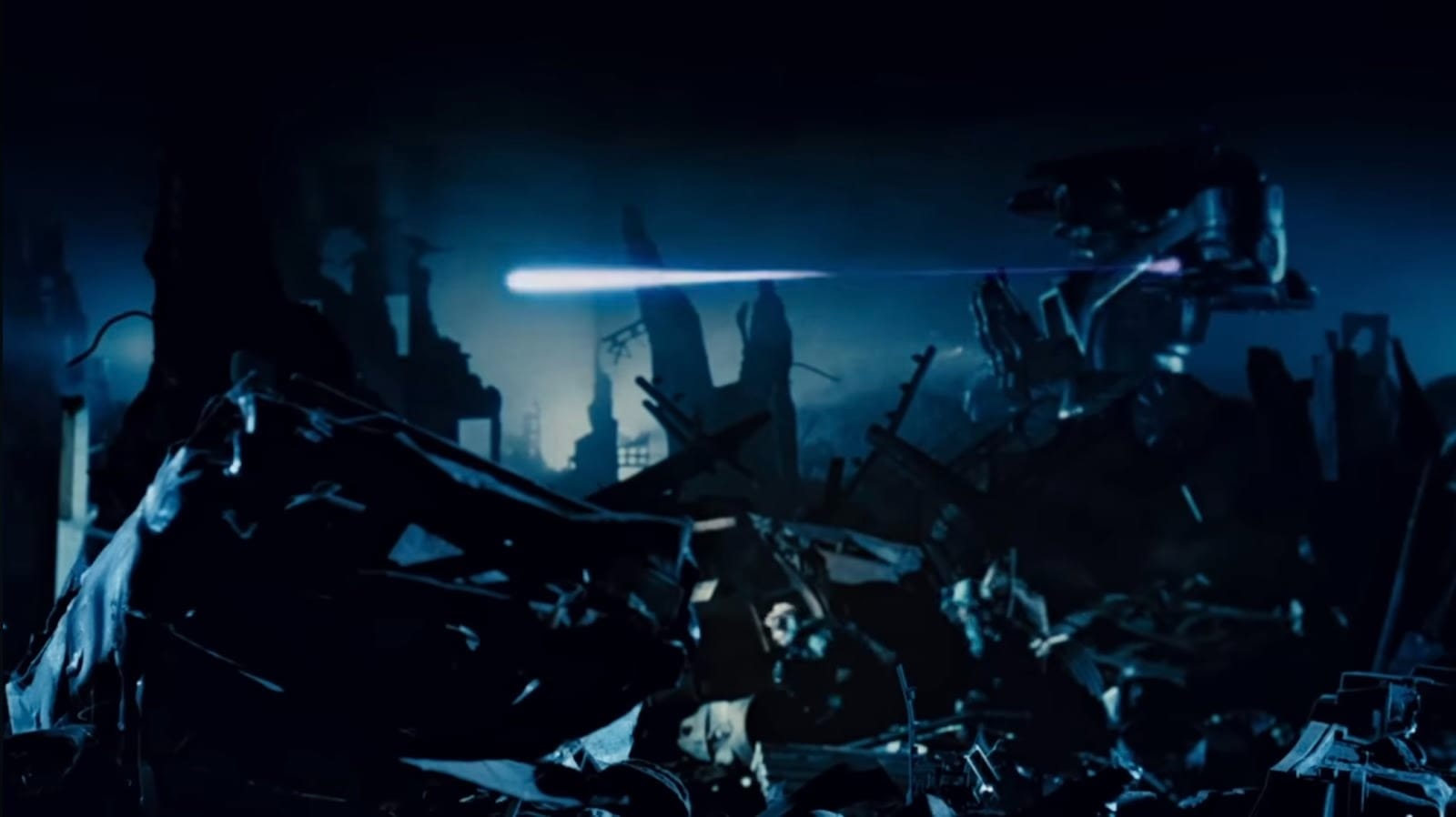
Saw The Terminator Live on Monday. Brad Fidel’s mechanical heartbeat score performed by live musicians, pumping against the on-point visuals. Looking pretty tight in contrast to decades of weak green screen of this century. The cleverness of real people running on scenery next to a projection of the giant tank robot more convincing as current compositing becomes rushed.
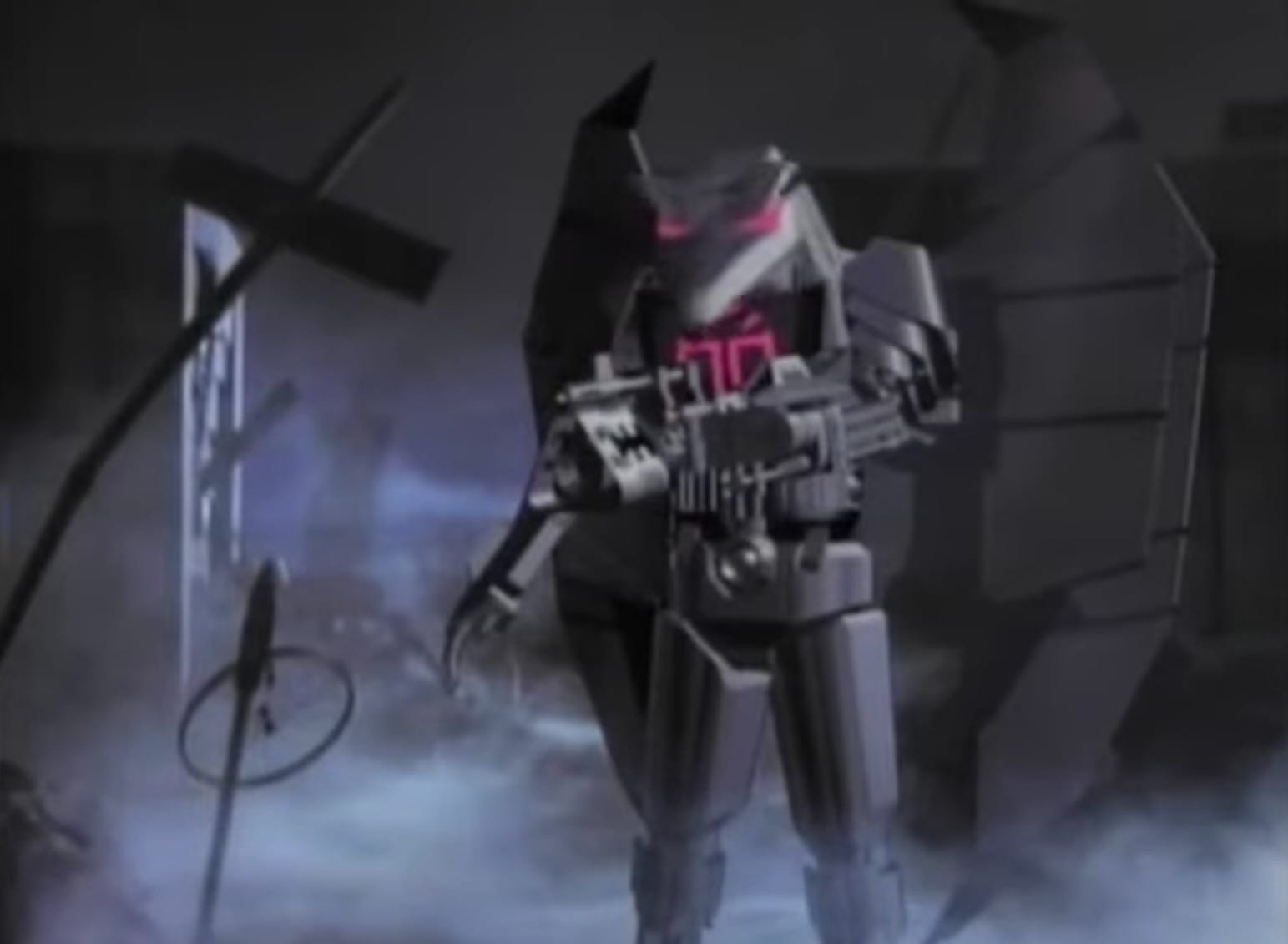
Stupidly, I flash back to a dumb conversation from a few weeks ago: Captain Power & The Soldiers of the Future. The Metal Wars! When man fought machine and machine won. A live action TV show, The Terminator by way of the Masters of the Universe movie. Built to sell a Mattel toyline. Nerds enjoy speculating that the design of cyborg villain, Lord Dread, influenced Star Trek’s Borg. Dread’s henchman include the winged robot, Soaron, who hunts surviving humans. He has s weapon that ’digitises’ his victims. Flesh made binary. Imprisoned within him. It knows everything about you, torturing you from within.
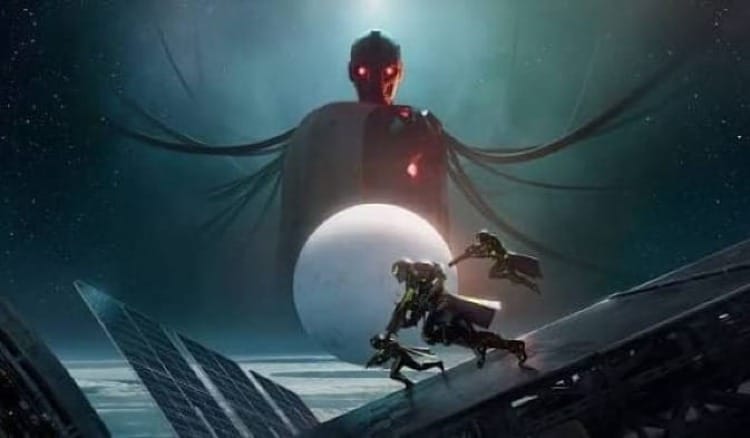
My brain skips again to other digital fears. Clovis Bray, the egotistical scientist from video game Destiny 2. Craving to be the most important member of the human race. Purging his son of all DNA inherited from his mother. Editing them to no longer need sleep. Fatal Prion Insomnia ensues. Slow, sleepless death. The next desperate step? Uploading to a robotic body. The result? A problem dubbed loop/billboard/crash. Lacking the stimulus of the true human body, the mind believes itself to be dead. What you were is accessible, but increasingly machine-like. Repetitious. Looping. Alive but dead.
Presently, billionaires convinced of their own importance seek immortality and world changing prestige because the money didn’t solve them. They will feed your art to machines, pay tame journalists to tell you IT’S ALIVE so investors will give them more. They’ll take that more and farm your body and soul.
ITEM
You cannot kill what does not live
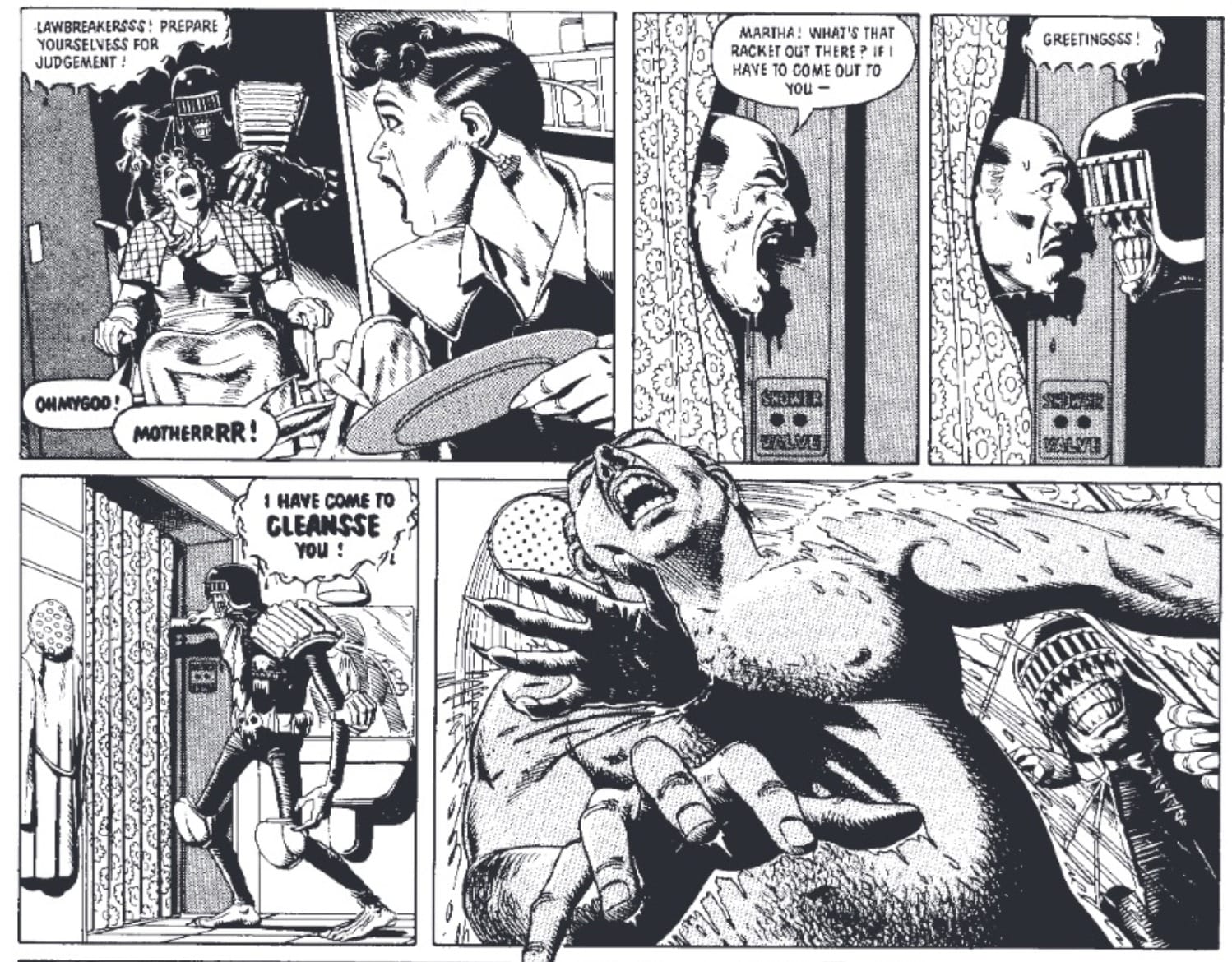
They get the voice wrong. In the Penguin audio Dredd vs Death Judge Death is buff and gruff, the same vocal register as Dredd. Chasing an unfamiliar Radio 4 audience, lacking visual cues they’re going for a sonic mirror. But Death’s voice is soft, sibilant, insidious, wheedling. Jordan Peterson with carbon monoxide poisoning. Donald Trump tracheotomy. Death is accountant as genocidal freak.
Like a lot of finance bros escaping the rat race Death goes artisanal, mass murder as intimate activity. His hand moving slowly inside you, fingers in your heart, fingers in your brain. No resistance, no tearing, just the admittance, the incorporation of the thing into yourself.
Death’s appearance in the Dredd story-plane provokes escalation. A rabid citizenry turning against themselves in Block Mania the opening salvo of the shared 80s nightmare of the Apocalypse War. These pressures force Dredd into new shapes, herding his citizens into execution pits ’No mercy for collaborators’, pushing a button that kills half a billion people. An act that outside of one badass panel the strip is entirely incapable of dealing with.
The shockwave destabilises him but it’s too big to hold in his head so the cracks scale down to individuals, children crushed by the Judges machinery. Bonnie made freakish in a metal body, Wenders asking fundamental questions about the nature of power before dying at the hands of a man made insane by the Judges' truncheons. Unable to judge his own system Dredd vacates it, ceding his space to a bad Xerox. And in the space Dredd vacates Death creeps in to build his Necropolis.
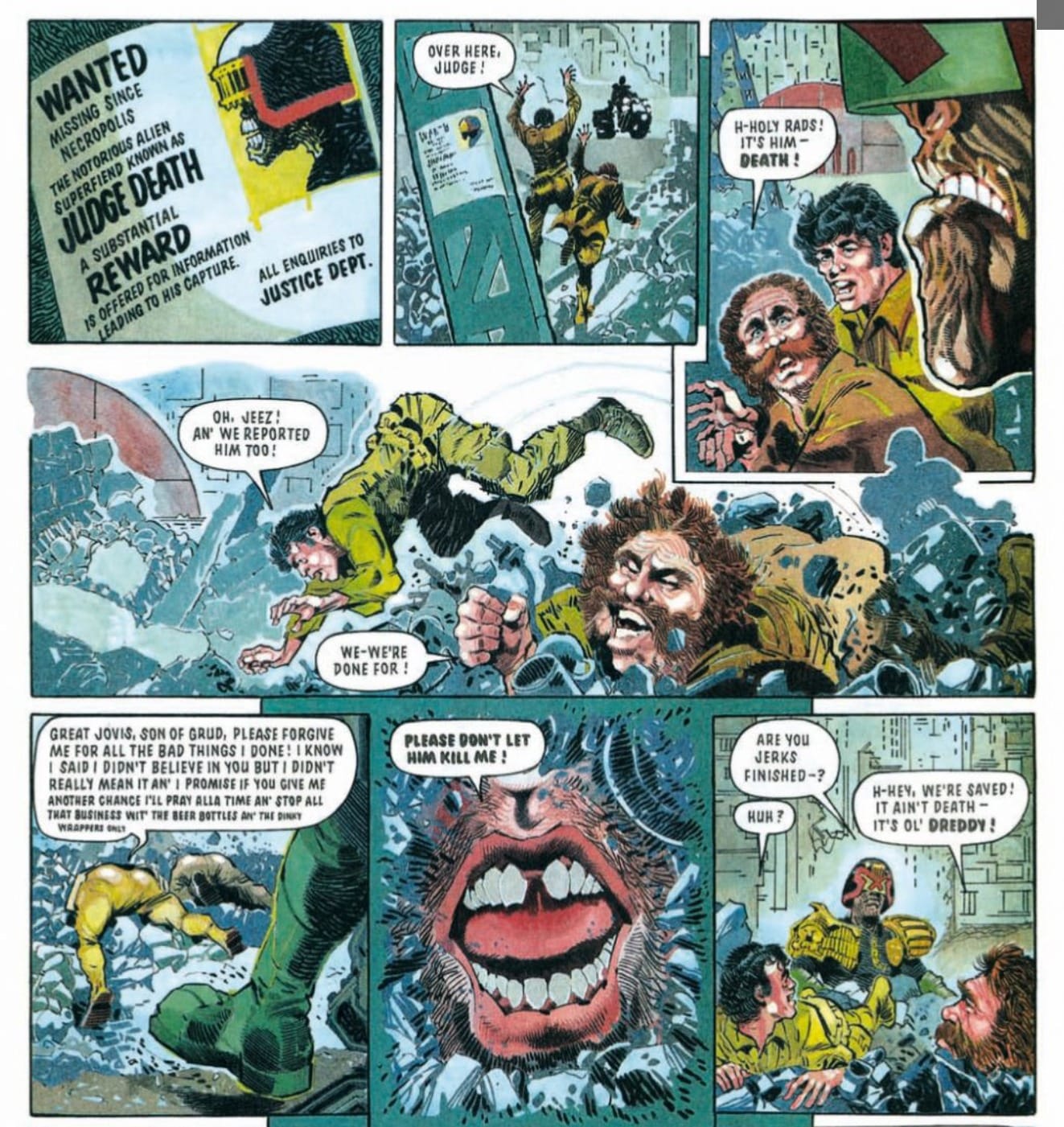
Necropolis isn’t the last Dredd story. That’s the week after when two citizens freak out at Dredd’s scarred face, correctly, mistaking him for Death and then feel relief when they realise it’s ‘...good ol’ Dreddy’. It’s difficult not to get so familiar with our monsters that we stop seeing them properly.
ITEM
MINDLESS EXPLORATION - the aqueduct
Friendship (Andrew DeYoung, Tim Robinson, Paul Rudd, 2024)
It starts with an ancient axe head. “The axe is the first step to the telescope” - something a very young or very old person might say, the product of a relationship with time that’s easier to sustain when you’re near the start or the end of one experience of it.
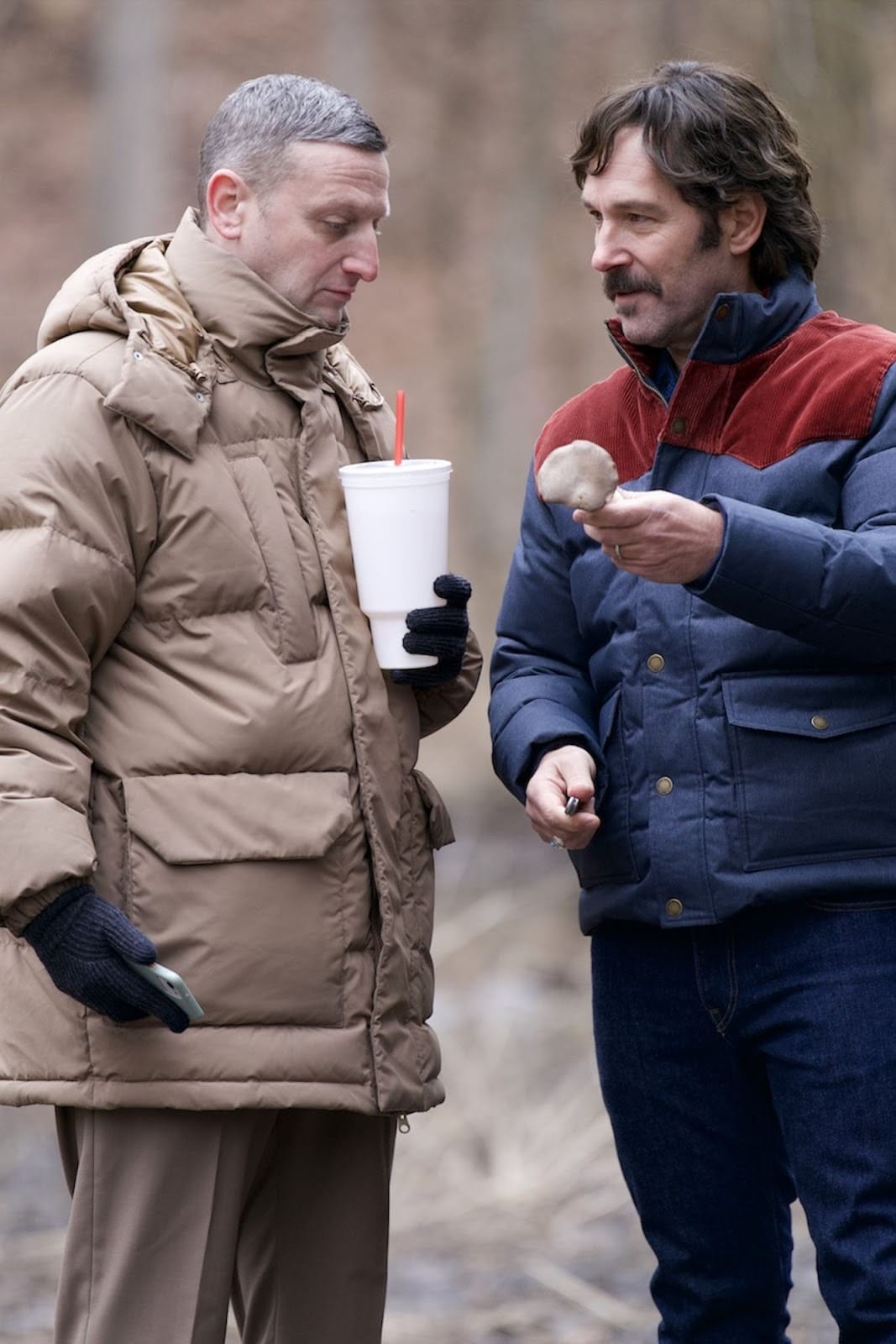
It can be hard to build new friendships when you’re an adult. Harder still to build one on ideas so far removed from worries about your careers, your hairlines, and the need to make the latest thing more addictive. Maybe that’s why the axe head leads you past the security fence, down into a dark and unformed world below. A sense of adventure there, though; connections to the centre of power, hearty drinks overlooking the town.
Sometimes it’s hard to keep an adult friendship going at all, even assuming you’re not gifted at messing up standard social interactions. It takes work and not a little magic.
Whatever you do, though, you mustn’t try to go down there again. Your attempts to recreate these rituals will lead to embarrassment at best, vain efforts to impress colleagues with shirtpin swords, trips to nowhere at all. At worst, they’ll look like efforts to lead your life partner to an early grave: “She’s in the sewer.”
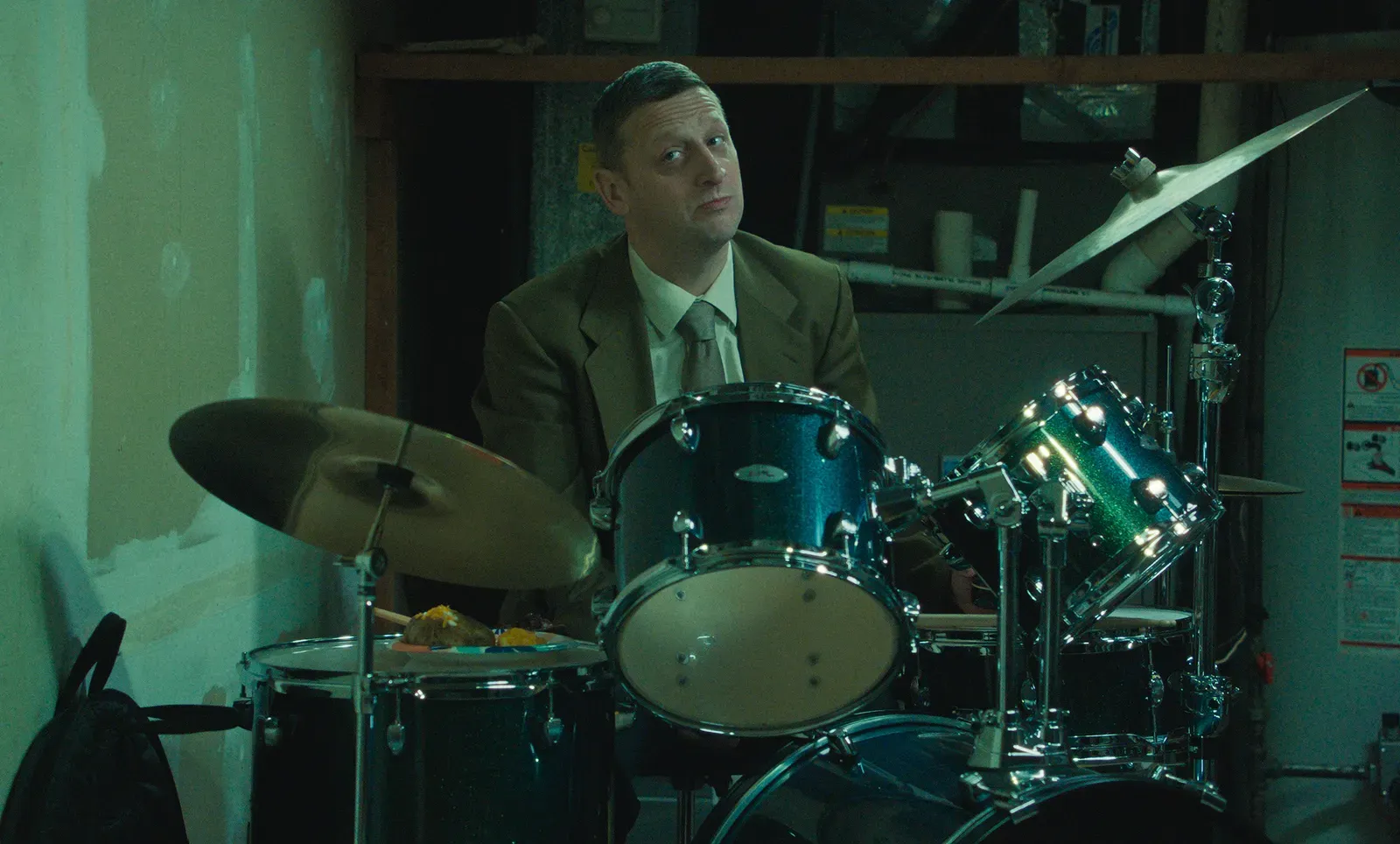
The world has been made an inhospitable place to enable the steady sale of new products and the compliance of the workforce. You know this. Hell, you might be part of this, despite being poorly adapted for such a life. Thanks to the axe head and the sewer you’ve got a longer view too, though. You can see past all that, back forward to other ways of living. Hard to hold on to, but right there underneath. Eternities of rage, longing and love caught in a passing wink.
ITEM
Veil
Tell just one person that you liked this newsletter. Word of mouth, more than any other form of promotion, is how creative works get noticed and sustain themselves. Thank you very much for reading.
ITEM
The Backrooms
Web series by Kane Parsons, 2022 - Present

In 2019, the Backrooms creepypasta and urban legend arrived via 4Chan, supercharging the liminal space aesthetic that flooded social media during the pandemic. In 2025 we’re awaiting an A24 produced, Kane Parson’s directed Backrooms movie. The mainstreaming of “six hundred million square miles of randomly segmented empty rooms” that lurk at the edges of reality, ready to swallow the unwary.
I say mainstream as if being a key influence on Severance and Control were somehow inadequate when compared to film. The truth is that the Backrooms’ life as phenomenally successful horror product has been with us ever since Parsons’ original Youtube series started its journey to 68 million views, and that this success mirrors the ideas Parsons brought to the party. Like the 2019 meme that Parsons monetised, his Backrooms are colonised by the forces of capitalism. Their endless space seen as an unparalleled storage and housing opportunity by the mysterious Async corporation.
Similarly, the Internet’s content hungry urge to fill the Backrooms, to populate it with monsters, to describe levels is of course anathema to the horror it represents. The Backrooms of the original photo cannot be catalogued or mapped. They’re pure liminality, outside of location or time. The very definition of anthropologist Marc Augé’s non-place, if infinitely more concentrated than the service stations of his imagination. More like the corporate virtualities that the Backrooms inhabit in our world and that Auge’s thinking prefigured: a flat plane scrolling down until and beyond death.
In a sense, Parsons’ web series, while ostensibly layering on redundant meaning, simply signposts this reading. There’s the persistent suggestion that the zone beyond Async’s carefully carved out order - an order that stands in for our world - is in fact its past and future.
In what meaningful way can this be said to be encroachment at all? The flat plane of Capital is always already mad and lost, and us along with it.
ITEM
TAKE ME TO MY BEACH (PRON. “BITCH”, this is an important plot point in Alex Garland’s novel actually)
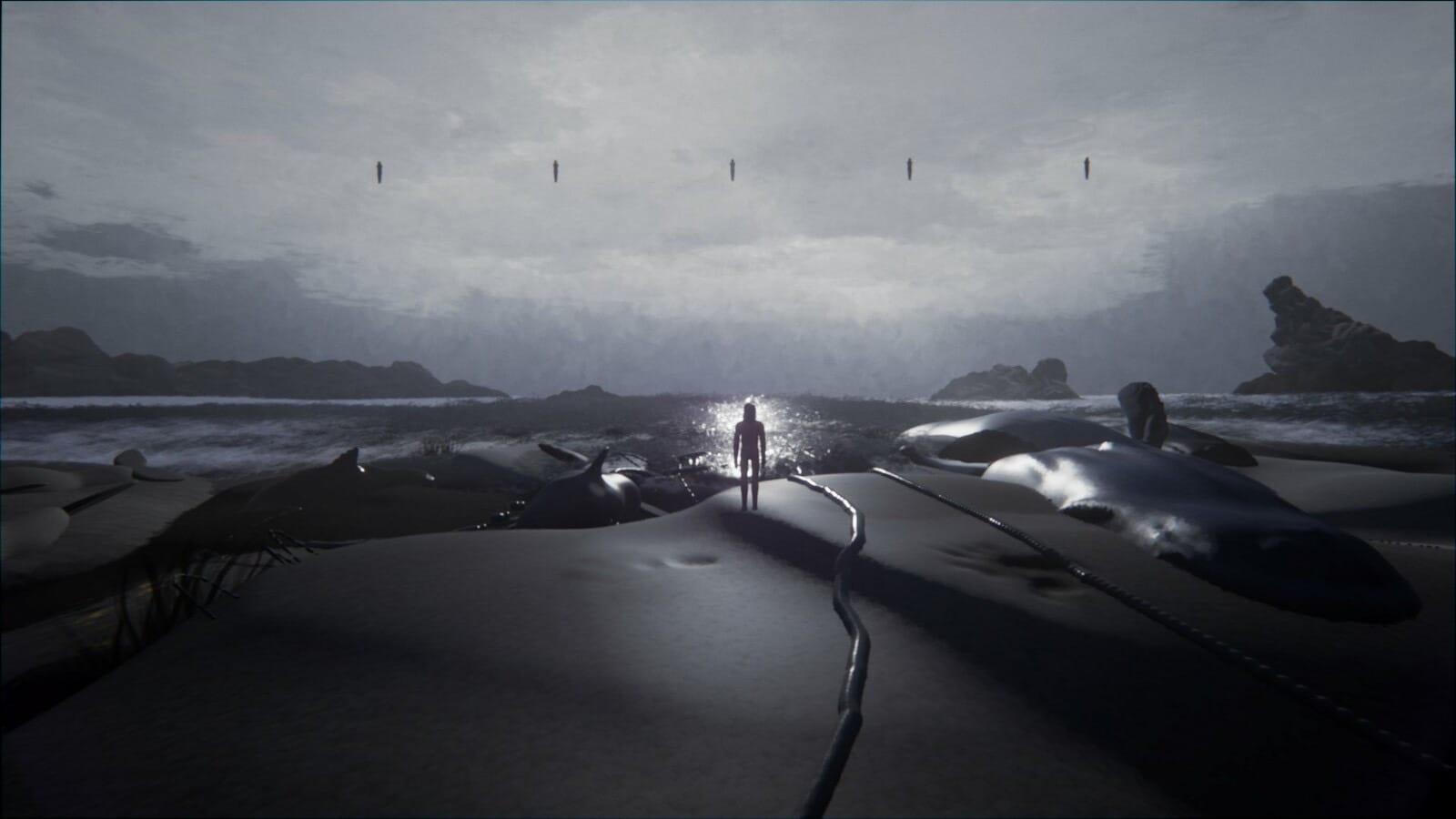
Death Stranding has permanently ruined computer games for me, by exposing the architecture and underwiring of every point, click, tasking time-waste and insinuating: “wouldn’t it be an idea to go for a walk”.
This it did in addition to also uncannily prefacing COVID & lockdown (mind that - when dancing was illegal, both utterly unimaginable and boring simultaneously) moreso than even the blip in MCU films - or any damn thing you can name I bet.
The Beach is where the dead go, load of archons in the sky but you’d expect that wouldn’t you, chiral points extending out - it lives and we the living are dead all at once… only listen to the best Halloween LP ever for evidence, it is seasonal, has zero skips and is actually the secret 6th great Wu-Tang album
time isn’t actually real I am continuing to discover
My mum speaks Swahili but I find this a very persuasive idea mathematically also, which was my now retired dad’s profession - sasha is the ever immediate present, zemani a vast black forgotten pool which has created it, all time before; the future only exists in the process of the conjunction of the two, well let’s just scroll up to that pic again hmm emoji - this isn’t even getting into contemporary theory about nested folds and wefts in the dimensionality of time, mirroring* the Norse Fates knitting causality.
*whilst being occasionally critical of the American pronunciation of this word I do actually find it somehow apt and unique to be able to say a triple R
wyd now affects the past?! Be good
ITEM
On Dracularity II:
Screamtime (Michael Armstrong and Stanley A. Long, 1983)
Trouble at the Top: Bucks Fizz (BBC, 2002)
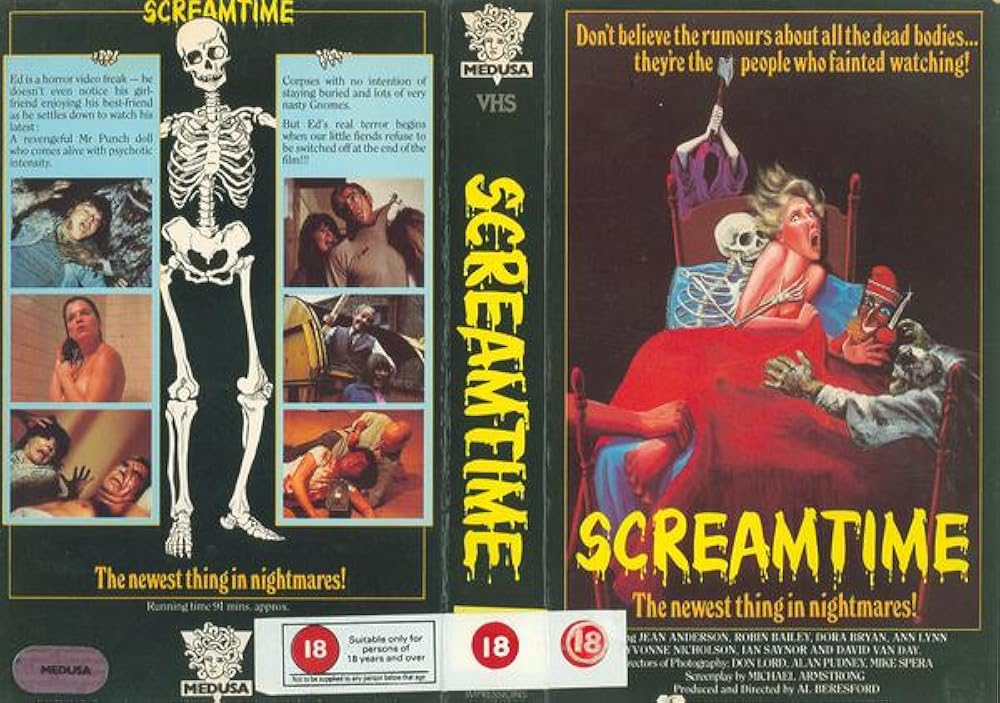
Three-stage process of dracular engineering, with examples:
1. A system's capacity to extract vital energy
2. Conversion of that energy into spectacular pseudo-novelty
3. Transmission of spectacle through available media
viz:
- Estate agent Johnathan Harker's addiction to sex parasites
2. The Count's operatic arrival on the massacred Demeter, instant manufacture of an ancient shipwreck
3. The pens, ink, typewriters and mail delivery infrastructure Stoker’s characters use to generate the words inside the novel. Cross platform adaptation of the novel.
and:
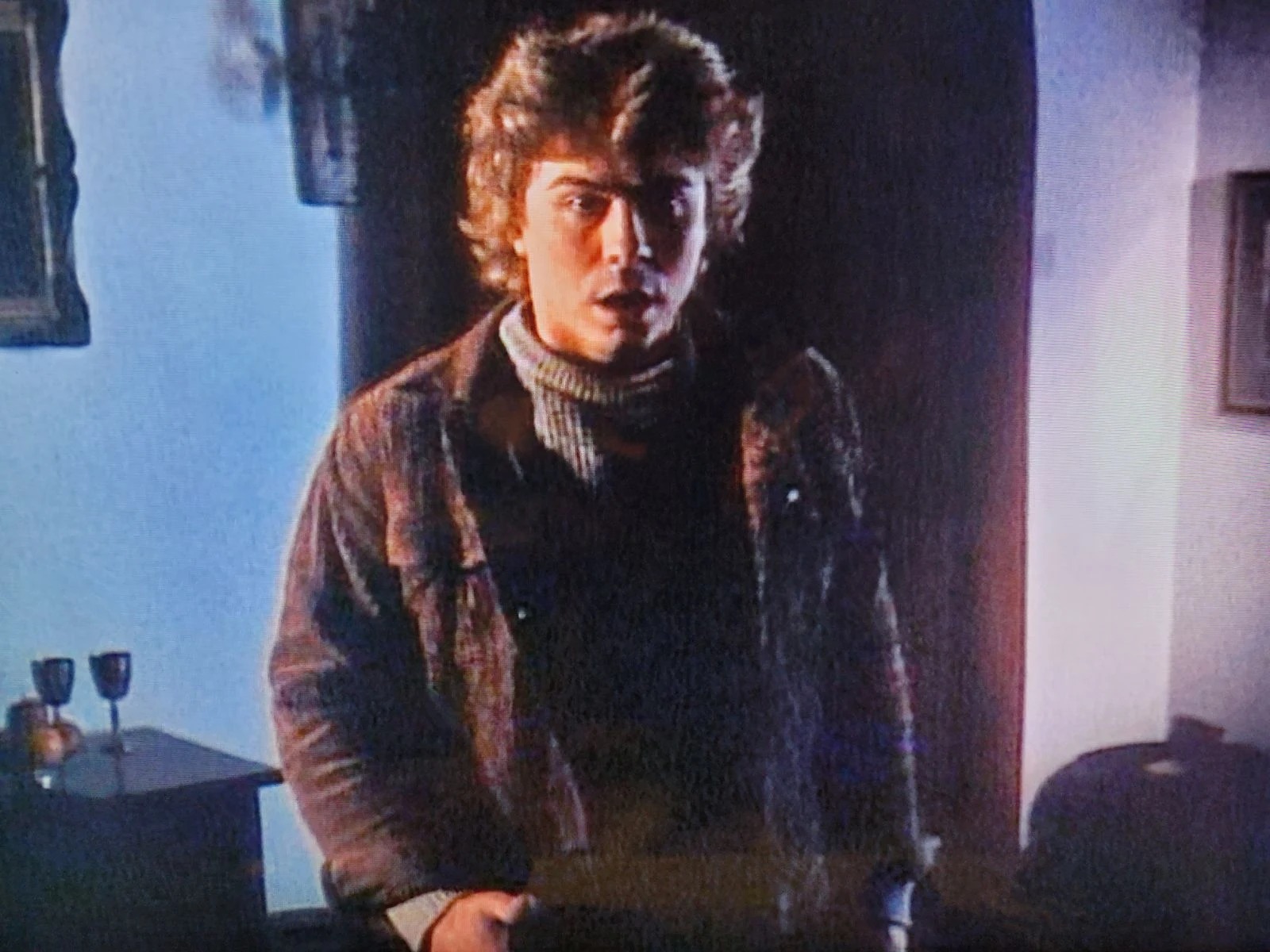
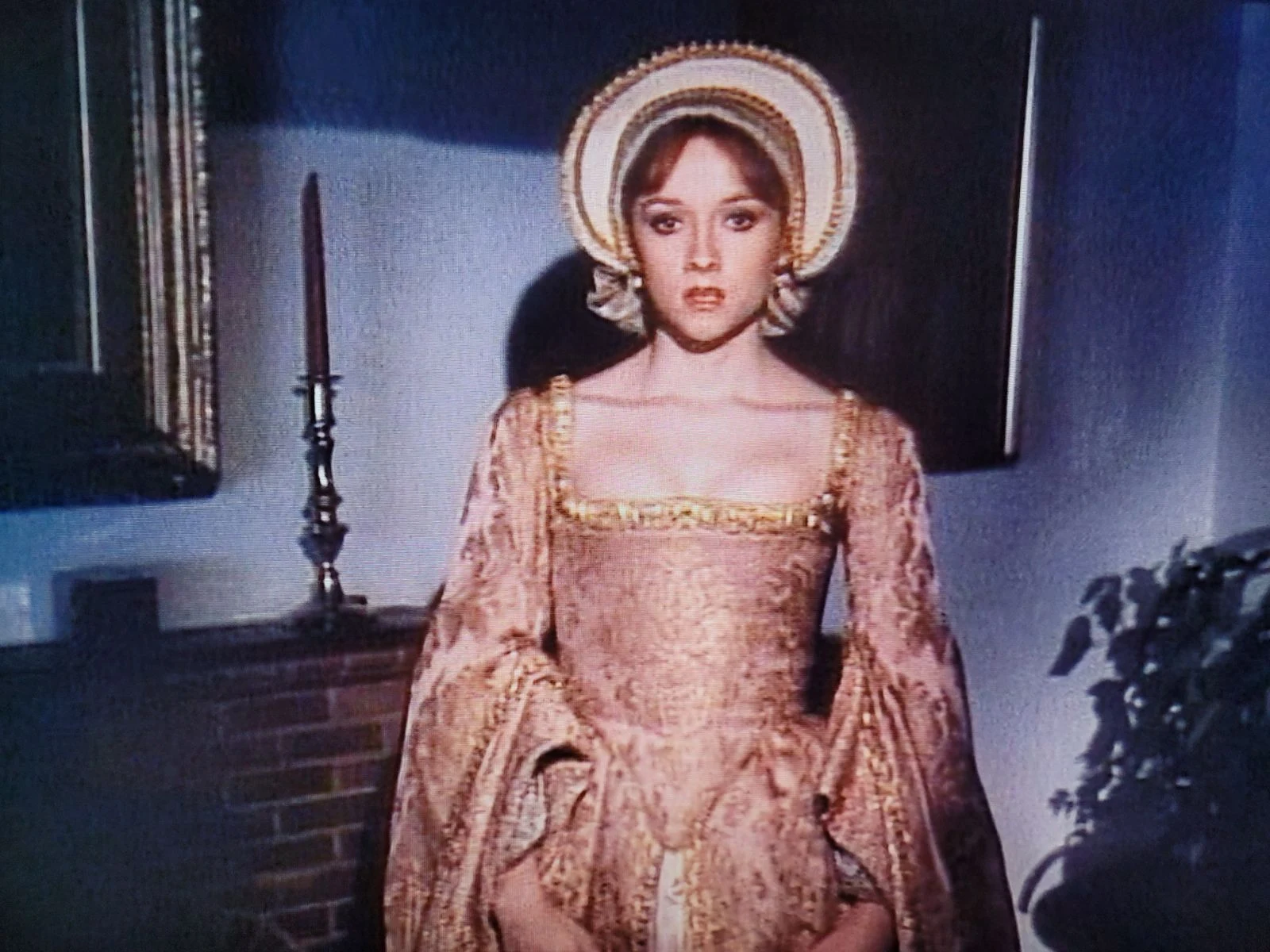
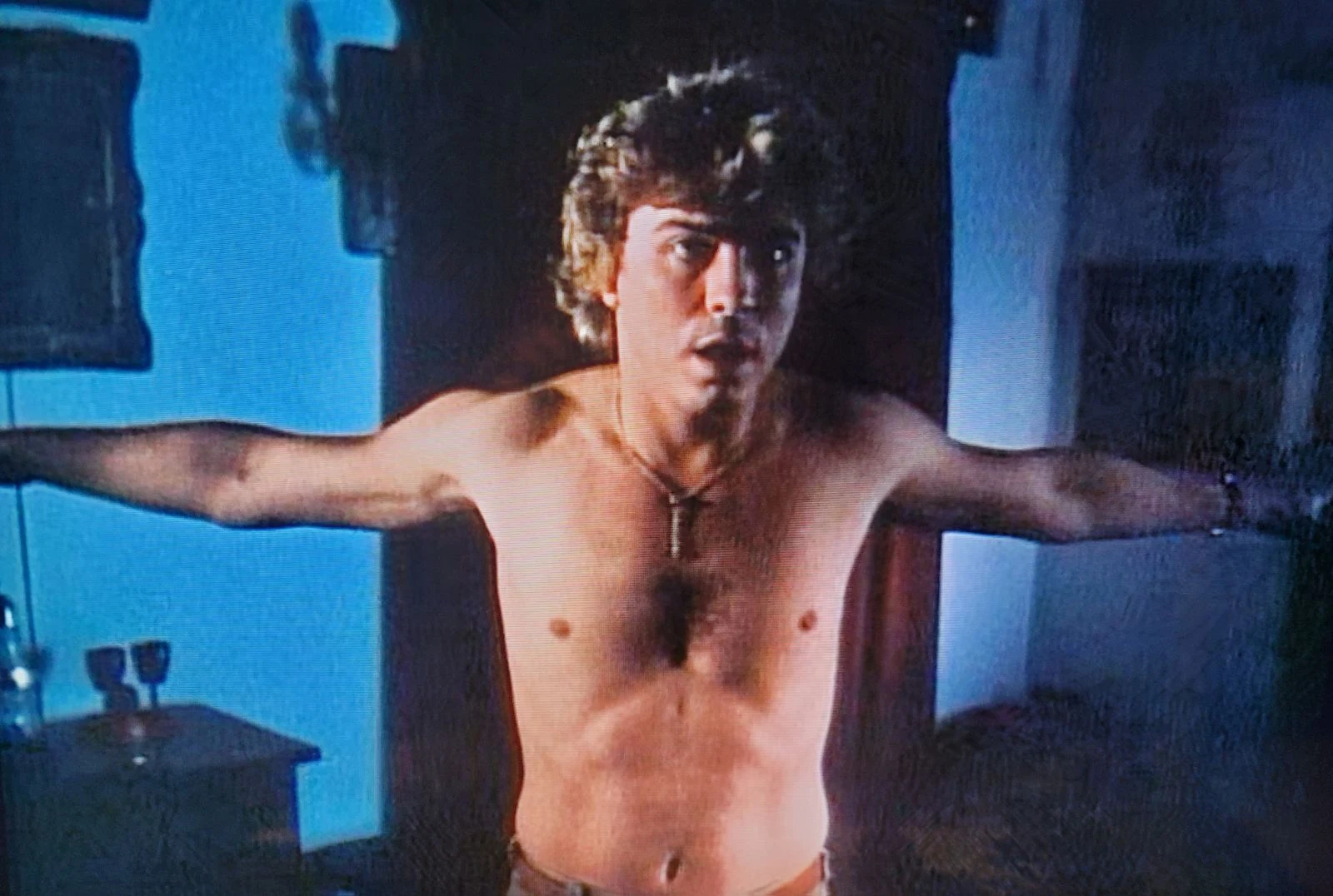
Pop was the perfect habitat for these improper, parasitic forms of life to grow in. Brighton guy David Van Day stars in the third chapter of Sussex schlocker Screamtime, long after the portmanteau format’s glory days. The way you tell a vampire is, he looks like a vampire and sings vampire songs.
After six bad years in the game David's band Dollar have split on tour in Japan. Lack of personality clash. The chance to do a movie flattered his Shakespearean ambitions and delusional dark-alpha complex. Perfect for the 80s, David is rapacious but unable to achieve the most simple realisation: he's the monster, not the hero, not the victim.
While David is crucified by a faery curse, the Fizz are showing the first signs of vulnerability in the charts. But they’re still two good years away from the coach crash.
Thirteen before David V. Day will hover and a desperate, stage-weary Bobby G. will be weak, and invite him in.
You can most clearly see the reality of the monster in the haunted, dawning terror in Bobby's eyes, as he recounts the cruelty of betrayal when post-coma Mike Nolan became David's Renfield.
Or in the inevitability of David shedding his biological presence into the body and apparatus of Bucks Fizz, decarbonating first with eagerness, then resentment and rage.