Stronger loving world
Santa vs. Christmas. Toonies. Whichmen? ABHOBC: Comic Relief Comic. The Filth. Sad as Fuck. Die Hard.
ITEM
Santa vs. Christmas

I realised I didn’t know much about him. The visuals and trappings are so striking they obscure him. In preparation for the ritual [MO 7/12/25] I had to understand who I was writing to.
It turns out Father Christmas and Santa Claus are two distinct entities from completely separate traditions. The slippage between them begins in the 1850s, the Victorian Christmas revival running parallel with the American ascendency. The entanglement becomes inextricable post 1922 in the aftermath of war and plague. Santa Claus is as much a modernist project as Ulysees, The Waste Land and Jazz.
Father Christmas is a creature of the woods, a degraded avatar of Odin leading the Wild Hunt, it’s the 15th Century where he enters the written record. Holly crowned, up for a wassail, not looking for a party he is the party. The Puritans loathed him, the Royalists used him as a symbol of the ‘good old days’. Post Reformation he slips away again becoming a Lord of Misrule but of uncertain status as like to be Captain or Prince Christmas. He survives in Mummer’s plays taking on the role of Beelzebub.
St Nicholas of Myra, patron saint of students, the unmarried and repentant thieves is transformed by the Dutch into Sinterklaass and carried to the new world where poets and Madison Avenue create Santa Claus. Irving strips him of his bishopric, makes him a drunken sailor, the iconography designed to mock the Dutch accidentally creates a stone-cold banger.
The jolly red faced fellow naturally wins out over Gandalf’s sketchy weed head brother. But this guy coming out the woods smelling of damp, mushrooms and woodsmoke, him I get, him I know. On several occasions I have been him.
The days before the ritual I am a committed Father Christmas revivalist. But I hadn’t been to Lapland yet. I was getting closer but I hadn’t understood.
ITEM
Toonies
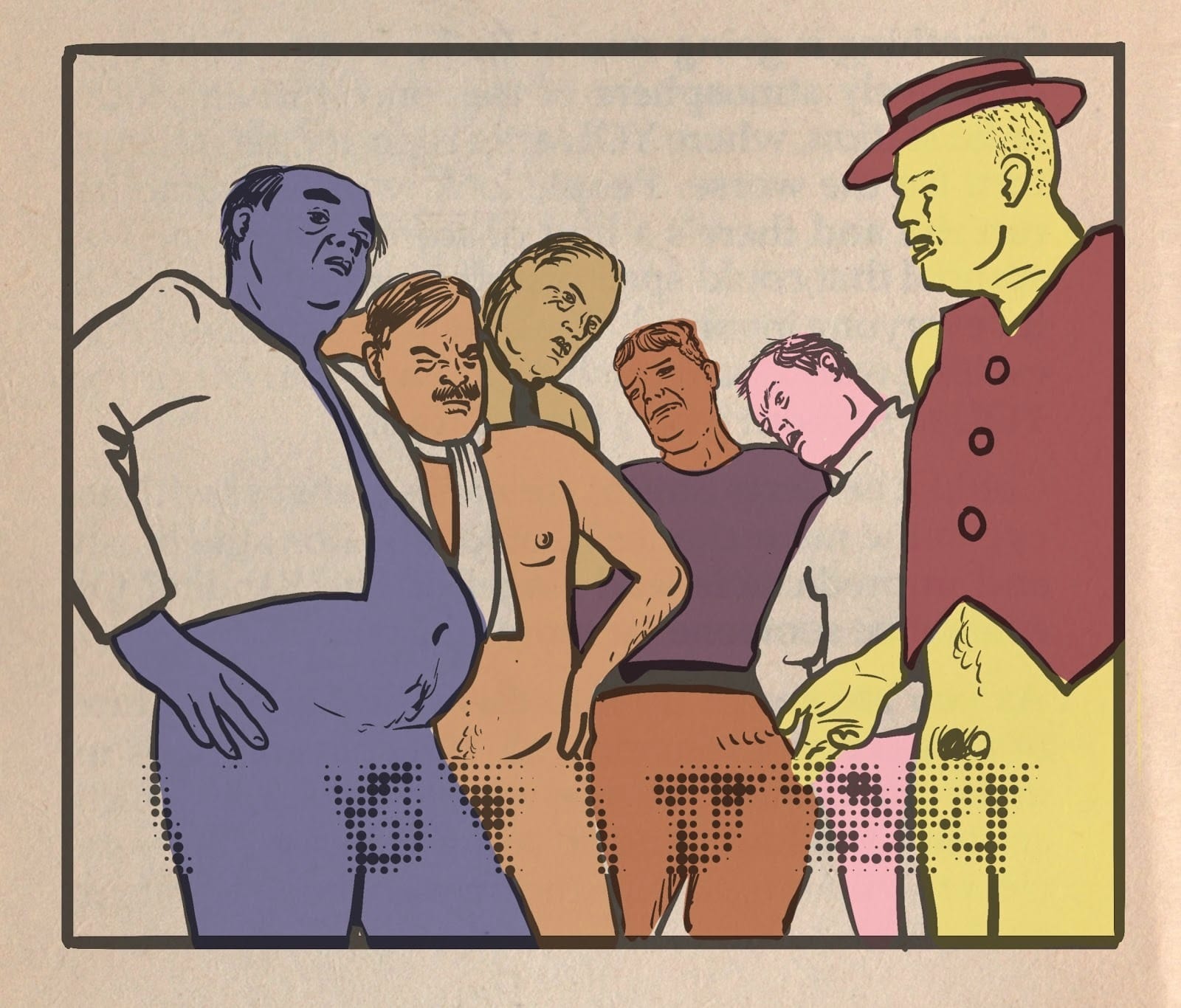
"Don't talk to me about Furries. They're all perverts" says a furious Colin Heathfield sat dejectedly in Top Cat attire in his Yeovil home.
"Perving on the world from their full-body costumes. Anything could be going on under that cheap fuzz". Colin and crew have just been banned from yet another convention. Colin is part of a rising trend in fandom celebrating animal cartoon characters by dressing in replica clothes but crucially, without attempting to ape their animal characteristics.
"Hannah Barbera were all about the personalities, I'm anthro enough without pomorphing myself - excuse me." He says, casually separating some scrotum from his inner thigh. This cosplay subgenre quickly became a pariah within fandom. It all came to a head when Colin and his group of Toonies, (dressed as the full Top Cat entourage) kicked off for not being allowed entry to a con in Swindon. After the group were finally subdued by Brian Blessed and Nicola Bryant, Toonies made the news.
"It was a sad day for our rights but one good thing was getting arrested, we all got to pretend it was a run-in with Officer Dibble." When confronted with the obvious criticism that kids go to these events and that maybe fully visible genitalia isn't appropriate, Heathfield scoffs,
"You should be asking why children are allowed at these events! What child wants to meet Colin Baker?! And comics haven't been for kids since the 80s!"
It seems the world is not quite ready for Toonies but some good has come of it for Colin.
"I've met a great bunch of men of a similar age and situation and we've formed our own dance troupe. We're called Divorcity and the bookings are flooding in. We're performing at Weymouth next week and have our sights on Britain's Got Talent."
Good luck to the lads!
ITEM
Whichmen?
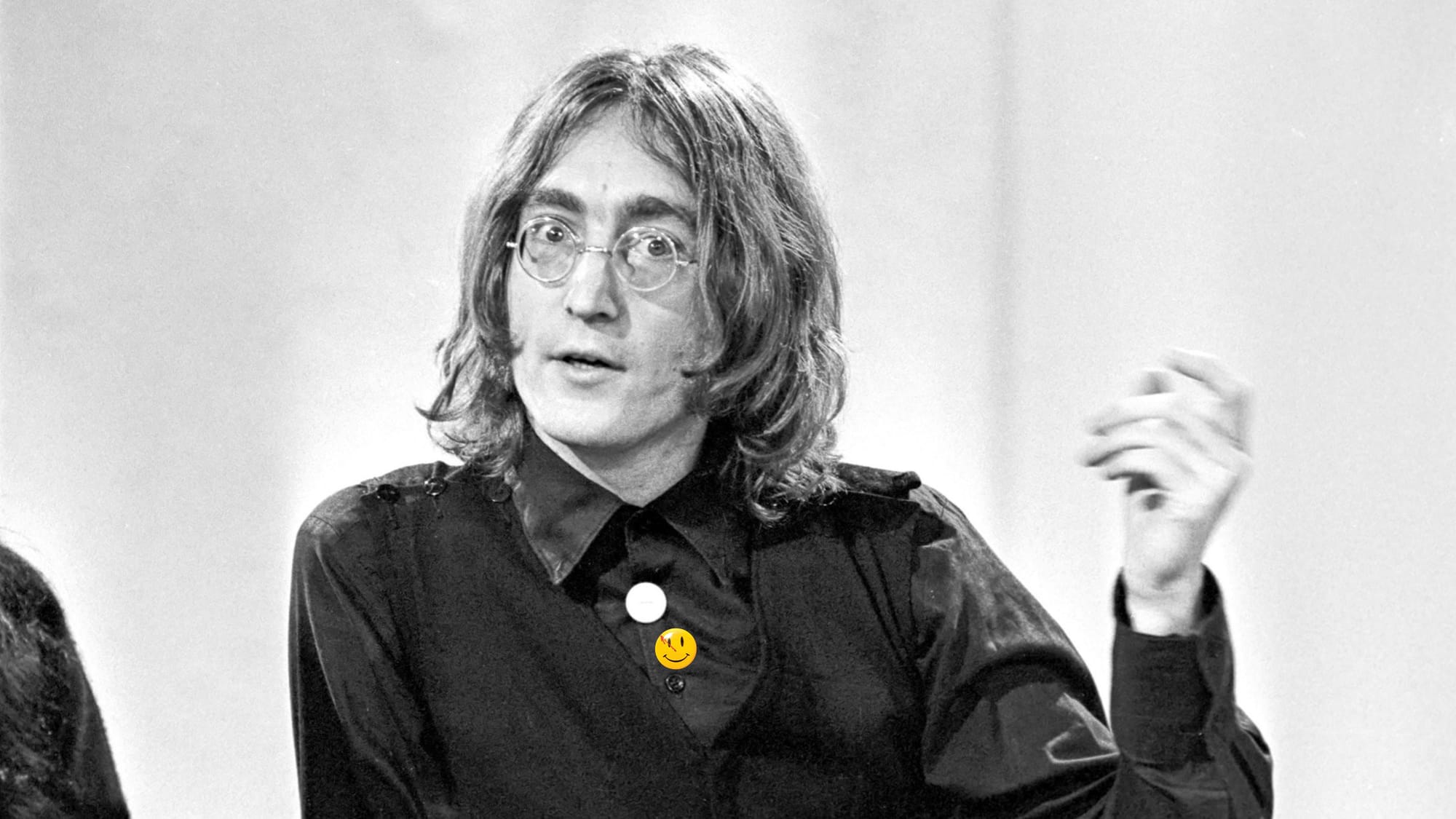
November 1986: Michael Parkinson, leaning forward with that trademark inquisitive glint, gestures to the blood-spattered smiley-face badge pinned boldly to John Lennon's lapel. "John, what's this little fellow doing here - with a touch of the red stuff on him?", Parky asks, his Yorkshire warmth cutting through the studio hush.
Lennon, glasses flashing under the lights, grins and pulls a copy of Watchmen #4 from his jacket, brandishing it like a manifesto. His Scouse accent crackles with urgency: "This, Mikey-P, this is the most important thing going on right now. Anywhere. I'm telling ya, I'm begging ya... just read it. Everyone, just f-f... just read it!" The stuttered passion, the pleading eyes - they rescue a comic languishing in bargain bins, sending sales skyrocketing overnight.
Days later. New York. Letterman: Lennon strides in clutching the same floppy monthly, points at the host before even sitting: "Have you been reading this shit?" An audience member yells "Woo - go Rorschach, baby!" Lennon pauses, gently but firmly reprimanding the inkblot vigilante’s studio cheerleader. "You think Rorschach's a swell guy? Oh my...I got a great therapist - you guys should talk!” The clip goes viral, endlessly replayed, igniting America's nascent culture wars.
Lennon acquires original Dave Gibbons pages, enthuses endlessly, and forges an intense, doomed friendship with Alan Moore. Moore even guests on backing vocals for the hidden track "Red Blues: Reprieve" on Lennon's 1988 album Red Blues, a UK #1 for three weeks. In the end, egos clash spectacularly; by 1990, Moore severs ties with Lennon in a public feud that dominates tabloids.
Fun fact: Harrison proudly coins the term "graphic novel" in a 1987 documentary about his plans to publish Puma Blues issues as a single volume, forever changing how the medium is marketed (although the endeavour almost bankrupts him).
ITEM
Kindle a light of meaning
Tell just one person that you liked this newsletter. Word of mouth, more than any other form of promotion, is how creative works get noticed and sustain themselves. Thank you very much for reading.
ITEM
A Brief History of British Comics
11: The Totally Stonking, Surprisingly Educational And Utterly Mindboggling Comic Relief Comic
- Publisher: Fleetway
- March 1991
- 1 issue
A thick vein of sentimentality runs through the rump of British culture. Surprising, given its legacy of rapacious empire-building and slavery. Or perhaps not.
While routinely voting in governments that gleefully dismantled social services and community projects, the great British public could regularly be found shedding a tear over charity telethons. These cloying, self-congratulatory behemoths would routinely occupy TV channels, splicing people’s genuine desire to help, with a parade of light entertainment lance-corporals gurning and simpering into the camera.
The first televised Comic Relief Day aired in 1988, fronted by Lenny Henry, Jonathan Ross and Griff Rhys Jones. At the time it seemed exciting and rowdy – a cooler option than its cheesy counterparts, the alternative comedy wave having crested and hit the mainstream. It was accompanied by Red Nose Day, a day of sanctioned ‘craziness’ for the public, blending quaint home-counties surrealism with ‘The Purge’. There was something genuinely anarchic about the original broadcast, and the presenters’ euphoric exhaustion in the wee hours of the morning felt earned.
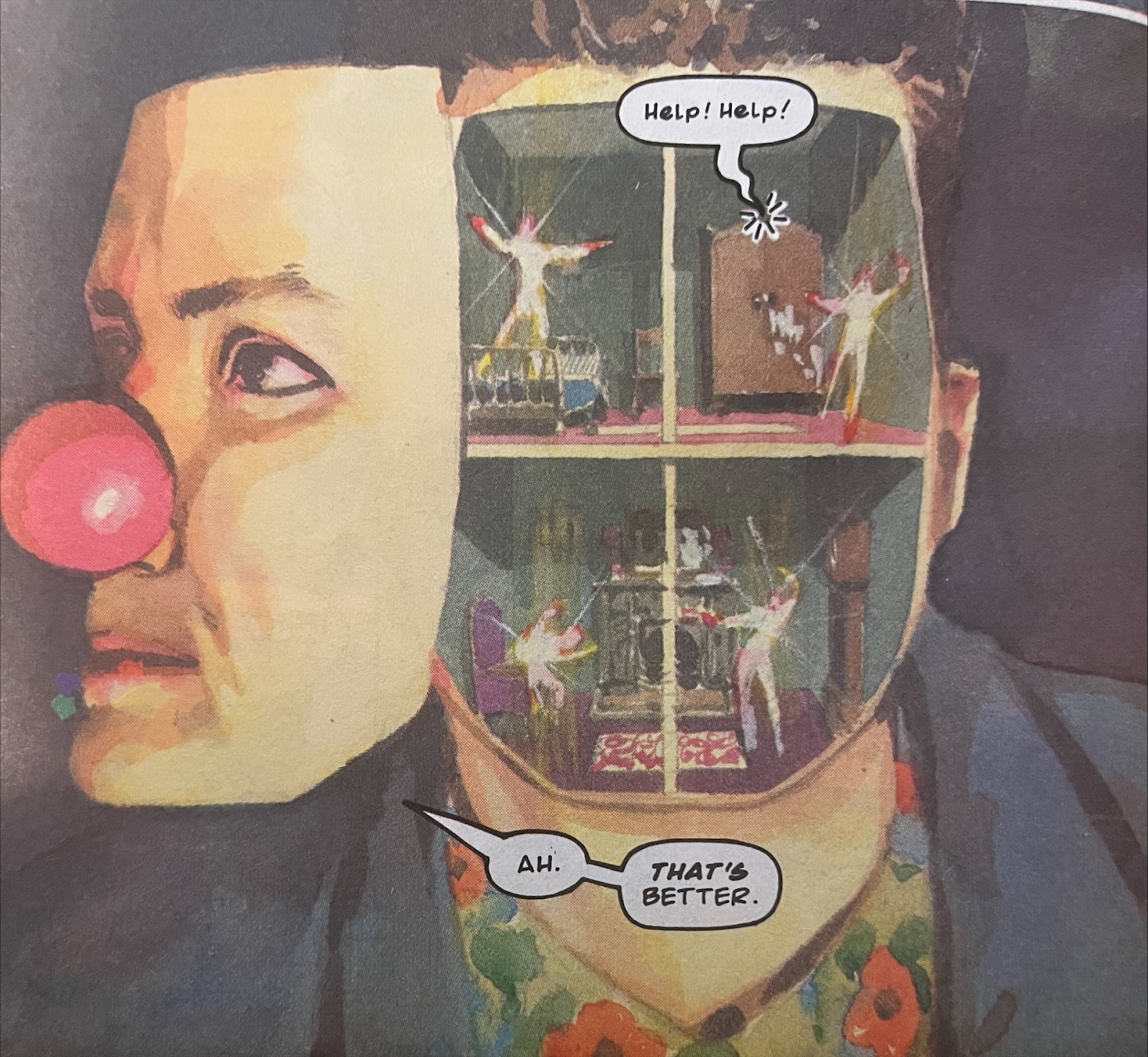
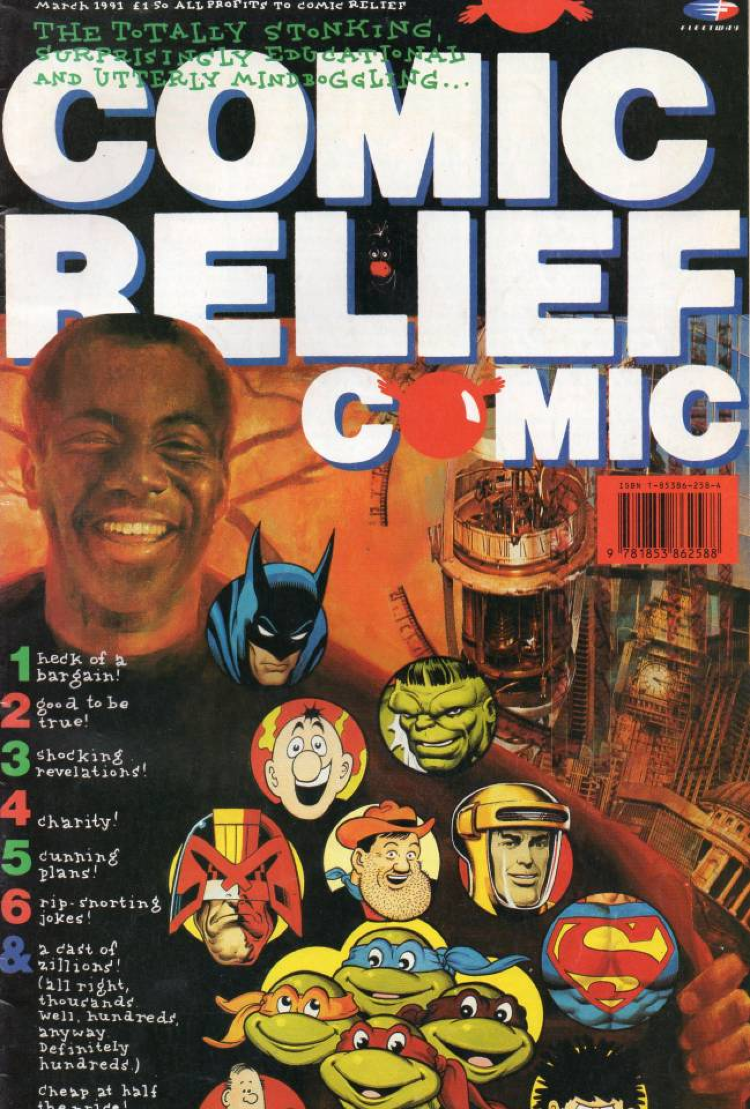
In 1991, one of the tie-in products, amongst the plastic red noses and t-shirts was the ‘Comic Relief Comic’. Available in newsagents nationwide, this was a collaborative jam-session by a litany of creators from the spectrum of British comics. An IP free-for-all, featuring Judge Dredd, Desperate Dan, The TMNT, Dan Dare, Superman, Dennis the Menace, Roger Mellie and more. It featured comic-versions of the three Comic Relief presenters, and an effervescent intro by noted comics fan Henry. Creators include Garth Ennis, John Smith, Jamie Delano and Grant Morrison (who undoubtedly added the sub-plot of the monstrous ‘Househeads’ that could have leapt straight out of Doom Patrol).
It has a Dave McKean cover with clocks on.
It’s a pop-cultural object so curious that staring at it for long enough might unlock the multiverse.
ITEM
FFFFFFilth #6: Lesser Wheels Within The Big
And so we return and begin again. Tell me, does this look like a medicine box or a set of instructions?
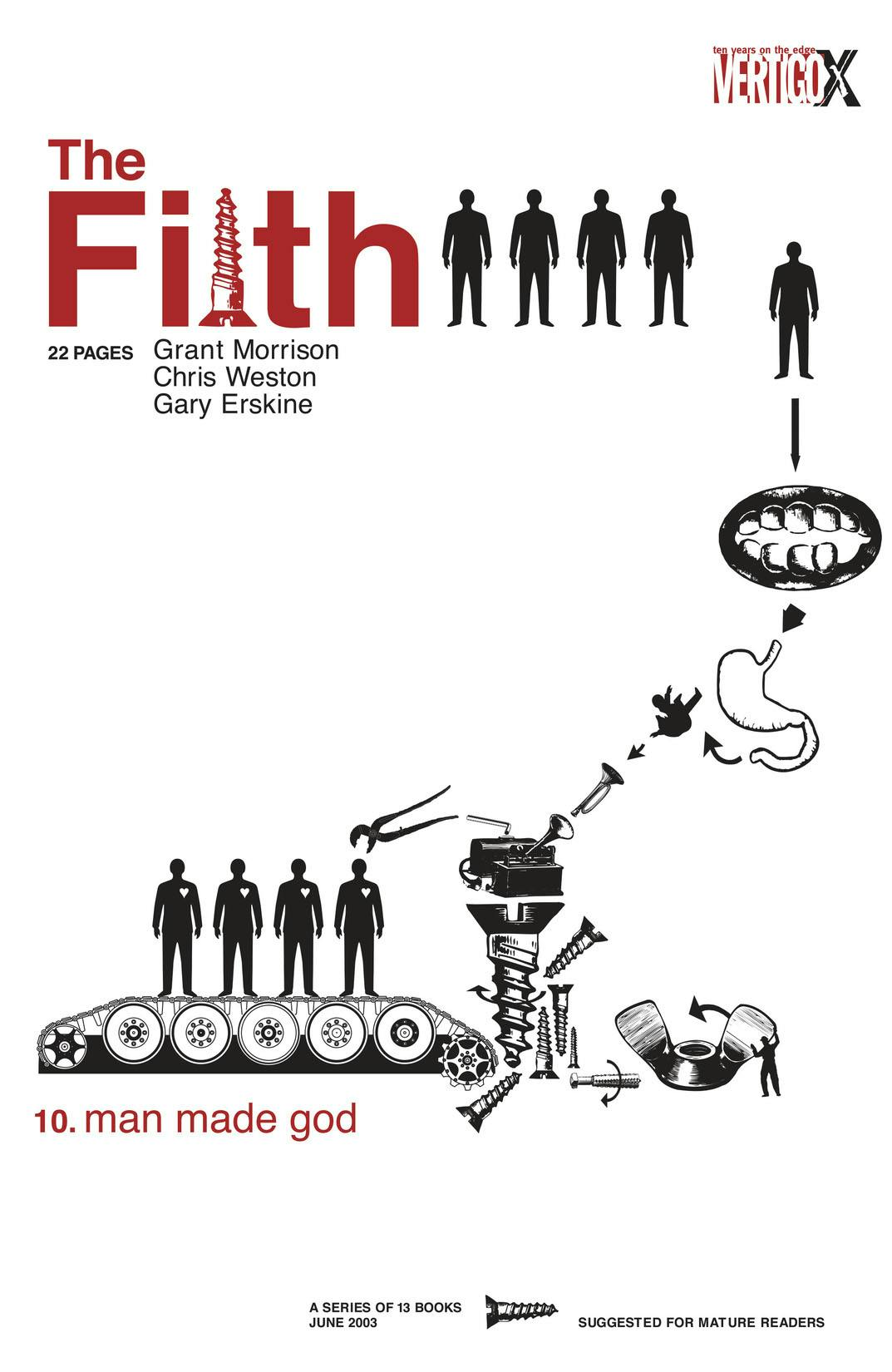
Another question. Does it feel like a description of reality or a map to the emergency exists?

Last time around it was all about disorientation and control, the turn in your stomach you get moving from issue #9 of The Filth (Inside The Hand) to issue #10 (Man Made God) and seeing no reference to the shock conclusion to the former in the latter. AND YET! We’re in the realm of The Palm now, and we need to adjust our mindset accordingly. We’re bringing it all together, reaching out, wiping away the shite of the day. Peak deep into the shiny clean Crack and you’ll see patterns repeating: a trip to the shop as a harbinger of a show-world collapsing, an exploration of the roles we play, the elimination of an “anti-person” by our befuddled hero, perverse fantasy leading to mass violence.
The overall effect is a paradox in motion: a sense of meaning emerging from even the most disorientating sequences, the distance between the book and its covers closing with every issue.
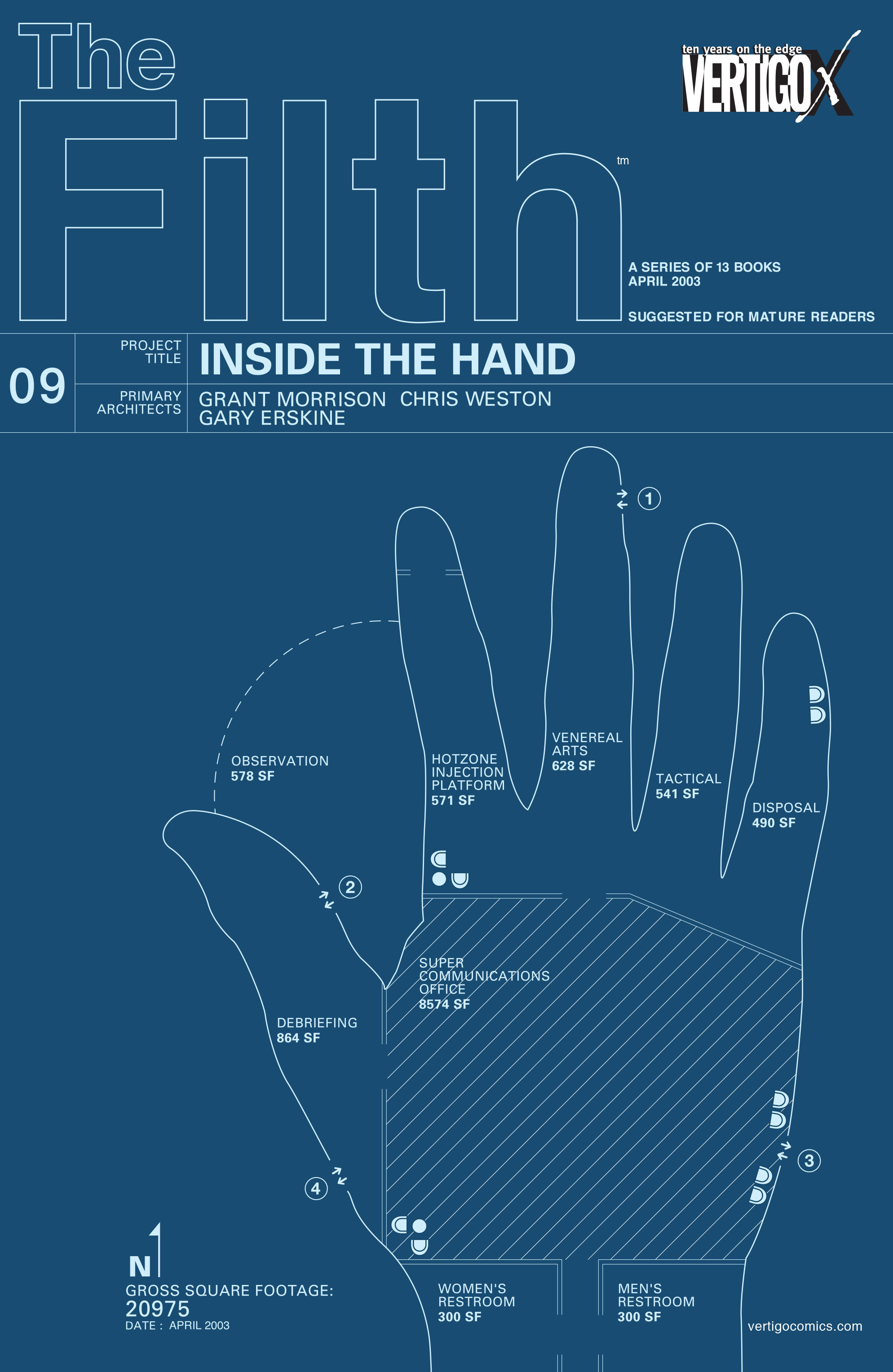
The Filth may not offer a way out of the future it inhabits but it isn’t totally hopeless either. It’s got jokes, and it still believes in our ability to transform the world from underneath. A bit Joycean in its ambitions there, mibby: “But in here it is I must kill the priest and the king.” In a world that wants to poison your ability to live in it, being able to see how the map and territory interact and coming away wanting to pet the cat and check in on an elderly neighbour can’t be enough.
On the other hand, it’s not nothing.
ITEM
I WILL ACCEPT YR AI SUMMARIES ONLY UPON THE DAY THEY ARE WRITTEN IN THE COMPOUND LANGUAGE OF ANGELS
(Slightly unfair if you shag three or four people through your work you acquire a reputation as a Casanova, which fails to account for a great many lonely nights but there you go.)
I used to suicidally ideate quite a lot as a young child, specifically imagining everyone being SAD AS FUCK at my funeral until my father quite helpfully and materialistically pointed out that I would not in fact be extant to suck up the grief. My interest in esoterica is sort of a psychological rebellion from this physical rationalism but it is useful to think of that as a surety in one’s existence.
You’ve got a life, stay in it. The gentlest and softest man I ever met from here, and it is a hard city, I grew up in a wee middle class suburb of it, a man who actually seemed relatively impossible given he had 3 decades on me too performed an horrific act of violence and ended his life this week, and I am struggling with it all a bit. Please talk about your feelings, please know you are more loved than you can imagine - I couldn’t have imagined being so disconsolate over someone I knew only lightly but I am.
PASSIVITY IS NOT PACIFISM (cf: WONDER WOMAN)
I wanted to talk about this white girl rapper but tis the season that death adumbrates, please watch how you go, and stay in it.
ITEM
Die Hard (John Mctiernan, 1988)
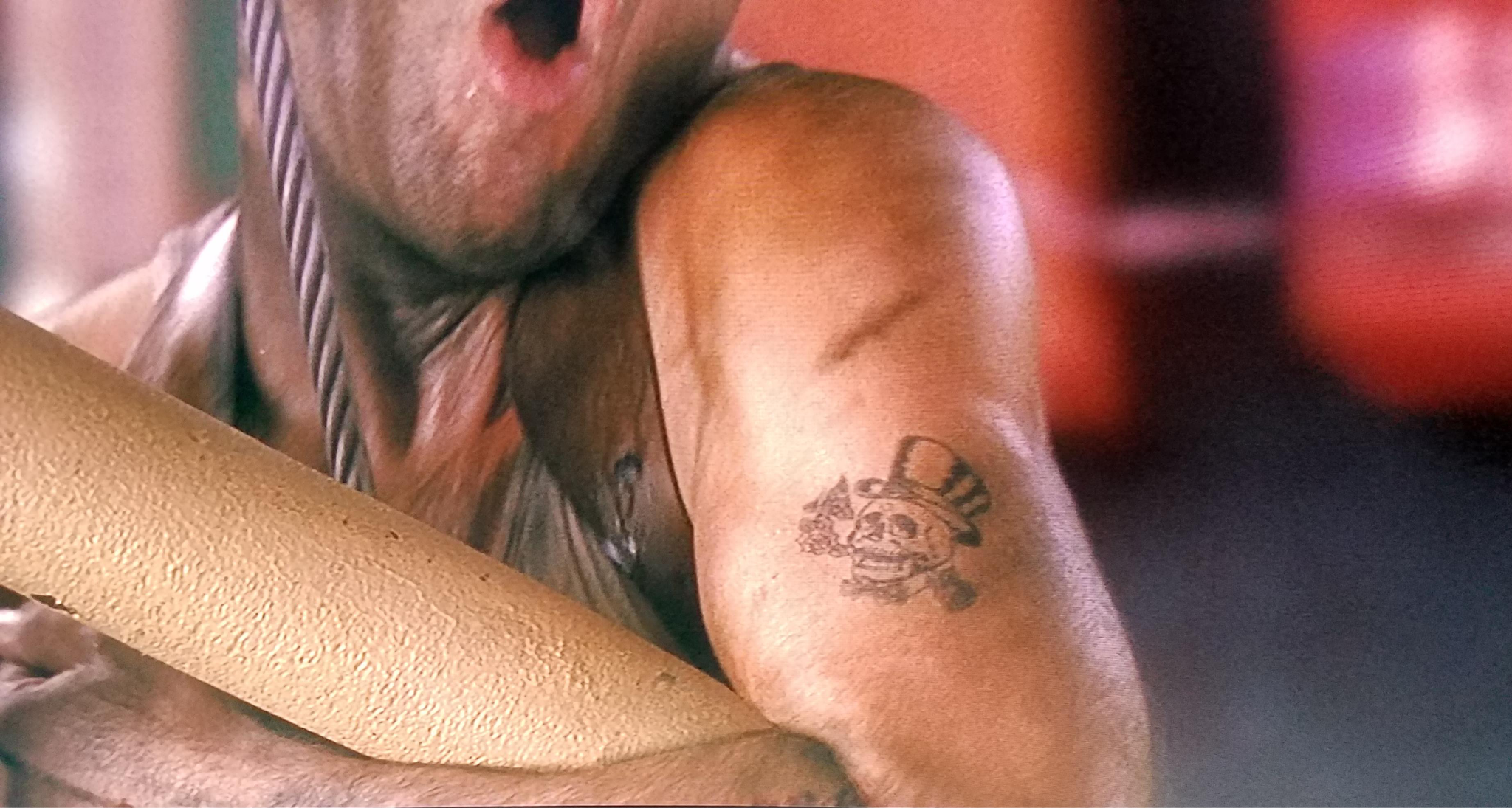
The Yankee-Cowboy war was the defining intra-ruling class conflict of the now-departing American empire. Yankees - established East coast brahmin money, looking back to Europe and favouring intelligence, finance and offshoring. Cowboys - rugged sun belt frontiersmen, zealous explorers and extractors: beef, wheat and oil. The latter still run the show, profiting from creation of endless new digital frontiers (ecomm, AI, attention economy), plus orbiting exocapital and genetically optimised palm oil yields.
Although cessation of hostilities required a fusion of Bush I’s New English skullduggery with Reagan’s rodeo clown cosplay, the Cowboys declared victory and wanted everyone to know. Die Hard is the celebration, and that's why we have to watch it every year: to use the solstice and pray for renewal.
Californian Freemasonry insists that riches express a solar divinity, moving westward across the globe. Los Angeles is America’s western limit, but high on its apparent mastery of reality, the victorious rustlers presume to own the next migration cycle via Japanese proxy Nakatomi, busy developing the Suramadu Bridge.
Nakatomi Plaza is played by 2121 Avenue of the Stars, CA 90067. Centrepiece of the Century City real estate development, physical manifestation of the shining hilltop the new age lodges loved to invoke. The land used to belong to 20th Century Fox, where they shot White Christmas, Seven Year Itch, a hundred others. Before that, a ranch owned by cowboy actor Tom Mix (Utopia Lodge No. 537), who invented the mythology of the old West from his fantasies of heroism and horsemanship, setting the template for Autry (Catoosa Lodge No. 185), Wayne (Marion McDaniel Lodge No. 56) and Reagan himself, to John Mclane’s icon Roy Rogers (Hollywood Lodge No. 355).
After the White House Reagan took his office on floor 34, the glass room, where Mclane wounds his feet and realises the Cowboys' doomed westward path will cost large amounts of blood.
Yippee Ki Yay to all motherfuckers who celebrate.