Into my life out of my dreams
New Year, New You. Creature Discomforts. Andrew & Steven. The Ballad of Peckham Rye. Granny Bought The Wrong One. If I Were Sisyphus I Would Simply Make Friends With Atlas. Eyes Wide Shut.
ITEM
New Year, New You

ITEM
Creature Discomforts
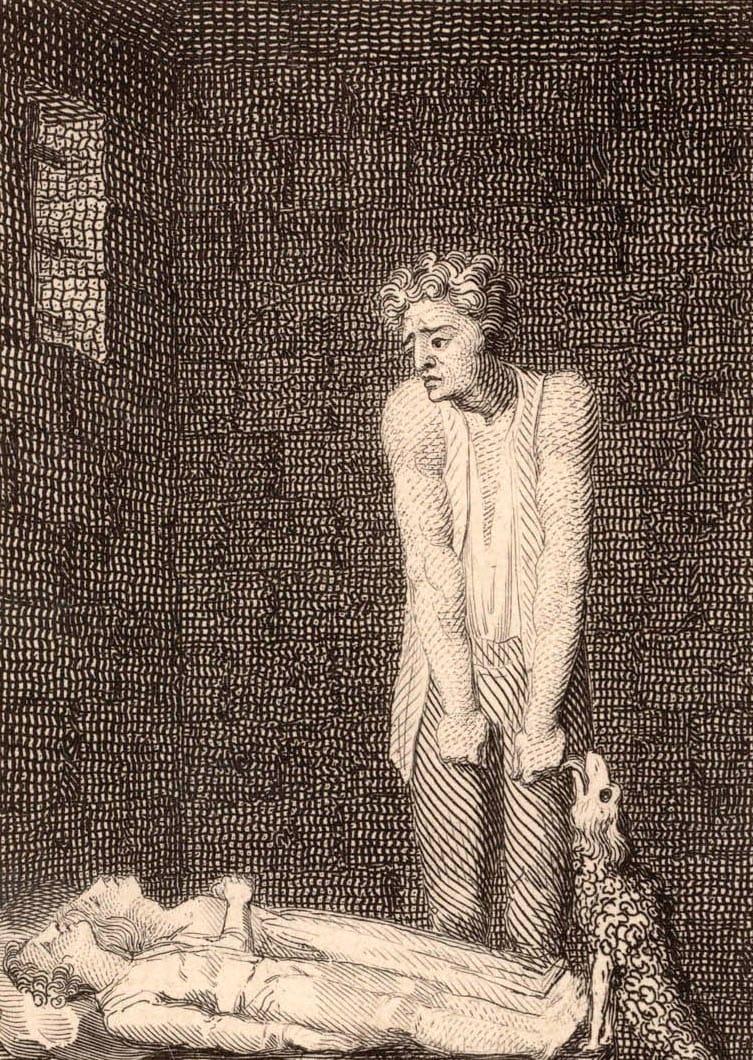
Having watched Del Toro’s reheated-turkey Frankenstein, I decided to belatedly tackle the original novel for Christmas/Perineal reading (not finished it yet, to be honest). Frankenstein is shockingly free of gory vivisection, gloomy labs or sparking tesla coils. Frankenstein’s methods are left deliberately vague and the creature’s moment of birth is similarly understated:
‘I saw the dull yellow eye of the creature open; it breathed hard, and a convulsive motion agitated its limbs.’
For the next five chapters the creature is only present as a mysterious, then monstrous shadow, as he murders Victor’s baby brother in a story more akin to serial killer crime than horror/science fiction.
When we finally get the creature’s side of the story, it becomes a thought experiment in contemporary theories of education and epistemology. The creature, newly born, but with a fully developed body is the definitive Tabula Rasa of Lockean thought, a blank slate upon which sensation, experience and reflection begin to build a consciousness. (Blake, incidentally, thought that this was all bollocks, and claimed that ‘Man is Born Like a Garden ready Planted & Sown’.)
Shelley imagines how this untutored, raw consciousness is affected by the primal movements of nature, a condensed reading list of contemporary romanticism, (Milton, Volney, Goethe), and, most crucially, the baffling rituals and reactive cruelty of mankind.
In the creature’s account of his encounter with Victor’s brother, he briefly hopes that as ‘this little creature was unprejudiced, and had lived too short a time to have imbibed a horror of deformity’ he might accept him as a friend. But, in his seven years of life the child has well absorbed the prejudices of the social imaginary - “monster! ugly wretch!… You are an ogre” and of societal privilege - ‘My papa is a Syndic - he is M. Frankenstein - he will punish you.’
And so he throttles the little brat.
ITEM
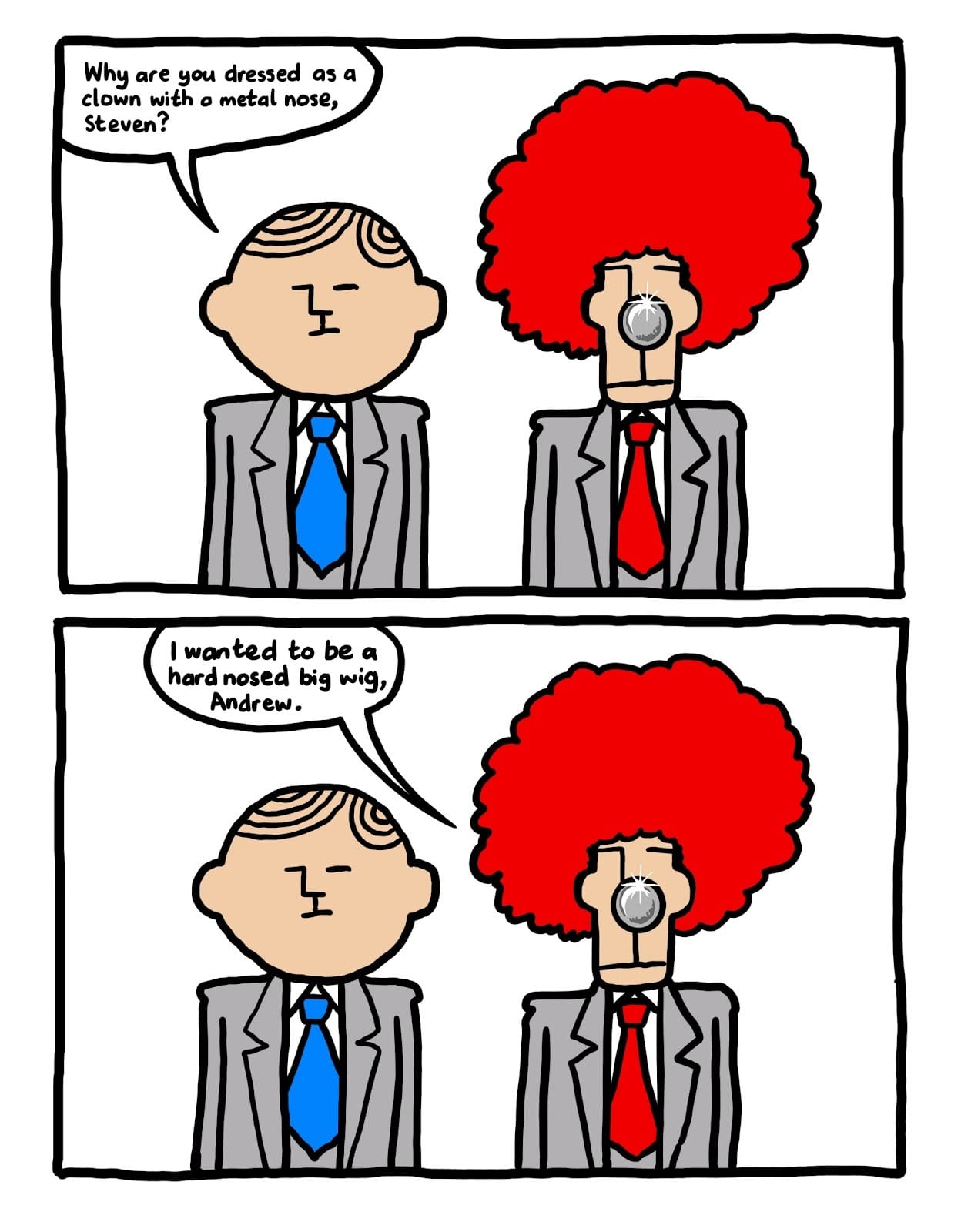
Andrew and Steven, Those Amusing Brothers
ITEM
The Ballad of Peckham Rye (Muriel Spark, 1960)
What good are the arts? Dougal Douglas is hired by textile company Meadows, Meade & Grindley to find out. As Douglas Dougal, he’s employed to do the same job for a rival firm.
The notion that a man cultured by the system could raise the workforce to meet its requirements, and perhaps even reduce absenteeism, is the product of an empire that hasn’t recognised its death knell. The reality is a pisstake tango beyond production lines, frayed threads all over, some of them tangled up in murder.
“Who is this bastard and why are they lying to me?” is a good question to ask about artistic types. Dougal/Douglas has many answers - he’s an educated Scot, a man of fey ancestry, a police informant, and more - but in the absence of a peek inside the skull, best to focus on the finer contradiction. On his dual role as crop-horned devil and exorcist, Douglas claims “The two states are not incompatible.” True, but was everything that happens here latent in the cast of process controllers and engineers before he arrived?
Perhaps. Dougal performs his most overtly creative work as biographer for a retired star. Through fragmented correspondence, we gather that he’s shifted anecdotes from Peckham and attributed them to other people, other times.
Considering this demiurgic act among the others, a passage from Frankenstein comes to mind: “He was the murderer! I could not doubt it. The mere presence of the idea was an irresistible proof of the fact.”
Muriel Spark wrote a tidy study of Mary Shelley, and in this (un)holy flash we find a case for art’s transformative power that survives conservative mockery: it might not always be good for life as we know it, but the correct words in the right order can make anything plausible.
ITEM
Granny Bought The Wrong One

There were some things trampled over in a hurry last time, so let’s stand them up, dust them down and give them some dignity.
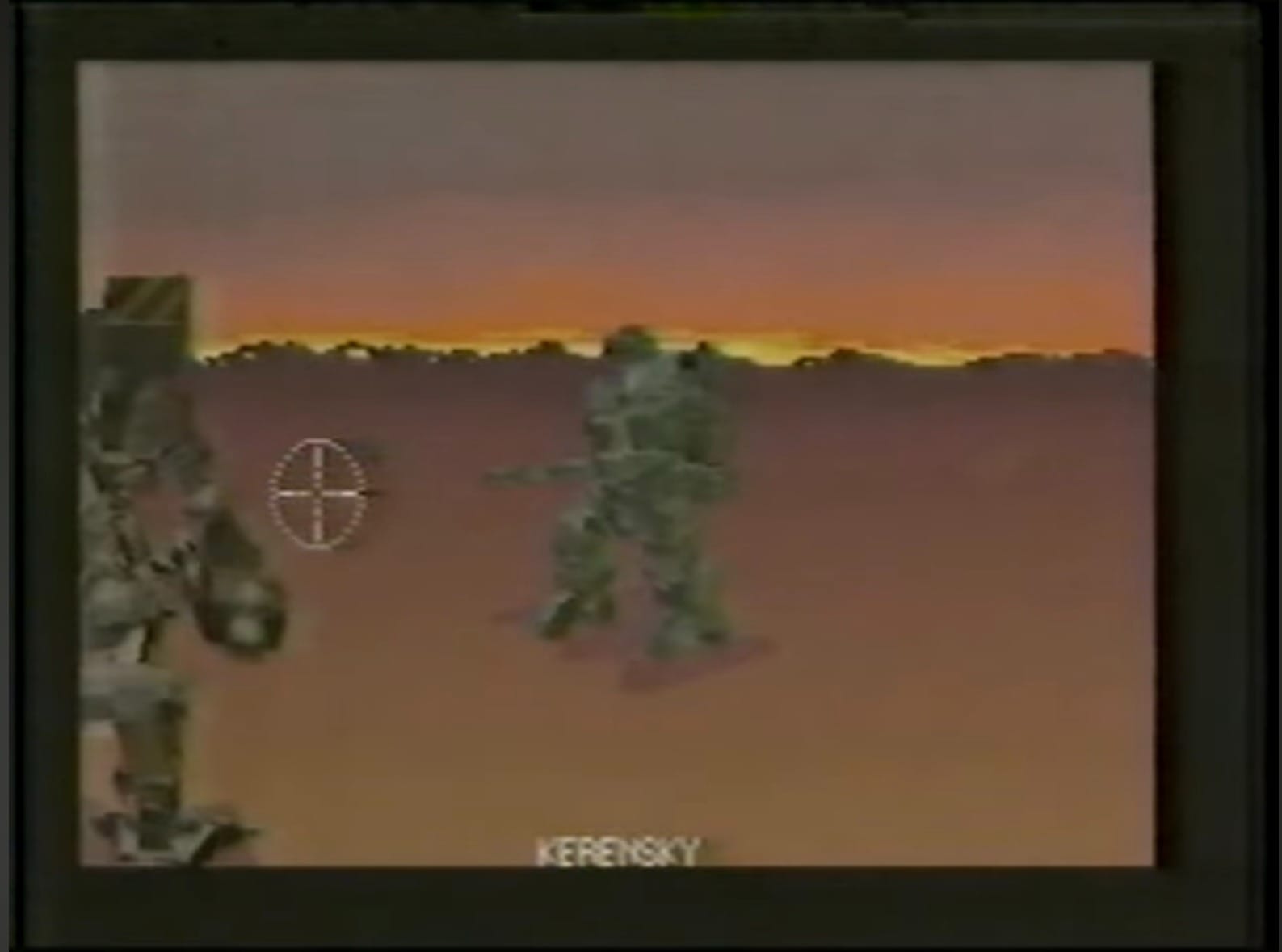
Firstly, the MadCat/Timberwolf. In 1988 FASA was attempting to create a kind of immersive video game. Using their own Battletech setting, Battlepods saw players man their own unit from an immersive cockpit. For this, video game developer Tim Skelly designed a new kind of mech to better suit the game.
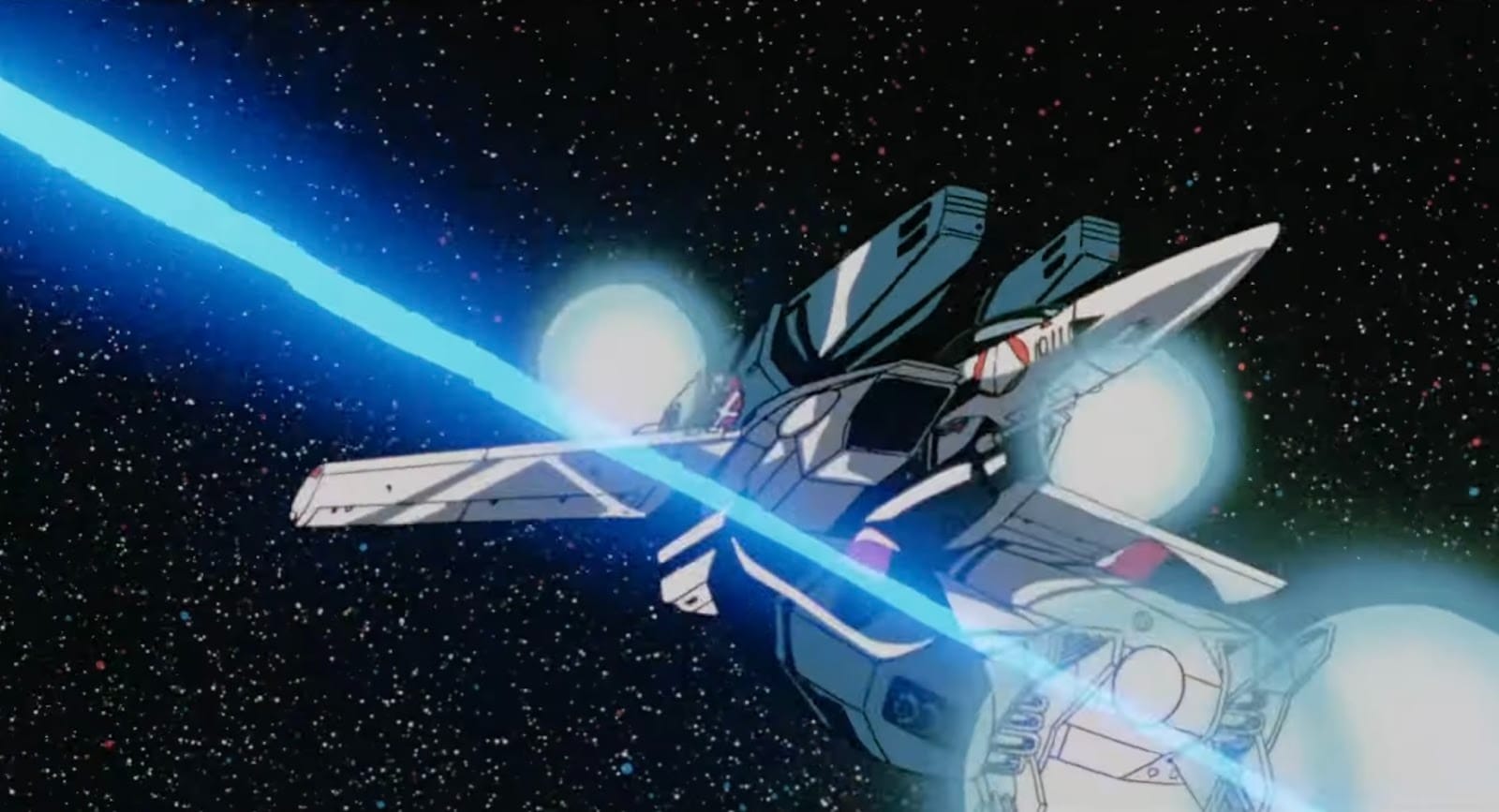
Obviously, Shoji Kawamori’s influence can be felt here. The Valkyrie has an in-between mode called GERWALK. The legs are deployed in a backwards knee position, performing VTOL manoeuvres or retro thrust in space.
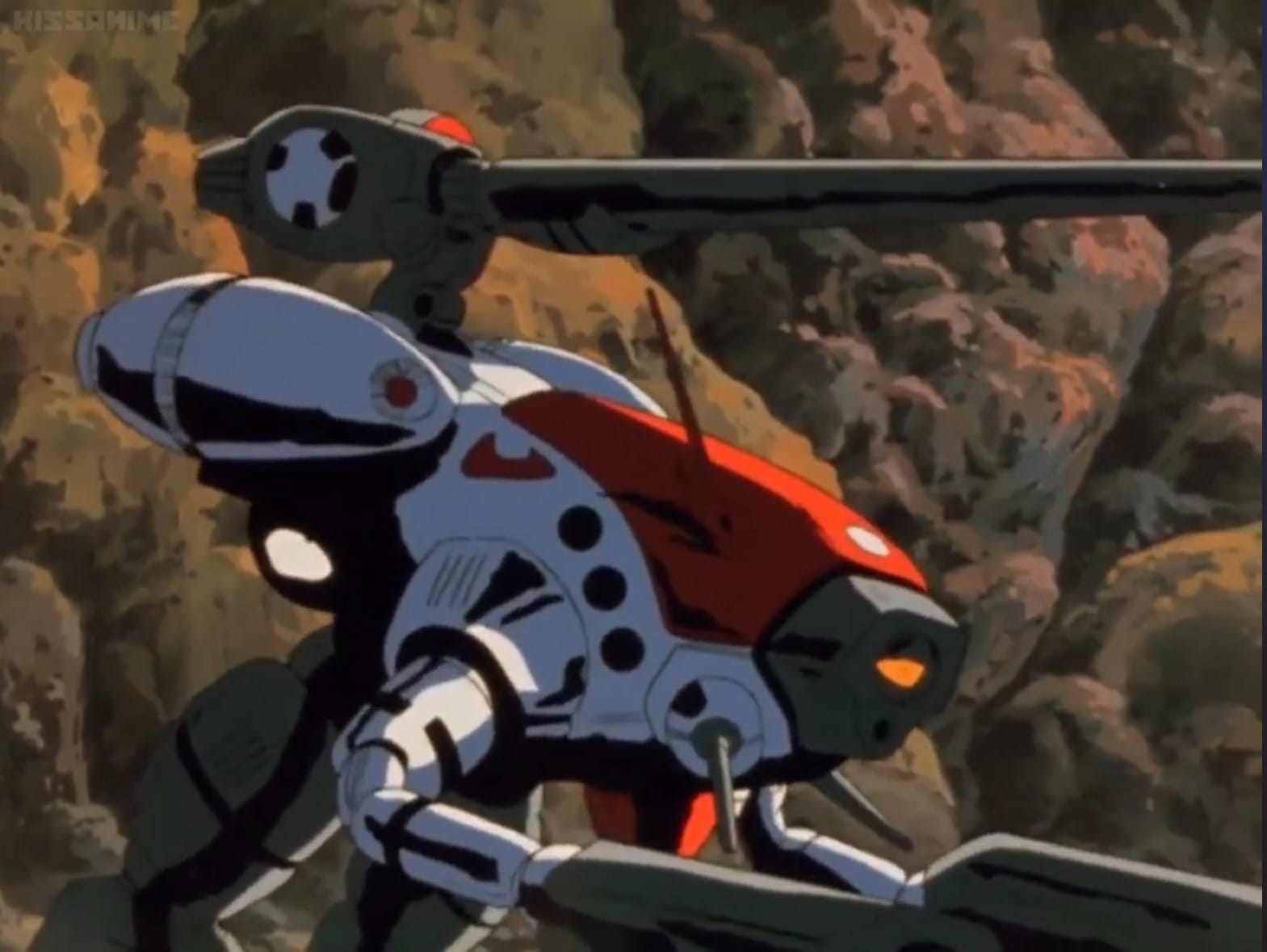
It’s opponents included the Glaug, a chicken walker with gun arms and rear mounted cannon. Shades of Joe Johnston’s work designing the walkers of The Empire Strikes Back, which itself owes it’s origins to art by Syd Mead. The Glaug and Valkyrie variants were featured in the Battletech board game.
Searching for the Exo Squad ‘Heavy Attack E-Frame’ will bring up this comparison image from a Battletech Facebook group. Illustrating the continued befuddlement felt by outside observers of the legal case that was lost over what appears to be the obvious theft of the MadCat/Timberwolf design.
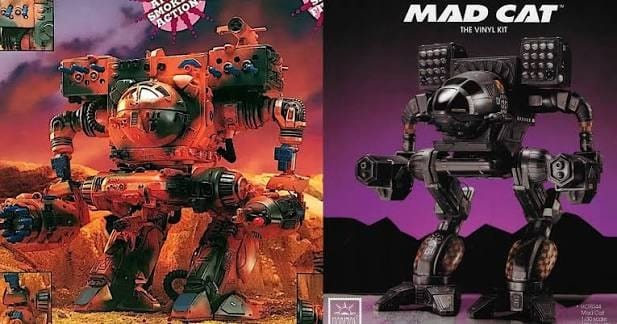
Playmates, the Exo Squad toy makers, had been offered the Battletech license. They passed. FASA would seem to have the right to attack over the infringement. Harmony Gold then allowed Robotech products to be sold under the Exo Squad brand (the Exo Squad show’s creators had no involvement). This became the basis of a suit to block FASA from using the mecha under the Robotech umbrella. FASA’s original licensor having evaporated, they had no recourse but to redesign everything that overlapped.
ITEM
IF I WERE SISYPHUS, I WOULD SIMPLY MAKE FRIENDS WITH ATLAS (not the Ayn Rand one).
Invented a new genre today, which is comprised of 3 songs and called Megatron. Given Optimus Prime’s musical contribution would be like some Kenny Rogers songs and that - I am not going to say Fathers 4 Justice, every time I say something particularly vindictive here I feel haunted by it - Father’s Day charity song with the crayon cartoon video (It was #1! Nizlopi.) you would have to say in the unforgiving arena of popular music things are looking down for the heroic Autobots.
MY NEW AFFIRMATION, AND YOU CAN USE THIS, FEEL FREE, IS “1000000%”- THAT’S CUBIC 100%s, 100% HEIGHT, BREADTH AND DEPTH. THIS ONE GOTTA TAKE OFF - IT’S SO GOOD.
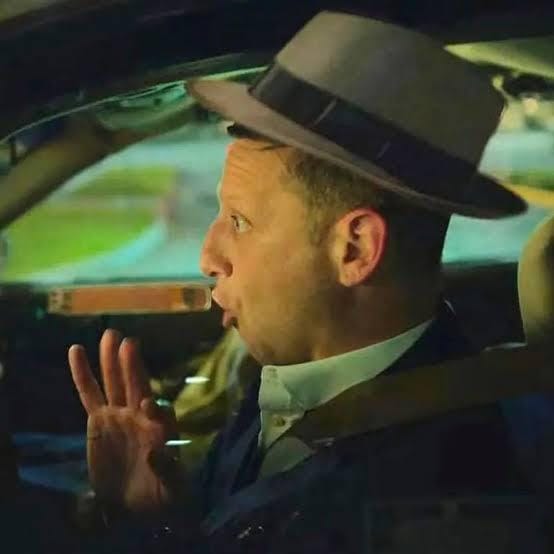
…IT’S SO GOOD.
Extremely basic but true year end list: Film of the Year One Battle After Another primarily for the correct and hilarious depiction of racial purists as disgusting ludicrous milksops I suppose but it was all good, the car chases especially TV of the Year Pluribus whose Mega-Chekhovian series end hinges on what I had imagined was a throwaway but particularly funny moment - it’s good when she asks them for heroin too, really kinda feels like a new genre and thank fuck nobody is living underground in this one so far Album of the Year Clipse Let God Sort ‘Em Out - I know I have rattled on about this already but for clarity’s sake my last two AOTYs were Charli XCX & Christine & the Queens, so I don’t exclusively listen to rap (oddly rap AOTY is JID God Does Like Ugly, don’t question it, shhh shh night night *putting my finger to your lips and looking you dead in the eye, asking “do you think Stranger Things is heavy nonce-coded?!?”*)
ITEM
Annunciate
Tell just one person that you liked this newsletter. Word of mouth, more than any other form of promotion, is how creative works get noticed and sustain themselves. Thank you very much for reading and happy New Year.
ITEM
Eyes Wide Shut (Stanley Kubrick, 1999)
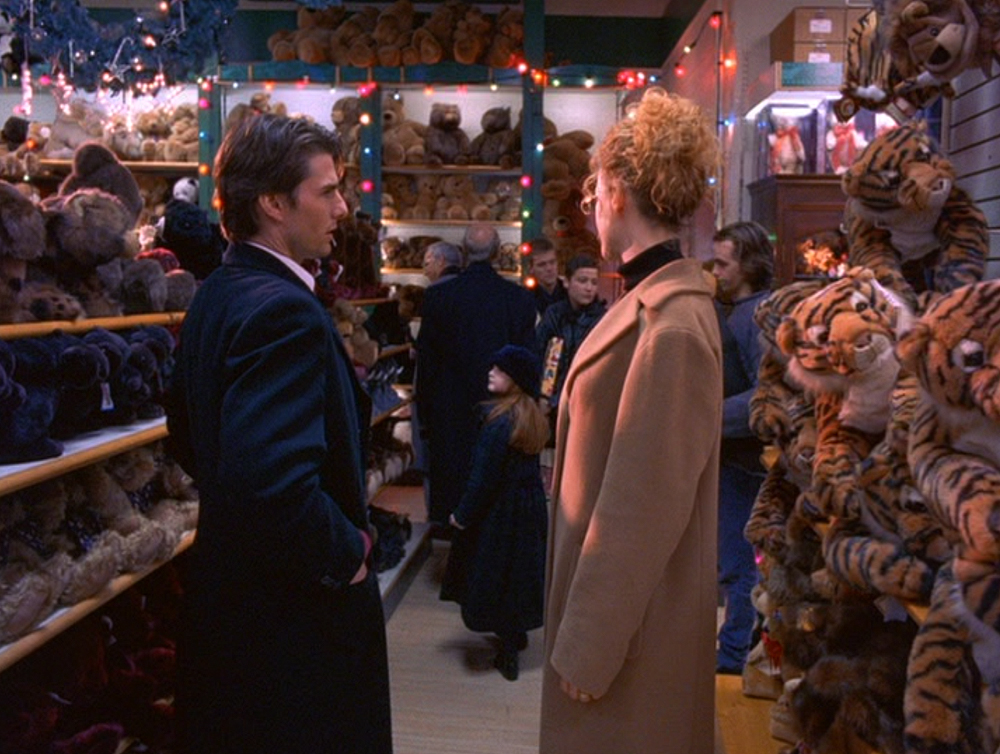
After the long slow journey to be counted, the struggle for shelter, incarnation - now active danger arrives toward the end of the holy family’s quest. The evil but wily King, a puppet with long strings, tricks the not-so-wise men into giving god’s game away, at his moment of direst vulnerability.
The descent from monad into human is unprecedented and unrepeatable. The accountant's instinct to obey the conservation of energy demands a payment. The death of the children of Herod's kingdom as a suitable balance of exchange for giving God feet and teaching him to walk as people do. Evil is woven into reality and behaves with all the ruthless strength of a mechanism to smother the light before he’s learnt to crawl.
The gospel of a world unredeemable. A response is already built into existence, a trap laid by divinity not to catch itself in to explore some cosmic paradox, but to exercise his insane and absent wrath onto earthly families cursed with proximity to the blessing.
So how many dead babies equals one embodied god? In the Renaissance Boccaccio numbered it at 144,00, stacking the dozens to make Mad John’s numerology make sense. More recent estimates given the likely size of Bethlehem province puts it at anything from 20 to 100.
The moment of innocence lies in Matthew’s make believe: it never happened. The Massacre of the Innocents is elsewhere unattested, and Herod's edict, even if had enough imperial rope, could hardly have gone without further record. The scripture and its interpreters want you to believe nothing comes for free, that even miracles have their ledger, that the prophecy of magicians is enemy technology.
Kubrick's great act of disclosure feels today like only half the story, obsessing over the trafficking networks while unseeing the mechanised destruction of children’s bodies (covered previously in Full Metal Jacket). The myth stuck, and the empire must devour the innocent in order to give birth to itself.